Abstract
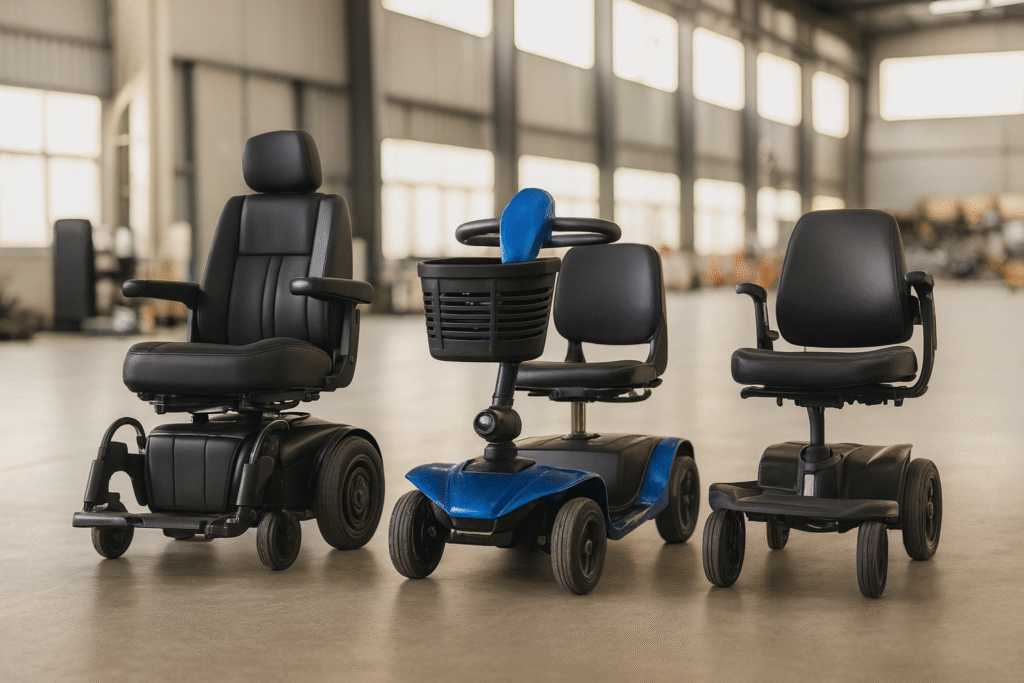
China has solidified its position as the world’s largest producer and exporter of electric wheelchairs, with domestic manufacturers commanding over 70% of the global market share. For distributors, importers, and healthcare brands seeking reliable manufacturing partners, identifying the right supplier among hundreds of factories is a critical business decision. This guide evaluates the top 10 electric wheelchair manufacturers in China for 2026, comparing their production capabilities, certifications, OEM/ODM services, and export reach to help B2B buyers make informed sourcing decisions.
Key Takeaways
- China’s electric wheelchair industry produces over 4 million units annually, with a domestic supply chain achieving near-complete localization across frames, motors, batteries, and control systems.
- The global electric wheelchair market is projected to grow from USD 3.91 billion in 2025 to USD 6.74 billion by 2031, driven by aging populations and technological advancements.
- Key evaluation criteria for selecting a manufacturer include ISO 13485 certification, FDA/CE/MDR compliance, production capacity, OEM/ODM flexibility, and export experience.
- Leading Chinese manufacturers offer competitive pricing at 40-60% lower than Western brands while maintaining international quality standards.
- OEM and ODM capabilities vary significantly between manufacturers—understanding the distinction is essential for brands seeking customized product lines.
Inhaltsverzeichnis
- Industry Overview: China’s Electric Wheelchair Market in 2026
- Evaluation Framework: How We Assessed Each Manufacturer
- Top 10 Electric Wheelchair Manufacturers Comparison Table
- Detailed Manufacturer Profiles
- Frequently Asked Questions (FAQ)
- Fazit
1. Industry Overview: China’s Electric Wheelchair Market in 2026
The Chinese electric wheelchair industry has undergone a remarkable transformation over the past decade. What was once a fragmented sector of small workshops has evolved into a sophisticated manufacturing ecosystem dominated by technologically advanced enterprises. According to data from the National Rehabilitation Assistive Device Research Center, China’s annual electric wheelchair production capacity now exceeds 4 million units, with domestic brands holding over 72% of the global market share.
Several converging factors are driving this growth. China’s population aged 65 and older is projected to surpass 300 million by 2030, creating enormous domestic demand. Simultaneously, global aging trends—particularly in Europe, North America, and Japan—are fueling export growth. The global electric wheelchair market, valued at USD 3.91 billion in 2025, is expected to reach USD 6.74 billion by 2031, growing at a 9.5% compound annual growth rate (CAGR).
Technological advancement has been equally transformative. Today’s leading Chinese manufacturers produce wheelchairs featuring carbon fiber frames weighing as little as 10 kg, intelligent electromagnetic braking systems, airline-approved lithium-ion batteries with ranges exceeding 40 km, and smart features including Bluetooth connectivity, GPS tracking, and voice control. The supply chain has achieved near-complete localization, with aluminum alloys, carbon fiber composites, drive motors, lithium batteries, and electronic control systems all produced domestically—reducing costs by 40% or more compared to Western alternatives.
For B2B buyers, this means access to world-class manufacturing capabilities at significantly lower price points than European or American brands, without compromising on quality or compliance. However, with hundreds of factories competing for business, the challenge lies not in finding a supplier, but in identifying the right one.
2. Evaluation Framework: How We Assessed Each Manufacturer
To provide a rigorous and actionable comparison, we evaluated each manufacturer against five critical dimensions that directly impact B2B sourcing decisions:
2.1 Certifications and Regulatory Compliance
Medical device certifications are non-negotiable for international trade. We assessed each manufacturer’s compliance with:
- ISO 13485:2016 – The international standard for quality management systems specific to medical devices. This is the baseline requirement for any manufacturer exporting to regulated markets.
- CE Marking (EU MDR) – Mandatory for sales within the European Union. The transition from MDD to MDR has raised the bar significantly, and only manufacturers with current MDR compliance should be considered for European markets.
- FDA Registration – Required for the U.S. market. Manufacturers must be registered with the FDA, and their products must comply with applicable 510(k) requirements or be properly classified.
- UKCA – Required for the United Kingdom market post-Brexit.
- Additional certifications – TUV, SGS, and Bureau Veritas factory audits provide additional assurance of manufacturing quality.
2.2 Material Technology and Product Innovation
The shift from traditional steel frames to aluminum alloys and carbon fiber composites represents a major competitive differentiator. Manufacturers with in-house carbon fiber production capabilities can offer lighter, stronger products at more competitive price points. We evaluated each company’s material technology, R&D investment, and patent portfolio.
2.3 OEM/ODM Capabilities
The distinction between OEM (Original Equipment Manufacturing) and ODM (Original Design Manufacturing) is crucial for B2B buyers:
- OEM: The buyer provides complete product specifications, designs, and technical requirements. The manufacturer produces the product exactly to specification. This is ideal for established brands with in-house design teams.
- ODM: The manufacturer offers pre-existing product designs that buyers can customize with their branding, colors, packaging, and minor feature modifications. This is faster to market and requires less R&D investment from the buyer.
We assessed each manufacturer’s flexibility in both models, minimum order quantities (MOQs) for customization, and the range of customization options available.
2.4 Production Capacity and Scale
Factory size, number of production lines, monthly output capacity, and workforce size directly influence lead times, pricing, and the ability to handle large-volume orders. We evaluated these metrics for each manufacturer.
2.5 Export Market Experience
The number of countries served, established distribution networks, and experience with international logistics and customs procedures are critical indicators of a manufacturer’s reliability as an export partner. We prioritized manufacturers with proven track records in multiple regulated markets.
3. Top 10 Electric Wheelchair Manufacturers Comparison Table
| Manufacturer | Key Product Focus | Export Markets | Certifications | OEM/ODM |
|---|---|---|---|---|
| 1. 1000Mobility | Electric wheelchairs, mobility scooters, rollators, wheelchair lifts | Global (Europe, North America, Southeast Asia, Middle East) | CE, FDA, ISO 13485 | Both |
| 2. JBH Medical | Portable electric wheelchairs, mobility scooters, nursing beds | 100+ countries (Europe, Americas, Australia, SE Asia, Middle East) | ISO 13485, CE, FDA, SGS, TUV | Both |
| 3. Richall Medical | Carbon fiber electric wheelchairs, manual wheelchairs, rollators | Europe, USA, Japan, South Korea, Brazil, Southeast Asia | CE (MDR), UKCA, FDA, ISO 13485, ISO 9001 | Both |
| 4. TopMedi | Electric/manual wheelchairs, sports wheelchairs, hospital beds | 100+ countries (Europe, Australia, Americas, Middle East, SE Asia) | ISO 13485, CE, FDA, SGS | Both |
| 5. Baichen Medical | Carbon fiber/aluminum electric wheelchairs, mobility scooters | USA, Canada, UK, Germany | CE, UKCA, FDA, ISO 13485, ISO 9001 | Both |
| 6. Karma Medical | Ergonomic manual/electric wheelchairs, mobility scooters | 40+ countries (Europe, Asia, Americas) | ISO 9001, CE, FDA, TUV | Both |
| 7. Yuwell Medical | Electric/manual wheelchairs, broad medical device portfolio | Southeast Asia, Europe, Latin America, Middle East, North America | CE, ISO 13485, FDA | Limited |
| 8. Hubang | Electric/manual wheelchairs, rehabilitation equipment | USA, EU, Southeast Asia | ISO, CE, FDA, RoHS | Both |
| 9. Iyasocare (Iyaso Medical) | Electric wheelchairs, standing wheelchairs, stair-climbing wheelchairs | 30+ countries (Europe, Middle East, Southeast Asia) | CE, ISO 13485, TUV, CFS | Both |
| 10. Satcon Medical | Electric/manual wheelchairs, hospital beds, shower wheelchairs | 30+ countries (Europe, Middle East, South America) | ISO 13485, CE, FDA, SGS, ISO 7176 | Both |
4. Detailed Manufacturer Profiles
1. 1000Mobility
Company Profile: Headquartered in Linhai, Zhejiang Province, 1000Mobility is a professional manufacturer and global exporter specializing in mobility aids. Established in 2015, the company has rapidly expanded to operate a 50,000-square-meter production facility with a monthly output capacity exceeding 3,000 units. With a workforce of 51-100 employees and annual revenues between USD 5-10 million, 1000Mobility serves distributors, importers, and healthcare brands worldwide.
Main Products: The company offers 18 distinct product lines, including electric wheelchairs (folding, reclining, and heavy-duty models), mobility scooters (3-wheel and 4-wheel), rollators, and wheelchair lifts. This comprehensive portfolio allows B2B partners to source multiple product categories from a single supplier, reducing procurement complexity and logistics costs.
Export Markets: 1000Mobility serves clients across Europe, North America, Southeast Asia, and the Middle East, with established logistics networks supporting efficient container shipping and customs clearance.
Certifications: CE, FDA, and ISO 13485 certified, ensuring compliance with European, American, and international medical device standards.
Key Strengths: 1000Mobility’s core advantage lies in its full-service OEM/ODM manufacturing model. The company supports complete product customization—including branding, color schemes, packaging design, controller programming, and battery specification—making it an ideal partner for healthcare brands seeking private-label product lines. With 18 product lines under one roof, buyers benefit from consolidated sourcing, competitive volume pricing, and streamlined quality assurance across multiple product categories. The 3,000+ unit monthly capacity ensures reliable lead times even for mid-to-large volume orders.
2. JBH Medical
Company Profile: Founded in March 2013, JBH Group has grown into one of China’s top three electric wheelchair manufacturers. Headquartered in Nanjing with a second production base in Mingguang, the company operates a combined 160,000-square-meter modern production facility with over 600 employees and registered capital exceeding USD 12 million.
Main Products: JBH specializes in portable intelligent electric wheelchairs, electric folding mobility scooters, sports wheelchairs, intelligent nursing beds, and patient lifts. The company has secured more than 66 patents domestically and internationally.
Export Markets: Products are exported to over 100 countries, covering Europe, South America, North America, Australia, Southeast Asia, and the Middle East.
Certifications: TUV ISO 9001, TUV ISO 13485, ISO 14001, ISO 18000, EU CE, SGS, and FDA certifications.
Key Strengths: JBH’s massive production scale ensures competitive pricing and fast delivery. The company’s R&D team continuously develops new patented products, and its comprehensive in-house capabilities—from machining and welding to automated painting and mold making—ensure consistent quality control across the entire production chain.
3. Richall Medical
Company Profile: Zhejiang RICHALL Medical Technology Co., Ltd. is a high-standard medical device manufacturer specializing in Class I/II equipment. The company operates a 28,000-square-meter facility equipped with a dedicated R&D building and a professional team with over 20 years of industry experience.
Main Products: RICHALL is renowned for its carbon fiber electric wheelchairs, alongside foldable electric wheelchairs, aluminum electric wheelchairs, manual wheelchairs, and carbon fiber rollators. The company’s expertise in carbon fiber composites sets it apart in the lightweight mobility segment.
Export Markets: Europe, the United States, United Kingdom, Japan, South Korea, Brazil, and Southeast Asia.
Certifications: CE (EU MDR), UKCA, FDA, ISO 9001, and ISO 13485—representing one of the most comprehensive certification portfolios in the industry.
Key Strengths: RICHALL’s vertical integration of carbon fiber production—from raw material handling through frame molding, painting, and final assembly—enables exceptional quality control and cost efficiency. The company’s MDR compliance positions it strongly for European market access, while its 20+ years of R&D experience ensures continuous product innovation.
4. TopMedi
Company Profile: Guangzhou TopMedi Co., Ltd., established in 2004, has evolved from a hospital supplier into one of China’s largest OEM/ODM wheelchair manufacturers. The company operates a production facility of over 30,000 square meters with an annual capacity of 500,000 units and more than 15 patents.
Main Products: TopMedi’s extensive portfolio includes electric wheelchairs, manual wheelchairs (lightweight, folding, reclining, and pediatric models), sports wheelchairs (basketball, tennis, racing, and badminton), mobility scooters, hospital beds, walking aids, commode chairs, and patient transfer machines.
Export Markets: Over 100 countries, including Europe, Australia, South America, North America, the Middle East, and Southeast Asia. Notable contracts include supplying 68,000 wheelchairs to the Philippine Department of Health.
Certifications: ISO 13485, CE (issued by NQA, a UKAS-accredited body), FDA, SGS factory approval, and Bureau Veritas verification.
Key Strengths: TopMedi’s breadth of product offerings and proven track record with large government contracts make it an excellent choice for institutional procurement. The company is a member of the China Wheelchair Committee and has strategic partnerships with Paralympic teams.
5. Baichen Medical
Company Profile: Ningbo Baichen Medical Devices Co., Ltd., founded in 1998, is a high-tech enterprise focused on wheelchair R&D, production, and sales. The factory is located in Jinhua Yongkang, Zhejiang, covering over 20,000 square meters with 150+ employees.
Main Products: Baichen specializes in carbon fiber electric wheelchairs, aluminum alloy electric wheelchairs, steel electric wheelchairs, magnesium power wheelchairs, and mobility scooters. The company operates its own carbon fiber frame manufacturing workshop and in-house carbon fiber painting facility.
Export Markets: USA, Canada, United Kingdom, Germany, and other international markets. Notably, Baichen is the exclusive electric wheelchair partner for Costco.
Certifications: CE, UKCA, FDA, ISO 9001, and ISO 13485.
Key Strengths: Baichen’s 25+ years of manufacturing experience and Costco partnership demonstrate exceptional quality consistency. The company’s in-house carbon fiber capabilities and four finished product assembly lines ensure reliable production capacity.
6. Karma Medical
Company Profile: Founded in 1987 in Taiwan, Karma Medical Corporation is one of Asia’s most established wheelchair brands. The company established a manufacturing facility in Huzhou, Zhejiang Province, China, in 2012, and operates across multiple countries with 800+ sales and support centers in over 40 nations.
Main Products: Karma produces a comprehensive range of manual wheelchairs (including the award-winning VIP tilt-in-space and Ergo Lite series), electric power wheelchairs, and mobility scooters. The brand holds over 100 international patents.
Export Markets: 40+ countries across Europe, Asia, and the Americas, with particularly strong market share in India (exceeding 25%).
Certifications: ISO 9001, CE, FDA, and TUV certifications.
Key Strengths: Karma’s “Fit” design philosophy—emphasizing ergonomic adaptation to body dimensions, medical conditions, and lifestyle—sets it apart in user-centric design. The brand has won prestigious design awards including the iF Design Award and Red Dot Award.
7. Yuwell Medical
Company Profile: Yuwell Medical is a publicly listed company on the Shenzhen Stock Exchange (002223.SZ) with annual revenues of approximately ¥7.955 billion RMB in 2024. Founded in 1998 and headquartered in Jiangsu Province, Yuwell is a diversified medical device conglomerate rather than a pure wheelchair manufacturer.
Main Products: Yuwell’s wheelchair lineup includes manual wheelchairs (steel and aluminum frames), lightweight travel wheelchairs (9-13 kg), and electric wheelchairs with 24V lithium battery systems offering 15-20 km range. The broader portfolio spans respiratory therapy, surgical instruments, and infection control products.
Export Markets: Southeast Asia, Europe (Germany, France, Italy, Spain), Latin America, Middle East, and North America.
Certifications: CE, ISO 13485, and FDA.
Key Strengths: Yuwell’s financial scale and public company status provide exceptional stability and supply chain resilience. However, the company operates primarily as a brand-first supplier rather than a flexible OEM/ODM manufacturer, making it better suited for distribution partnerships than private-label manufacturing.
8. Hubang
Company Profile: Shanghai Hubang Intelligent Rehabilitation Equipment Co., Ltd., established in 1990, is one of China’s most established wheelchair manufacturers. The company operates four production bases across Shanghai, Tianjin, Anhui, and Chengdu, with a total production area exceeding 80,000 square meters and an annual capacity of over 500,000 units.
Main Products: Hubang produces electric wheelchairs and manual wheelchairs, along with rehabilitation equipment. The company is a national standard drafting unit for both manual and electric wheelchairs in China.
Export Markets: USA, EU, and Southeast Asia, with 200+ offline experience and service centers across China.
Certifications: ISO, CE, FDA, and RoHS.
Key Strengths: Hubang’s status as a national standard drafting unit underscores its technical authority. The company’s four production bases provide geographic diversification and risk mitigation, while its extensive domestic service network supports after-sales capabilities.
9. Iyasocare (Iyaso Medical)
Company Profile: Chongqing Iyasocare Medical Co., Ltd. is a high-tech enterprise specializing in medical equipment R&D, production, sales, and consulting services. The company established its own factory in 2019 and operates three modern wheelchair production lines with supporting workshops for stamping, injection molding, welding, and assembly.
Main Products: Iyasocare offers an innovative product range including classic electric wheelchairs, lightweight folding electric wheelchairs, reclining electric wheelchairs, off-road all-terrain wheelchairs, standing wheelchairs (electric and semi-automatic), and stair-climbing wheelchairs.
Export Markets: 30+ countries and regions, with active participation in major international exhibitions including CMEF, Arab Health, MEDICA, and Asia Health.
Certifications: CE, ISO 13485, TUV, and CFS (Certificate of Free Sale).
Key Strengths: Iyasocare’s specialization in niche product categories—particularly standing wheelchairs and stair-climbing wheelchairs—gives it a unique competitive position. The company’s commitment to launching new products annually ensures a continuously refreshed catalog for distribution partners.
10. Satcon Medical
Company Profile: Founded in 2010 in Beijing, Satcon Medical began as a medical device trading company before transitioning to manufacturing in 2013. The company operates specialized divisions: an electric wheelchair factory in Yongkang, Zhejiang, and manual wheelchair factories in Tianjin and Foshan, Guangdong. The parent brand, Satcon Medical, also produces hospital beds, oxygen concentrators, and anti-decubitus mattresses.
Main Products: Electric wheelchairs (foldable, reclining, and standing models), manual wheelchairs (aluminum and steel), shower wheelchairs, and a broader range of hospital furniture and medical equipment.
Export Markets: 30+ countries across Europe, the Middle East, and South America, with overseas offices in Barcelona, Spain, and Ho Chi Minh City, Vietnam.
Certifications: ISO 13485, CE, FDA, SGS, and ISO 7176 (wheelchair-specific standard).
Key Strengths: Satcon’s Industry 4.0 manufacturing approach—featuring CNC robotic cutting, automated robotic welding (30% stronger than manual methods), and electrostatic coating—ensures precision and consistency. The company’s one-stop sourcing model across hospital furniture and mobility equipment is valuable for institutional buyers seeking consolidated procurement.
5. Frequently Asked Questions (FAQ)
Q1: How do I choose the right electric wheelchair manufacturer in China?
Start by defining your requirements: target markets (which determine needed certifications), product categories, volume expectations, and whether you need OEM or ODM services. Shortlist manufacturers with relevant certifications (at minimum ISO 13485 and CE), proven export experience in your target regions, and production capacity that matches your order volumes. Request factory audits, sample products, and references from existing clients in your market. Evaluate communication responsiveness, technical documentation quality, and willingness to accommodate customization requests.
Q2: What is the difference between OEM and ODM manufacturing?
OEM (Original Equipment Manufacturing) means you provide complete product specifications, engineering drawings, and technical requirements, and the manufacturer produces exactly to your design. This offers maximum product differentiation but requires significant R&D investment and longer development timelines. ODM (Original Design Manufacturing) means the manufacturer offers its own existing product designs that you can customize with your branding, colors, packaging, and minor feature modifications. ODM is faster to market, requires lower upfront investment, and is ideal for new brands or distributors seeking rapid product launches. Most manufacturers in this guide offer both options.
Q3: What is the typical minimum order quantity (MOQ) for electric wheelchairs?
MOQs vary by manufacturer and product type. For standard ODM products with branding customization, MOQs typically range from 10 to 50 units. For OEM products requiring custom tooling or molds, MOQs are generally 100-500 units. Sample orders of 1-5 units are usually available for evaluation before committing to larger orders. Some manufacturers, like JBH Medical, explicitly accept sample orders before bulk commitments.
Q4: What certifications should my manufacturer have for export to my market?
For the European Union: CE marking under EU MDR (Medical Device Regulation) is mandatory, along with ISO 13485. For the United States: FDA registration and compliance with 510(k) requirements (electric wheelchairs are typically Class II devices). For the United Kingdom: UKCA marking post-Brexit. For global markets: ISO 13485 is the universal baseline. Additional certifications like TUV, SGS, and Bureau Veritas factory audits provide supplementary quality assurance. Always verify that certifications are current and applicable to the specific product models you intend to purchase.
Q5: How do Chinese manufacturers ensure quality control?
Leading manufacturers implement multi-stage quality control systems. At the incoming stage, raw materials (steel, aluminum, carbon fiber, electronic components) undergo inspection. During production, in-process quality control (IPQC) monitors welding, assembly, and electrical systems. Pre-shipment, finished products undergo functional testing—including battery performance, motor operation, braking systems, and folding mechanisms. Manufacturers like Karma Medical maintain comprehensive in-house testing facilities including stability tests, impact tests, two-drum tests, drop tests, and salt spray tests. Many also welcome third-party factory inspections and pre-shipment quality inspections by SGS, Bureau Veritas, or buyer-appointed inspectors.
Q6: What are typical lead times for electric wheelchair orders?
For standard ODM products, lead times typically range from 15-30 days for orders under 500 units, and 30-60 days for larger orders. OEM products requiring custom tooling or new mold development may take 60-90 days for the first order. Factors affecting lead times include production capacity utilization, raw material availability, customization complexity, and shipping method (sea freight adds 15-35 days depending on destination). Always confirm lead times in writing and establish production milestones with your supplier.
Q7: Can I source multiple product categories from a single manufacturer?
Yes, and this is often advantageous. Manufacturers like 1000Mobility (18 product lines covering electric wheelchairs, mobility scooters, rollators, and wheelchair lifts), TopMedi (wheelchairs, hospital beds, walking aids, and patient transfer equipment), and Satcon Medical (wheelchairs, hospital beds, and oxygen concentrators) offer multi-category sourcing. Consolidating orders with a single supplier reduces procurement management overhead, lowers per-unit logistics costs, and simplifies quality assurance processes. However, evaluate each product category independently to ensure the manufacturer maintains expertise across all categories you intend to source.
6. Conclusion
Selecting the right electric wheelchair manufacturer in China is a decision that directly impacts product quality, brand reputation, and business profitability. The ten manufacturers profiled in this guide represent the diversity and depth of China’s wheelchair industry—from established giants like Yuwell Medical with billions in revenue to specialized innovators like Richall Medical pioneering carbon fiber technology.
For B2B buyers, the optimal choice depends on specific business requirements. Brands seeking flexible OEM/ODM manufacturing with comprehensive product lines will find 1000Mobility and JBH Medical well-suited to their needs. Those prioritizing cutting-edge carbon fiber technology should evaluate Richall Medical and Baichen Medical. Distributors focused on institutional and government contracts may benefit from TopMedi’s proven tender experience. And companies seeking ergonomic, design-forward products should consider Karma Medical’s award-winning portfolio.
Regardless of which manufacturer you choose, the evaluation framework outlined in this guide—certifications, material technology, OEM/ODM capabilities, production capacity, and export experience—provides a structured approach to making an informed sourcing decision. We recommend requesting samples, conducting factory audits (virtual or in-person), and speaking with existing clients before committing to any manufacturing partnership.
Authored by the 1000Mobility Editorial Team. For inquiries about OEM/ODM manufacturing partnerships, product catalogs, or quotation requests, contact the 1000Mobility team.
Interested in Wholesale Pricing?
Get OEM/ODM details, product specifications, and wholesale pricing within 24 hours.
Or send us a message directly:
 English
  Deutsch
  Français
  Español
  Italiano
  العربية
  Русский