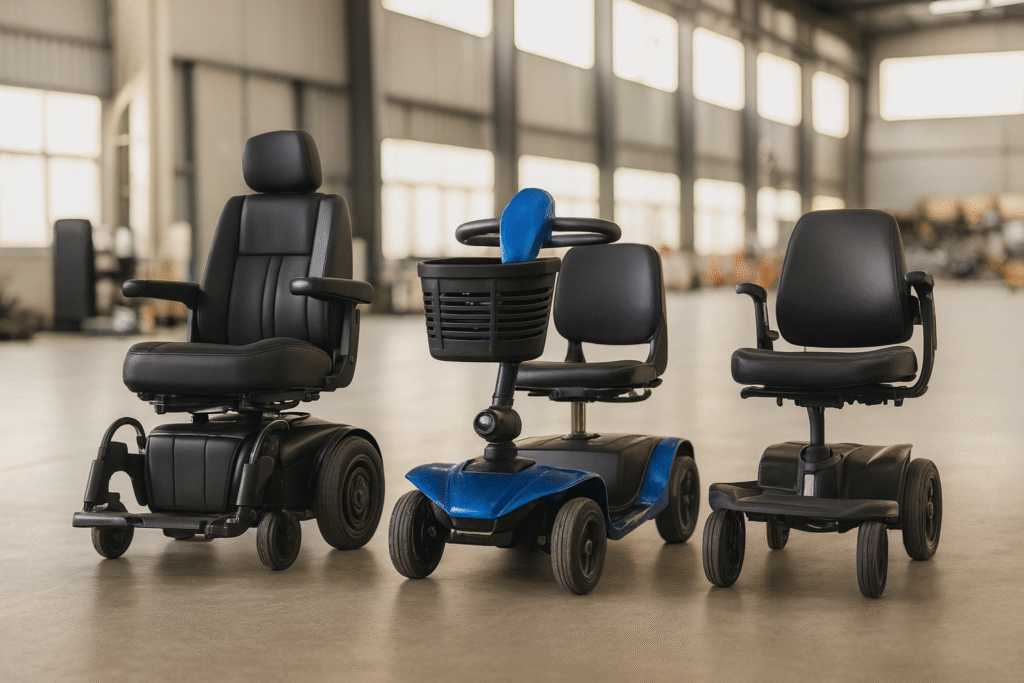
Mobility Scooter FAQ — Everything You Need to Know
Whether you’re a first-time buyer, a caregiver, or a dealer, our FAQ covers all the most-searched questions about mobility scooters—eligibility, coverage, performance, and usage rules—so you can make informed decisions with confidence.
Yes. Medicare Part B may cover mobility scooters (power‑operated vehicles) as durable medical equipment when they are medically necessary for in‑home mobility. Requirements include a face‑to‑face exam and prescription, documentation that other aids are insufficient, and use of a Medicare‑enrolled DME supplier. After the Part B deductible, Medicare typically pays 80% and you pay 20%.
Yes. When medical necessity is documented for activities of daily living inside the home, and you have a doctor’s prescription plus a Medicare‑approved supplier, Part B will pay its portion (deductible and coinsurance apply). Outdoor‑only or recreational models are generally not covered.
Yes. Covered under Part B as DME when required for safe, reliable in‑home mobility. Some areas or plans may require prior authorization. Standard 80/20 cost‑share after deductible.
Yes (with limitations). Medicare focuses on in‑home mobility. If a scooter can be used safely indoors and your doctor documents that it is necessary for ADLs at home, Part B may help pay; outdoor‑only/high‑speed models are generally excluded.
Yes. When medically necessary, with a face‑to‑face evaluation and prescription, and obtained from a Medicare‑enrolled supplier. Coverage is typically 80% after the Part B deductible.
Yes (varies by plan). Many private plans cover medically necessary mobility scooters, often requiring prior authorization, a physician prescription, clinical documentation, and purchase/rental from an in‑network supplier.
Yes (state‑specific). Most states require a doctor’s prescription, proof of medical necessity, prior authorization, and use of an approved/contracted DME vendor.
Travel/portable: ~4–6 mph (6–10 km/h) Mid‑size: up to ~8 mph (13 km/h) Heavy‑duty/recreational: ~10–15 mph (16–24 km/h) Local rules may cap speed in public areas; higher speeds are generally for outdoor use.
Yes. If criteria are met (medical necessity, prescription, Medicare supplier), Part B generally covers 80% of the approved amount after the deductible; you pay 20%.
Yes (many plans). Benefits vary by state/plan. Expect medical necessity, prior authorization, and in‑network DME rules.
Yes (in many states). Typically requires prior authorization, a physician’s order, and documentation that other mobility aids are insufficient.
Yes—fast classes exist. Travel units ~6 mph; mid‑size ~8 mph; performance/outdoor ~10–15 mph (subject to local rules and manufacturer guidance).
- Lightweight/portable: ~40–60 lbs (18–27 kg) without battery; heaviest piece for car loading is often 25–40 lbs.
- Mid‑size: ~100–150 lbs (45–68 kg).
- Heavy‑duty: ~200–400 lbs (90–181 kg).
Yes—lighter lithium batteries help reduce overall weight versus lead‑acid.
Yes (with restrictions). Generally not on high‑speed roads. Some jurisdictions allow low‑speed streets (e.g., ≤25 mph) when sidewalks are unavailable—always check local laws.
Yes. Many DME providers, pharmacies, theme parks, tourist centers, and hotels offer daily/weekly/monthly rentals. Reserve ahead and confirm capacity, range, and delivery/pickup.
Yes. Home Depot lists mobility scooters online and may stock select models in some stores. Inventory varies; delivery is often fulfilled by third‑party partners.
Yes. Eligible seniors who meet Part B medical‑necessity criteria and use a Medicare‑approved supplier can receive coverage (typically 80% after deductible).
Yes. Medicare, many state Medicaid programs, and private insurers may cover medically necessary mobility scooters with documentation and authorization.
Yes (sometimes). Private plans may cover with a physician prescription and proof of necessity. Check DME benefits, deductibles, coinsurance, and network rules.
Yes. Medicare Part B continues to cover qualifying mobility scooters as DME, typically at 80% after the deductible.
Yes (many plans). Coverage varies by plan type; expect medical necessity, prior authorization, and in‑network supplier requirements.
Yes—via approved suppliers. Medicare approves suppliers (not a public brand list) who provide scooters meeting DME standards for safe in‑home use.
Yes—broad user groups. Seniors, people with disabilities, and individuals recovering from injury; caregivers and facilities also purchase units.
Yes. Three‑wheel scooters offer tight turning indoors; four‑wheel designs may feel more stable on uneven terrain. Follow weight, slope, and speed guidance.
Yes. Most supermarkets welcome mobility scooters, and many large retailers provide courtesy units. Keep speeds low and yield to pedestrians.
Yes (with limits). Generally not on high‑speed roads; typically allowed on sidewalks/crossings and sometimes on low‑speed streets where permitted by local law.
Note: Coverage rules and local regulations may change. Always confirm with your insurer/Medicare/Medicaid and local authorities.
 English
  Deutsch
  Dansk
Dansk  Nederlands
  Suomi
Suomi  Français
  Bahasa Indonesia
  Italiano
  日本語
日本語  한국어
한국어  Norsk bokmål
  Polski
  Português do Brasil
  Русский
  Español
  Svenska
  ไทย
ไทย  Türkçe
  Tiếng Việt