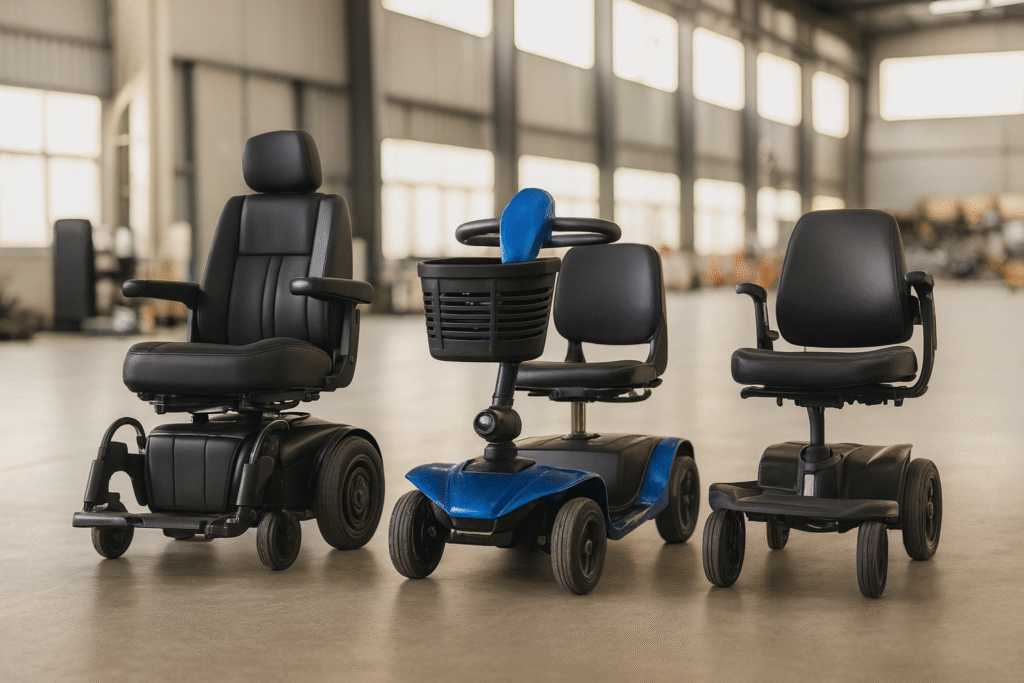
What Are Brain-Computer Interfaces?
Brain-computer interfaces are systems that allow users to control devices using signals from their brain, often captured through non-invasive methods like EEG headsets. These systems bypass traditional input methods like joysticks or buttons, offering hands-free control of technology.
In the context of mobility, BCIs can be used to steer, stop, or adjust electric wheelchairs using intentional thought patterns. This is particularly valuable for individuals with high-level spinal cord injuries, neurodegenerative diseases, or conditions like ALS.
How Smart Wheelchairs Work with BCIs
Smart wheelchairs are already integrating features such as:
- Obstacle detection
- Automated braking
- Voice control
- Environmental mapping (via LiDAR or cameras)
When paired with BCI input, the wheelchair becomes a co-pilot, interpreting user intention and translating it into movement with safety protocols in place. For example, a user may focus on a directional arrow on a screen, and the system translates that focus into a command to turn left — all while the chair autonomously avoids obstacles.
Current Limitations and Opportunities
While BCIs are still largely in the research or early commercialization stage, there are already successful pilot programs and case studies. According to Federici et al., real-world adoption will depend on several factors:
- Signal accuracy: EEG signals are noisy and require training time
- User fatigue: Cognitive control can be mentally tiring
- Cost: Current systems remain expensive and often not covered by insurance
- Support: Ongoing calibration and technical assistance are essential
For B2B suppliers, the opportunity lies in:
- Partnering with startups or research labs on pilot programs
- Educating customers about upcoming tech trends
- Positioning your brand as “future-ready” through thought leadership content
Use Cases with High Impact Potential
1. Progressive Conditions: As diseases like ALS advance, users lose the ability to control traditional interfaces. BCIs offer a future-proof pathway to maintain independence.
2. Pediatric Rehabilitation: Children with severe disabilities can begin using BCI-based systems early, adapting their use over time.
3. Long-Term Institutional Care: BCI-equipped wheelchairs reduce reliance on staff, giving users greater autonomy and reducing workload on caregivers.
Bridging Today and Tomorrow
B2B suppliers don’t need to wait for full-scale rollout to act:
- Offer “smart-ready” wheelchair platforms that can integrate BCI modules later
- Follow and share updates from major academic and engineering collaborations (e.g., EU Brain projects, NIH-funded research)
- Start conversations with rehab centers and clinicians about future needs
Ethical and Practical Considerations
As with any advanced tech in healthcare, suppliers should also consider:
- User consent and privacy: Especially when brainwave data is collected
- Ease of use: Systems must be user-friendly even for those with cognitive impairments
- Fallback options: Every smart system needs a reliable manual override
Conclusion
Brain-computer interfaces are no longer just science fiction—they’re part of the emerging future of mobility. For B2B suppliers, understanding these technologies today means preparing for tomorrow’s market shifts.
By exploring partnerships, building adaptable products, and staying informed, your business can play a key role in shaping assistive tech that empowers users in revolutionary new ways.




 English
  Deutsch
  Dansk
Dansk  Nederlands
  Suomi
Suomi  Français
  Bahasa Indonesia
  Italiano
  日本語
日本語  한국어
한국어  Norsk bokmål
  Polski
  Português do Brasil
  Русский
  Español
  Svenska
  ไทย
ไทย  Türkçe
  Tiếng Việt