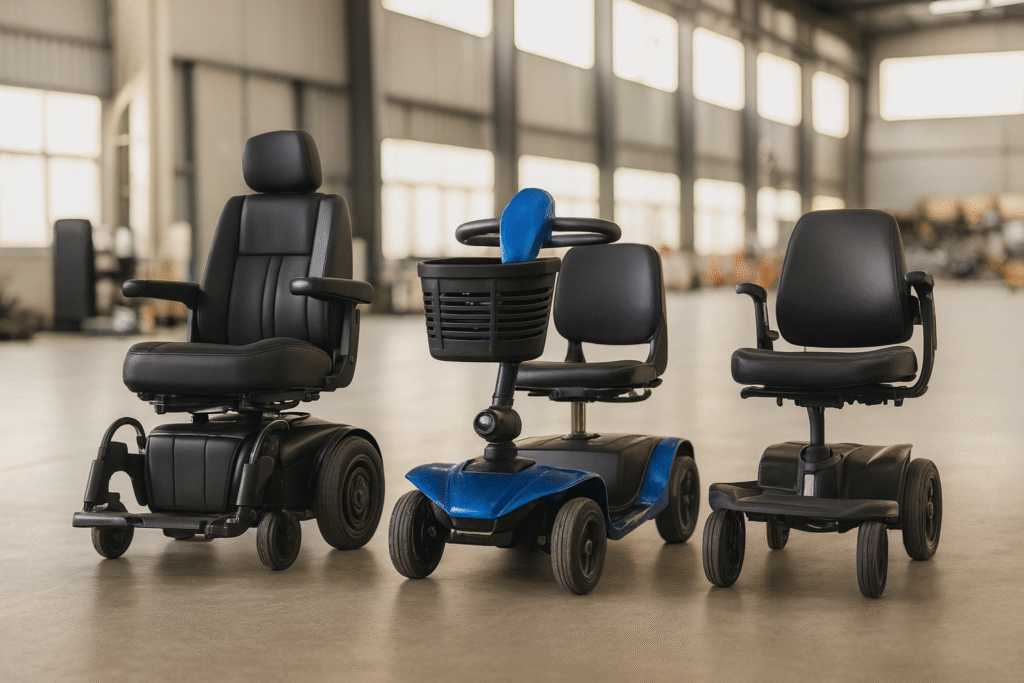
UK Mobility Market 2026: Sourcing Guide for British Wheelchair Distributors
Quick Answer: The UK mobility market is projected to reach USD 70 million for mobility scooters alone in 2026, driven by an aging population of 12+ million people over 65. For wheelchair distributors sourcing from international manufacturers, success depends on understanding MHRA registration requirements, UKCA marking (mandatory since January 2026), import duties, and building relationships with certified OEM/ODM suppliers who can navigate post-Brexit regulatory complexity.
UK Mobility Market Size and Growth Potential
The United Kingdom represents one of Europe’s most significant mobility equipment markets, holding approximately 18% of the European mobility scooter market share. According to Fortune Business Insights, the UK mobility scooters market is projected to reach USD 0.07 billion (approximately £55 million) in 2026, as part of a broader European market valued at USD 0.57 billion. The global mobility scooters market itself was valued at USD 1.59 billion in 2025 and is expected to grow to USD 3.43 billion by 2034, registering a CAGR of 9.08%.
Beyond scooters, the UK wheelchair market is substantial. Data from ClinMed International Library indicates that approximately 300,000–350,000 mobility scooters were in use in the UK as of 2017, a figure that has grown significantly since. The UK’s aging population — with over 19% of residents aged 65 and above — creates sustained demand for both wheelchairs and mobility scooters. According to industry research, there are over 7,400 mobility equipment suppliers operating in the United Kingdom as of March 2026, ranging from large national chains like Eden Mobility (47 stores) to independent local retailers.
For distributors and importers, this market structure presents both opportunity and challenge. The consolidation trend — exemplified by Eden Mobility’s nearly 50% growth in under two years through private equity backing — signals that scale matters. However, independent retailers still thrive by offering personalised service and specialised product ranges, creating viable distribution channels for wheelchair importers who can supply differentiated products.
For those looking to enter or expand in this market, understanding the OEM/ODM services available from international manufacturers is essential for building a competitive product portfolio.
MHRA Registration Requirements for Medical Device Importers
Post-Brexit, the Medicines and Healthcare products Regulatory Agency (MHRA) has become the sole regulatory body for medical devices placed on the UK market. For wheelchair distributors importing powered mobility devices, MHRA registration is a critical compliance step.
Who Must Register?
All manufacturers, importers, and distributors placing medical devices on the UK market must register with the MHRA. Electric wheelchairs classified as Class I medical devices under the UK Medical Devices Regulations 2002 (as amended) require registration before they can be legally sold. The registration process involves:
- Manufacturer registration: International manufacturers must appoint a UK Responsible Person (UKRP) who is established in the UK. The UKRP acts as the liaison between the manufacturer and MHRA, responsible for regulatory compliance documentation and communication.
- Device registration: Each device must be individually registered with the MHRA before placement on the UK market. This requires submitting device specifications, intended use, and conformity assessment documentation.
- Import registration: Importers must verify that manufacturers have completed their registrations and must maintain records of all imported devices for traceability.
Costs and Timelines
MHRA manufacturer registration costs £240 per year, with an additional fee of £70 per device registration. Processing times typically range from 5 to 10 working days, though complex submissions may take longer. Distributors should factor 4–8 weeks into their go-to-market timeline for regulatory compliance alone.
Understanding quality certifications is crucial when selecting manufacturing partners, as they directly impact MHRA registration success rates.
UKCA Marking: The Post-Brexit Certification Standard
Since January 1, 2026, UKCA (UK Conformity Assessed) marking has been fully mandatory for products placed on the Great Britain market (England, Scotland, and Wales). CE marking is no longer accepted for most products in GB, with Northern Ireland maintaining special transitional arrangements under the Windsor Framework.
UKCA vs CE Marking: Key Differences
| Aspect | UKCA Marking | CE Marking |
|---|---|---|
| Applicable Market | Great Britain (England, Scotland, Wales) | EU 27 + EEA |
| Regulatory Basis | UK Regulations (UKSI series) + BS Standards | EU Directives + EN Standards |
| Certification Body | UK Approved Body | EU Notified Body |
| Authorised Representative | UK Responsible Person (mandatory for non-UK companies) | EU Authorised Representative |
| 2026 Status | Fully mandatory | Invalid in GB; valid in Northern Ireland until 2029 |
Practical Steps for Wheelchair Distributors
For distributors importing electric wheelchairs and mobility scooters into the UK, achieving UKCA compliance requires:
-
Identify applicable UK regulations: Electric wheelchairs fall under the UK Medical Devices Regulations 2002 (as amended) and may also require compliance with the Electromagnetic Compatibility Regulations 2016 and the Electrical Equipment (Safety) Regulations 2016.
-
Conformity assessment: Depending on the device classification, this may involve self-declaration for low-risk products or third-party testing by a UK Approved Body for higher-risk categories.
-
Testing to British Standards: Products must be tested to BS EN standards, including:
- BS EN 12184 (Electric wheelchairs, scooters, and battery chargers)
- BS EN 12182 (Technical aids for disabled persons — test methods)
- BS EN 1041 (Information supplied by the manufacturer)
-
Technical documentation: Compile a comprehensive technical file including design specifications, risk assessments, test reports, and a UK Declaration of Conformity (UK DoC). All documentation must be in English and retained for at least 10 years.
-
Appoint a UK Responsible Person: Non-UK manufacturers must appoint a UKRP. Failure to do so can result in fines of up to £20,000 and product seizure.
Distributors should note that while some CE test data can be reused for UKCA certification, it requires review and supplementary testing by a UK Approved Body. The process cannot simply transfer CE reports to UKCA — additional BS standard difference testing is typically required.
Import Duties, Tariffs, and VAT Considerations
Understanding the UK’s import duty structure is essential for wheelchair distributors to accurately calculate landed costs and maintain competitive pricing.
Customs Duty Rates
Under the UK Global Tariff, most medical and rehabilitation equipment, including wheelchairs, qualify for reduced or zero-duty rates when imported under the correct commodity codes:
- Manual wheelchairs (HS code 8713.10.00.00): 0% duty
- Powered wheelchairs and mobility scooters (HS code 8713.90.00.00): 0% duty
- Wheelchair parts and accessories (HS code 8714.19.00.00): Typically 0–4% duty
The zero-duty rate for wheelchairs reflects the UK’s commitment to keeping assistive medical devices affordable. However, distributors must ensure correct HS code classification, as incorrect classification can lead to duty overpayment or customs penalties.
VAT Treatment
Wheelchairs and mobility scooters designed solely for use by disabled persons qualify for VAT zero-rating under HMRC Notice 701/7 (VAT reliefs for disabled people). This means:
- Zero-rated sales: No 20% VAT is charged on qualifying products sold to eligible disabled persons
- Zero-rated imports: Import VAT is not charged when goods meet the eligibility criteria and the importer declares VAT relief at customs
For distributors, this creates a significant pricing advantage. Products that might retail at £600–£800 before VAT relief effectively cost eligible buyers £480–£640. However, the zero-rating applies only to products designed solely for disabled use — general-purpose mobility devices may not qualify.
Additional Import Costs
Beyond customs duties, distributors should budget for:
- Customs broker fees: £50–£150 per shipment
- Port handling charges: £75–£200 depending on port and container size
- ** inland transport**: Variable based on delivery location
- Product liability insurance: £500–£2,000 annually for typical SME distributors
Key UK Mobility Trade Shows and Exhibitions
Trade shows remain the primary venue for wheelchair distributors to evaluate suppliers, discover new products, and build industry relationships. The UK hosts several major mobility events:
Naidex
Naidex is the UK’s largest event dedicated to the disability, independent living, and healthcare sectors. Held annually in Birmingham, it attracts over 8,000 visitors including retailers, distributors, healthcare professionals, and end users. For wheelchair distributors, Naidex offers direct access to manufacturers showcasing their latest products, networking opportunities with potential retail partners, and insights into emerging market trends.
OTAC (Occupational Therapy Adaptation Conference)
Running multiple events across UK cities throughout the year, OTAC focuses on equipment for occupational therapists and healthcare professionals. While smaller than Naidex, these events provide distributors with direct access to clinical decision-makers who influence product purchasing in the NHS and local authority contexts.
Rehacare International (Düsseldorf, Germany)
Although held in Germany, Rehacare is the most important European trade show for wheelchair distributors serving the UK market. Many UK distributors attend Rehacare to source new products and meet with international manufacturers, particularly Chinese OEM/ODM suppliers who exhibit at this event. The show features over 750 exhibitors from 40+ countries and attracts 40,000+ visitors.
For distributors planning their trade show calendar, our trade shows resource provides a comprehensive guide to global mobility exhibitions where you can connect with certified manufacturers.
Selecting the Right Manufacturing Partner for the UK Market
Choosing a manufacturing partner capable of meeting UK regulatory requirements is perhaps the most critical decision a distributor will make. Key evaluation criteria include:
Regulatory Compliance Capability
Your manufacturer must demonstrate:
- UKCA certification or a clear pathway to achieving it
- Experience with MHRA registration processes
- Willingness to support appointment of a UK Responsible Person
- Full technical documentation in English
- BS EN standard test reports from accredited laboratories
Product Range and Customisation
The UK market demands diverse product offerings. Distributors should seek manufacturers offering:
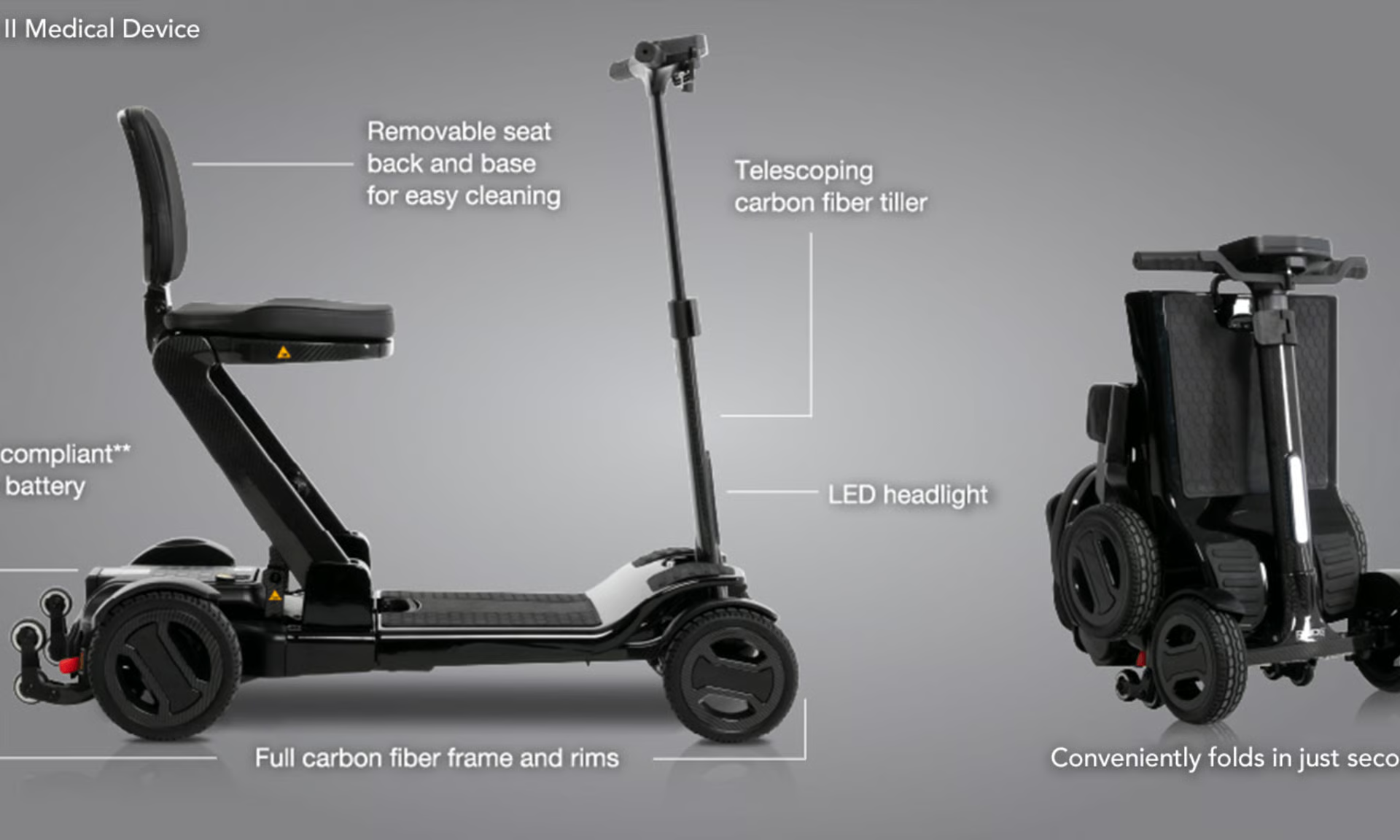
- Folding electric wheelchairs: Popular for transport and storage in compact UK homes
- Lightweight models: Carbon fiber and aluminum frame options meeting BS EN 12184 standards
- Mobility scooters: Class 2 (pavement, 4 mph) and Class 3 (road-legal, 8 mph) variants
- OEM/ODM capabilities: Custom branding, colour schemes, and specification modifications for the UK market
Supply Chain and Logistics
Reliable supply chain management is essential for maintaining stock levels and meeting seasonal demand peaks. Key considerations include:
- Production lead times: 30–60 days for standard products, 60–90 days for custom OEM orders
- MOQ flexibility: Manufacturers willing to accept smaller initial orders (5–30 units) for new distributor relationships
- Export experience: Demonstrated track record shipping to the UK with proper documentation
- Quality control: Pre-shipment inspection protocols and batch testing
When evaluating potential partners, consider why choosing an established manufacturer with proven export experience significantly reduces compliance and quality risks.
Competitive Landscape: UK Mobility Distributor Opportunities
The UK mobility distribution landscape is undergoing significant consolidation, creating both challenges and opportunities:
Market Consolidation Trends
Eden Mobility’s acquisition of Derbyshire Mobility in 2026, bringing its total to 47 stores, exemplifies the consolidation driven by private equity investment. This trend means:
- Larger distributors increasingly dominate the national market, making it harder for new entrants to compete on scale
- Independent retailers remain viable for specialised products and personalised service
- Online channels are growing rapidly, with e-commerce accounting for an increasing share of mobility equipment sales
Competitive Gaps for Importers
Despite consolidation, several market gaps remain:
- Premium lightweight products: Carbon fiber wheelchairs and ultra-light folding models are underserved in the UK
- Stair climbing solutions: Limited UK distribution for electric stair climbing wheelchairs, a growing product category valued at USD 1.12 billion globally in 2025
- All-terrain wheelchairs: Niche but growing demand from outdoor enthusiasts and rural users
- OEM-branded products: Independent retailers seek unique product lines to differentiate from national chains
For distributors seeking to capitalise on these gaps, becoming a distributor with a manufacturing partner who offers exclusive territorial rights and comprehensive marketing support is a strategic entry point.
Building a Successful UK Distribution Business
Pricing Strategy
With zero-duty imports and VAT zero-rating, UK distributors enjoy favourable cost structures. Typical retail margins for mobility equipment range from 30% to 55%, depending on product category and channel:
| Product Category | Typical Retail Price (£) | Distributor Margin |
|---|---|---|
| Folding electric wheelchair | 800–1,500 | 35–45% |
| Lightweight manual wheelchair | 150–400 | 30–40% |
| Class 2 mobility scooter | 600–1,200 | 35–45% |
| Class 3 mobility scooter | 1,200–2,500 | 40–50% |
| Carbon fiber wheelchair | 2,000–4,000 | 40–55% |
Assistenza post-vendita
UK consumers have strong protections under the Consumer Rights Act 2015, including 14-day cooling-off periods for distance sales. Distributors must provide:
- Minimum 12-month warranty on all powered mobility products
- Accessible spare parts supply (minimum 5-year availability)
- Technical support and repair services
- Product liability insurance coverage
NHS and Local Authority Contracts
The NHS operates a wheelchair service that provides equipment to eligible users free of charge. While primarily sourced through framework agreements with large manufacturers, smaller distributors can supply through:
- NHS Supply Chain: Competitive tendering for specific product categories
- Local authority direct payments: Users receiving personal budgets can purchase from any approved supplier
- Charity partnerships: Organisations like Motability and Whizz-Kidz procure from various suppliers
FAQ
Do I need UKCA marking to sell wheelchairs in the UK?
Yes. Since January 1, 2026, UKCA marking is fully mandatory for products placed on the Great Britain market. CE marking is no longer accepted in England, Scotland, and Wales (though Northern Ireland has transitional arrangements). Electric wheelchairs must comply with UK Medical Devices Regulations 2002 and carry UKCA marking before sale.
What is the import duty for electric wheelchairs into the UK?
Electric wheelchairs and mobility scooters imported under HS code 8713.90.00.00 qualify for 0% customs duty under the UK Global Tariff. Manual wheelchairs (HS 8713.10.00.00) are also zero-rated. This makes the UK an attractive market for wheelchair importers, as landed costs are primarily driven by shipping and compliance rather than tariff barriers.
How long does MHRA registration take?
MHRA manufacturer registration typically takes 5–10 working days, while individual device registration may take an additional 5–10 working days. However, the complete compliance process — including UKCA conformity assessment, testing, and documentation — generally requires 8–12 weeks. Distributors should begin the process well before planned product launches.
Can I use my existing CE certification for the UK market?
Not directly. While some CE test data can be reused for UKCA certification, you must undergo additional testing by a UK Approved Body to verify compliance with BS EN standards. The CE-to-UKCA transition requires a new UK Declaration of Conformity and appointment of a UK Responsible Person. Complex products such as powered wheelchairs may require 4–12 weeks for full recertification.
What is a UK Responsible Person and do I need one?
A UK Responsible Person (UKRP) is a person or company established in the UK that acts on behalf of a non-UK manufacturer to ensure compliance with UK regulations. If you are importing products from a manufacturer outside the UK, a UKRP is mandatory. Failure to appoint one can result in fines up to £20,000 and products being barred from the market.
Conclusione
The UK mobility market offers substantial opportunities for wheelchair distributors who can navigate post-Brexit regulatory requirements. With zero import duties, VAT zero-rating for disability equipment, and a market projected to grow steadily through 2034, the financial fundamentals are strong. However, success requires careful attention to MHRA registration, UKCA certification, and selecting manufacturing partners with proven compliance capabilities.
The market’s consolidation trend means new entrants must differentiate through specialised product ranges, strong after-sales support, and strategic partnerships with certified OEM/ODM manufacturers. By focusing on underserved segments — lightweight carbon fiber models, stair climbing solutions, and all-terrain wheelchairs — distributors can build profitable niches within this growing market.
Ready to source wheelchairs for the UK market? Request a Quote from 1000Mobility, a certified manufacturer with UKCA-ready products, comprehensive OEM/ODM services, and proven export experience to the UK and European markets. Get wholesale pricing on our full range of electric wheelchairs, mobility scooters, and specialised mobility solutions.
By the 1000Mobility Editorial Team
Interested in Wholesale Pricing?
Get OEM/ODM details, product specifications, and wholesale pricing within 24 hours.
Or send us a message directly:
 English
  Deutsch
  Français
  Español
  Italiano
  العربية
  Русский