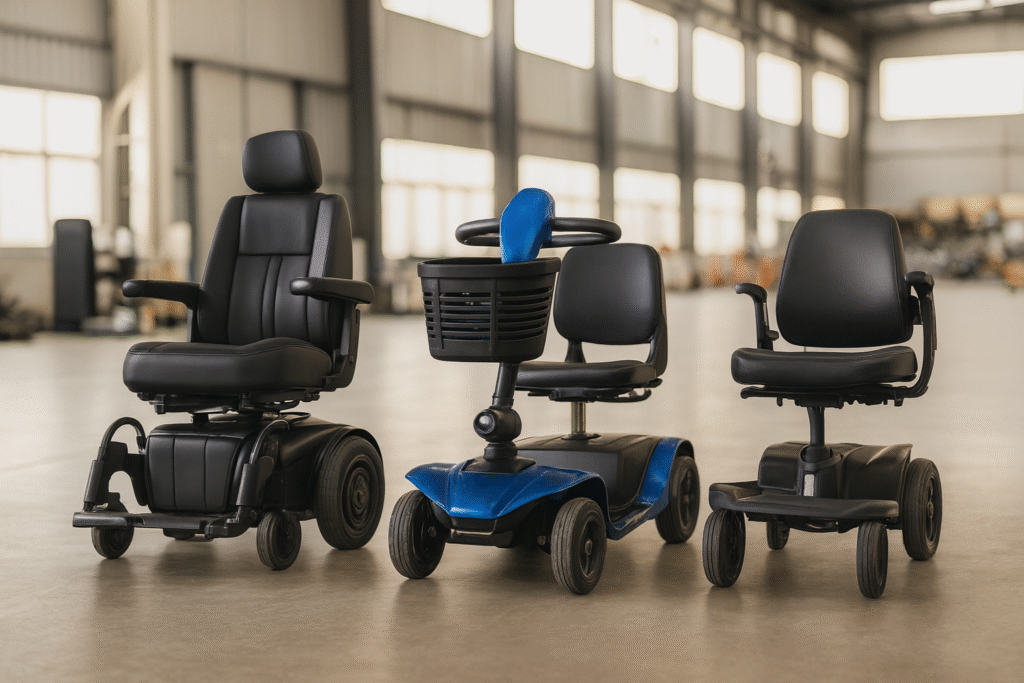
GCC Middle East Wheelchair Market: SFDA, MOHAP & Import Registration Guide (2026)
Last updated: November 2026
Why the GCC Wheelchair Market Matters for B2B Exporters
The Gulf Cooperation Council — Saudi Arabia, UAE, Kuwait, Qatar, Bahrain, and Oman — represents one of the fastest-growing medical device markets in the world. Saudi Arabia alone imported over $1.2 billion in medical devices in 2024, with mobility and rehabilitation equipment accounting for approximately $85 million of that total.
Three factors drive wheelchair demand in the GCC:
- Aging population: Saudi Arabia’s population over 65 is projected to grow from 4.8% (2020) to 9.6% by 2035, according to Saudi General Authority for Statistics.
- Disability prevalence: The Saudi Ministry of Health reports approximately 4.8% disability prevalence, with mobility disabilities being the largest category.
- Healthcare expansion: Saudi Vision 2030 includes $65+ billion in healthcare infrastructure investment, including new rehabilitation centers and home healthcare programs.
Despite this demand, the GCC market remains underserved by direct manufacturer content. Most wheelchair suppliers in the region are trading companies with limited technical expertise — creating an opportunity for manufacturers who can provide compliance documentation and Arabic-language support.
If you serve Arabic-speaking markets, our Arabic-language wheelchair catalog provides product information in Arabic for distributors and end users.
GCC Medical Device Regulatory Overview
| Country | Regulator | Registration Type | Local AR Required? | Arabic Labeling? | Typical Timeline |
|---|---|---|---|---|---|
| Saudi Arabia | SFDA (Saudi Food & Drug Authority) | MDMA (Medical Device Marketing Authorization) | Yes | Yes | 6–12 months |
| UAE | MOHAP (Ministry of Health & Prevention) | Device Registration | Yes (for Class IIa+) | Yes (bilingual) | 3–6 months |
| Kuwait | MoH (Ministry of Health) | MoH Registration | Yes | Preferred | 4–8 months |
| Qatar | MoPH (Ministry of Public Health) | MoPH Registration | Yes | Preferred | 3–6 months |
| Bahrain | NHRA (National Health Regulatory Authority) | NHRA Registration | Yes | Preferred | 3–6 months |
| Oman | MoH (Ministry of Health) | MoH Registration | Yes | Preferred | 4–8 months |
Important: The GCC Unified Registration System (GSO) was proposed to allow single-registration access across all six countries. As of 2026, this system is not yet operational for medical devices. Each country requires its own registration, though some accept SFDA or MOHAP approval as supporting documentation.
Saudi Arabia SFDA MDMA Registration: Step-by-Step
Saudi Arabia is the largest GCC market and has the most structured registration process. The SFDA regulates medical devices under the Medical Devices Interim Regulation (MDSR), aligned with IMDRF (International Medical Device Regulators Forum) principles.
Step 1: Classify Your Wheelchair
| Wheelchair Type | Risk Class | Examples |
|---|---|---|
| Class I (Low Risk) | Class I | Manual wheelchairs without powered functions |
| Class IIa (Low-Moderate) | Class IIa | Electric wheelchairs (non-invasive, external use) |
| Class IIb (Moderate-High) | Class IIb | Electric wheelchairs with patient-lift function |
| Class III (High Risk) | Class III | Rarely applies to standard wheelchairs |
Most electric wheelchairs classify as Class IIa, which requires full MDMA registration. Manual wheelchairs may qualify for Class I, which has a simplified registration path.
Step 2: Appoint a Saudi Authorized Representative (AR)
You cannot register a medical device in Saudi Arabia without a local AR. The AR acts as your legal representative for all SFDA communications and is responsible for post-market surveillance.
AR requirements:
- Must be a Saudi-registered company
- Must hold a valid medical device establishment license from SFDA
- Cannot represent competing manufacturers in the same device category
- Requires a formal AR agreement signed by both parties
AR cost: Typically $3,000–$8,000/year, depending on the number of devices registered.
Step 3: Prepare the Technical File
| Document | Description | Notes |
|---|---|---|
| Device description | Full specifications, intended use, variants | Include all wheelchair models |
| Risk analysis | ISO 14971 risk management report | Required for Class IIa+ |
| Clinical evaluation | Clinical data or equivalence claim | Published studies or predicate device |
| Biocompatibility | ISO 10993 for patient-contact materials | Seat, armrest, handle materials |
| Electrical safety | IEC 60601-1 + IEC 60601-1-21 | For electric wheelchairs |
| EMC test report | IEC 61000 series | Electromagnetic compatibility |
| Software documentation | IEC 62304 (if applicable) | For programmable controllers |
| Labeling | Arabic + English labels, IFU | Bilingual labeling mandatory |
| Post-market plan | PMS plan + vigilance reporting procedure | SFDA-compliant format |
| ISO 13485 certificate | QMS certificate from accredited body | Notarized + authenticated |
Step 4: Submit via Saudi Business Center (SBC)
| Submission Step | Platform | Timeline |
|---|---|---|
| Create SBC account | sbc.sa | 1–2 days |
| AR establishment license verification | SFDA portal | 1–2 weeks |
| Technical file upload | SFDA e-services | 1–2 weeks (review) |
| SFDA review and deficiency letter | SFDA | 2–4 months |
| Response to deficiencies | Your AR | 1–2 months |
| MDMA issuance | SFDA | 1–2 months |
| Total estimated timeline | 6–12 months |
Step 5: Arabic Labeling Requirements
Saudi Arabia requires bilingual (Arabic + English) labeling on all imported medical devices. For wheelchairs, the minimum labeling includes:
- Product name in Arabic and English
- Manufacturer name and address
- AR name and address (in Saudi Arabia)
- Model number and batch/lot number
- Manufacturing date and expiry (if applicable)
- Weight capacity and key specifications
- Warning statements in Arabic
- Storage and handling conditions
- CE/FDA/SFDA marking (as applicable)
Tip: Translate your product labels and Instructions for Use (IFU) into Arabic at the manufacturing stage. Retrofitting Arabic labels after import requires relabeling at a customs-bonded warehouse, which adds $5–12/unit and 3–5 days of delay.
For quality system verification before registration, our ISO 13485 factory audit checklist covers the QMS documentation that SFDA reviewers will examine.
UAE MOHAP Registration
The UAE’s MOHAP registration is generally faster than SFDA and accepts more international certifications as evidence.
| Requirement | Details |
|---|---|
| Local AR/Agent | UAE-registered company with DHCA or MOHAP license |
| Device classification | Per UAE Medical Device Regulation (aligned with EU MDR) |
| Technical file | Similar to SFDA requirements |
| Accepted certifications | CE marking, FDA 510(k), ISO 13485 (as supporting evidence) |
| Labeling | Bilingual Arabic + English |
| Timeline | 3–6 months |
| Cost | $4,000–$12,000 per device (including AR fees) |
Advantage: If you already have CE marking or FDA 510(k) clearance, MOHAP registration is significantly faster because the technical file review is abbreviated. The UAE accepts these certifications as primary evidence of safety and performance.
GCC Import Documentation Checklist
Beyond medical device registration, importing wheelchairs into GCC countries requires standard trade documentation:
| # | Document | SFDA (KSA) | MOHAP (UAE) | MoH (Kuwait) |
|---|---|---|---|---|
| 1 | Commercial invoice (authenticated) | Yes | Yes | Yes |
| 2 | Certificate of Origin (CoO) | Yes | Yes | Yes |
| 3 | Packing list | Yes | Yes | Yes |
| 4 | Bill of Lading / Airway Bill | Yes | Yes | Yes |
| 5 | SFDA MDMA certificate | Yes | No | No |
| 6 | MOHAP registration certificate | No | Yes | No |
| 7 | Insurance certificate | Yes | Yes | Yes |
| 8 | Arabic translation of commercial docs | Yes | Yes | Yes |
| 9 | Free Sale Certificate (FSC) | Recommended | Recommended | Yes |
| 10 | ISO 13485 certificate (notarized) | Yes | Recommended | Recommended |
| 11 | Halal compliance (not applicable) | N/A | N/A | N/A |
| 12 | SASO conformity certificate | Yes (for electrical) | No | No |
Note: Electric wheelchairs with batteries may require SASO (Saudi Standards, Metrology and Quality Organization) conformity assessment in addition to SFDA registration. This is separate from medical device registration and applies to electrical safety standards. Check the SASO SABER platform for your specific product category.
Market Entry Strategy: Which GCC Country First?
| Factor | Saudi Arabia | UAE | Kuwait/Qatar |
|---|---|---|---|
| Market size | Largest ($85M+ mobility) | Medium ($35M+) | Smaller ($8–15M each) |
| Registration timeline | 6–12 months | 3–6 months | 4–8 months |
| Registration cost | $8,000–$20,000 | $4,000–$12,000 | $5,000–$15,000 |
| AR cost (annual) | $3,000–$8,000 | $2,000–$5,000 | $2,000–$5,000 |
| Government tender volume | High (MoH tenders) | Medium | Low-Medium |
| Private market demand | High (home healthcare) | High (rehabilitation centers) | Medium |
| Accepts CE/FDA as shortcut | Limited | Yes (major advantage) | Partially |
| Arabic labeling mandatory | Yes | Yes (bilingual) | Preferred |
Recommended entry sequence:
- UAE first — Fastest registration (3–6 months), accepts CE/FDA, strong private market
- Saudi Arabia second — Largest market, higher barrier but worth the investment
- Kuwait/Qatar third — Once you have SFDA + MOHAP, smaller markets accept these as supporting evidence
FAQ
Conclusione
The GCC wheelchair market offers significant growth potential for manufacturers who can navigate the regulatory landscape. Saudi Arabia’s SFDA registration is the highest barrier but unlocks the largest market, while the UAE’s MOHAP registration — which accepts CE and FDA certifications — offers the fastest entry point.
For manufacturers with existing CE marking or FDA 510(k) clearance, the UAE is the recommended first market (3–6 months registration), followed by Saudi Arabia (6–12 months), and then smaller GCC states. Arabic labeling and a qualified local Authorized Representative are non-negotiable requirements across all six countries.
Need SFDA/MOHAP-compliant wheelchairs with Arabic labeling support? Contact our B2B team for electric wheelchairs, mobility scooters, and rollator walkers with CE/FDA certification, ISO 13485 QMS, and bilingual documentation support for GCC market entry.
Interested in Wholesale Pricing?
Get OEM/ODM details, product specifications, and wholesale pricing within 24 hours.
Or send us a message directly:
 English
 Deutsch
 Français
 Español
 Italiano
 العربية
 Русский