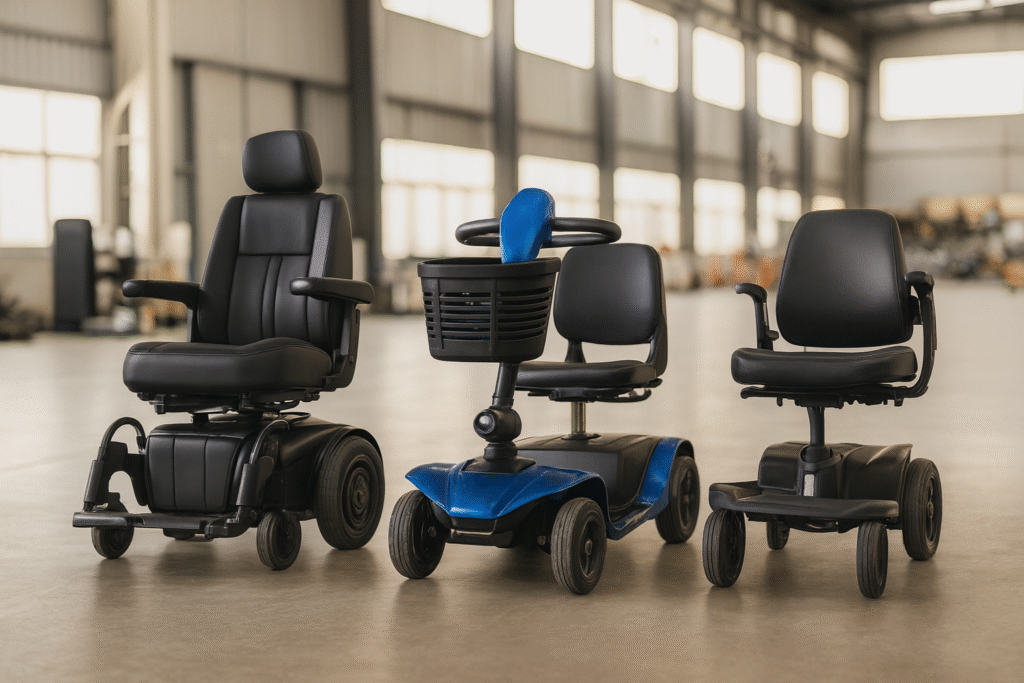
Does Medicare Cover Electric Wheelchairs in 2026? Complete Guide
Last updated: November 2026
Medicare’s power wheelchair coverage rules changed significantly with the Competitive Bidding program and recent payment reforms. This guide explains the current process, what’s covered, what isn’t, and how to maximize your benefits in 2026.
Medicare Power Wheelchair Coverage Criteria
Medicare requires all five conditions below to be met:
| Requirement | Details | Who Does It |
|---|---|---|
| Mobility evaluation | Face-to-face exam documenting why you can’t use a cane, walker, or manual wheelchair | Your doctor |
| 7-element prescription | Diagnosis, mobility limitation, equipment needed, duration, etc. | Your doctor |
| Supplier enrollment | Must be a Medicare-enrolled supplier in your Competitive Bid area | CMS-approved supplier |
| Medical necessity | Cannot perform daily activities (toileting, feeding, dressing) without the device | Documented in medical records |
| Least costly alternative | Medicare pays for the cheapest option that meets your medical needs | CMS determines |
Important: “I want a lighter wheelchair” or “I want one that folds for travel” are convenience reasons, not medical necessity. Medicare will only approve upgrades if there’s a documented medical reason (e.g., you live in a narrow hallway requiring a specific turning radius).
Step-by-Step Process
Step 1: Schedule a Mobility Evaluation (Week 1)
- Book a face-to-face appointment with your doctor (not a telehealth visit)
- Bring a list of daily activities you struggle with
- Ask the doctor to document specific limitations (e.g., “cannot self-propel manual wheelchair due to bilateral upper extremity weakness”)
- The doctor must use specific clinical language — “needs a wheelchair” is not sufficient
Step 2: Get the 7-Element Order (Week 1-2)
The prescription must include all seven elements:
- Beneficiary name
- Date of order
- Detailed description of item (HCPCS code)
- Diagnosis/condition justifying need
- Estimated duration of need
- Signature of treating physician
- Date of physician signature
Step 3: Work with a Medicare Supplier (Week 2-4)
- Find a Medicare-enrolled supplier in your area at Medicare.gov Supplier Directory
- The supplier verifies your prescription and submits to Medicare
- You choose from the supplier’s inventory of CMS-approved models
- The supplier handles all billing
Step 4: Delivery and Fitting (Week 4-6)
- Supplier delivers the wheelchair and completes setup
- A representative adjusts seat height, joystick position, and programming
- You sign a delivery receipt
- Medicare begins paying (rental or purchase)
What Medicare Pays in 2026
| Coverage Type | Medicare Pays (80%) | You Pay (20%) + Deductible | Total Annual Cost to You |
|---|---|---|---|
| Power wheelchair rental (13 months) | ~$350/month × 80% | ~$70/month + deductible | ~$1,017 + $257 deductible |
| Power wheelchair purchase | Lump sum ~$3,500-$6,000 | 20% = $700-$1,200 + deductible | $957-$1,457 |
| Group 2 (standard power) | Up to ~$6,000 | Up to $1,200 | Up to $1,457 |
| Group 3 (rehab power) | Up to ~$15,000 | Up to $3,000 | Up to $3,257 |
| Group 4 (heavy-duty) | Up to ~$20,000 | Up to $4,000 | Up to $4,257 |
Rental vs Purchase: Medicare’s default is a 13-month rental. After 13 months of rental payments, you own the wheelchair. If you need the chair for less than 13 months (e.g., recovering from surgery), rental is more cost-effective.
What Medicare Does NOT Cover
| Item | Reason | Typical Cost |
|---|---|---|
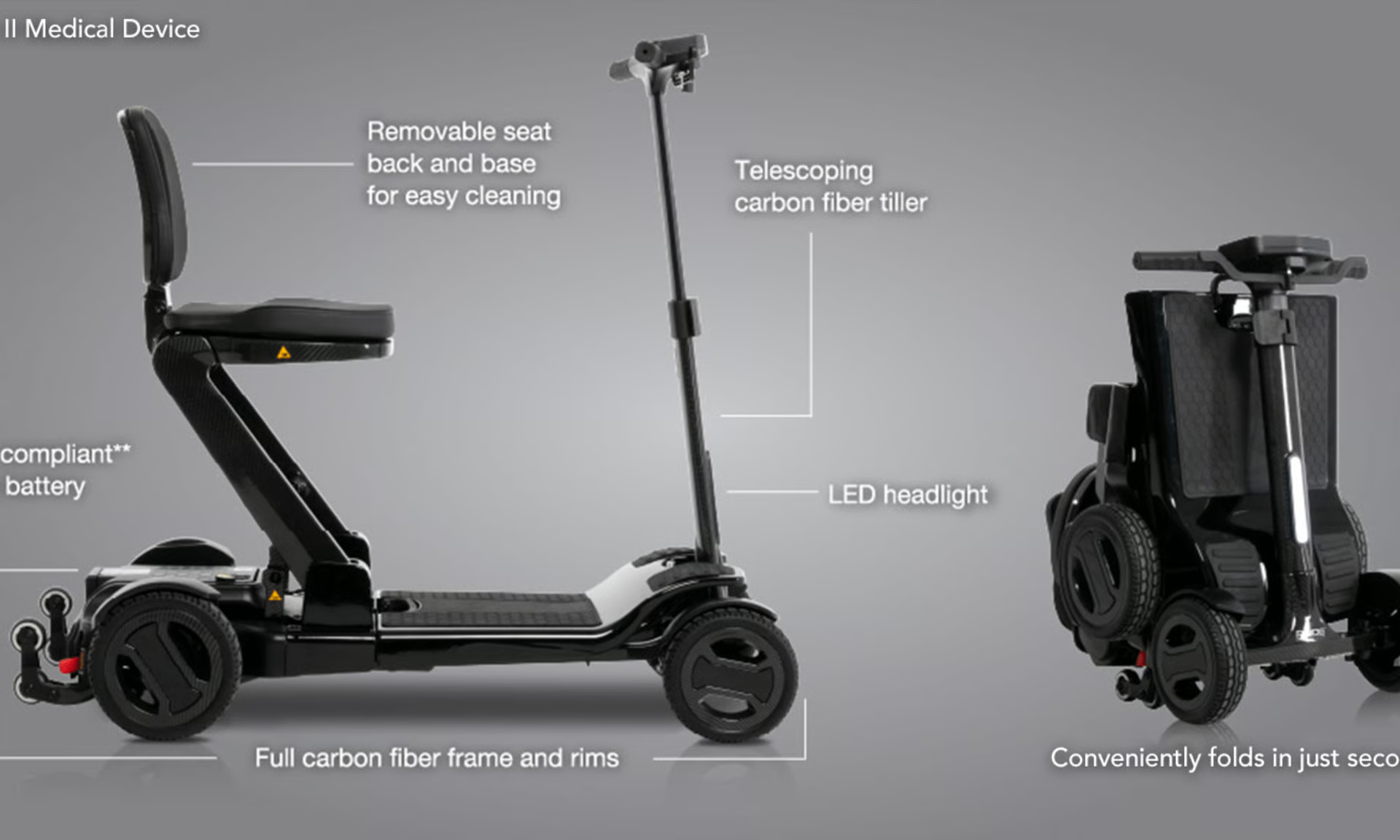
| Carbon fiber frame | “Convenience upgrade” — not medically necessary | $2,000-$5,000 |
| Travel/folding models | Usually not classified as Group 2+ | $1,500-$3,500 |
| Lithium battery upgrade | Lead-acid meets medical need | $200-$500 |
| Elevated leg rests | Only covered if prescribed for specific condition | $50-$150 |
| Custom seat cushion | Only covered with specific wound/prevention diagnosis | $100-$400 |
| Upholstery upgrades | Cosmetic only | $50-$200 |
| Smartphone app connectivity | Not recognized by CMS | $0-$100 |
Common Denial Reasons (and How to Avoid Them)
| Denial Reason | Frequency | How to Prevent |
|---|---|---|
| Insufficient documentation | 45% | Doctor must use specific clinical terms |
| No face-to-face exam | 20% | Schedule in-person visit, not telehealth |
| Wrong HCPCS code | 15% | Supplier selects correct code |
| Prior authorization not obtained | 10% | Submit prior auth for Group 3+ |
| “Convenience” not “medical necessity” | 10% | Frame all needs in clinical terms |
Prior Authorization: For Group 3 and above power wheelchairs, Medicare requires prior authorization before the supplier can deliver. This adds 2-4 weeks to the process. Your supplier handles this, but your doctor’s documentation must be thorough.
Medicare vs Private Insurance vs VA
| Funding Source | Coverage | Wait Time | Choice of Model |
|---|---|---|---|
| Medicare Part B | 80% after deductible | 4-6 weeks | Limited to supplier inventory |
| Medicare Advantage (Part C) | Varies by plan | 2-8 weeks | Plan-specific network |
| Private insurance | Varies widely | 2-12 weeks | Plan-specific |
| VA (veterans) | 100% if service-connected | 2-6 weeks | VA formulary |
| Medicaid | State-dependent | 1-6 months | State-approved models |
| Workers’ Comp | 100% if work-related | Varies | Any reasonable model |
FAQ
Can I buy a wheelchair online and get Medicare reimbursement?
No. Medicare requires you to use an enrolled Competitive Bid supplier. If you buy from Amazon or a non-enrolled retailer, Medicare will not reimburse you — even if the exact same model would have been covered through an approved supplier.
Does Medicare cover electric wheelchair repairs?
Yes, Medicare Part B covers 80% of repairs including parts and labor for DME you own. You must use a Medicare-enrolled supplier for repairs. Battery replacements are covered every 12 months if deemed medically necessary.
Can I upgrade to a better model and pay the difference?
Yes. This is called an “upgrade” — you pay the difference between the Medicare-approved amount and the cost of your preferred model. The supplier handles this with an Advance Beneficiary Notice (ABN) form.
How often will Medicare replace my power wheelchair?
Medicare expects a power wheelchair to last 5 years. You can request replacement after 5 years if the chair is beyond repair. If the chair is stolen or destroyed (fire, flood), Medicare may cover replacement sooner with a police report or insurance claim documentation.
Does Medicare cover electric wheelchair batteries?
Yes, batteries are covered as part of routine maintenance. Medicare covers battery replacement approximately every 12 months. You must use a Medicare-enrolled supplier — you cannot buy batteries at a store and submit for reimbursement.
What if my doctor says I need a specific feature that Medicare won’t cover?
Your doctor can write a detailed letter of medical necessity explaining why the standard option won’t work for your specific condition. This is called a “Detailed Written Order” (DWO). The supplier submits this with the claim. About 30-40% of appealed denials are overturned with adequate documentation.
Conclusione
Medicare electric wheelchair coverage in 2026 remains a structured but bureaucratic process. The keys to success are: get a thorough face-to-face mobility evaluation, use a Medicare-enrolled supplier, and frame all needs in clinical terms. If Medicare won’t cover the model you want, consider purchasing directly — our electric wheelchair collection includes models starting at $1,500, and our mobility scooter vs electric wheelchair guide can help you decide which type fits your needs.
Interested in Wholesale Pricing?
Get OEM/ODM details, product specifications, and wholesale pricing within 24 hours.
Or send us a message directly:
 English
 Deutsch
 Français
 Español
 Italiano
 العربية
 Русский