Carbon Fiber vs Aluminum Wheelchair: Which Frame Material Is Better? (2026 Guide)
Quick Answer: Carbon fiber wheelchair frames are 30-40% lighter than aluminum, offer 70-80% higher fatigue resistance, and dampen road vibrations more effectively. However, they cost 1.5-2x more upfront. For distributors and users prioritizing portability and long-term value, carbon fiber delivers a 30% lower total cost of ownership over 7 years. Aluminum remains the practical choice for budget-conscious buyers needing proven repairability and higher static load ratings.
Last updated: November 2026
Choosing the right frame material for a wheelchair is one of the most consequential decisions a distributor, healthcare provider, or end user can make. The material directly impacts weight, durability, ride comfort, maintenance costs, and ultimately the user’s quality of life. For B2B buyers sourcing wheelchairs at scale, it also affects warranty claims, customer satisfaction scores, and profit margins.
This guide provides a data-driven comparison of carbon fiber and aluminum wheelchair frames, drawing on peer-reviewed research, ANSI/RESNA testing data, and real-world manufacturing experience from 1000Mobility’s production lines.
Material Properties: Carbon Fiber vs Aluminum at a Glance
Carbon fiber reinforced polymer (CFRP) and aluminum alloy are the two dominant materials in modern wheelchair construction. Their fundamental material properties differ significantly, which translates directly into performance differences in finished products.
| Property | Carbon Fiber Composite | Aluminum Alloy (6061-T6) | Steel (AISI 4130) |
|---|---|---|---|
| Density (g/cm³) | 1.55–1.60 | 2.70 | 7.85 |
| Tensile Strength (MPa) | 600–1,600* | 310 | 560 |
| Specific Strength (Strength/Density) | 387–1,032 | 115 | 71 |
| Fatigue Limit (% of UTS) | ~70–80% | ~40–50% | ~50–60% |
| Vibration Damping | Excellent | Poor | Good |
| Corrosion Resistance | Immune | Moderate (requires anodizing) | Poor (rusts) |
*Directionally dependent. Carbon fiber is anisotropic — strength varies by fiber orientation. Data compiled from material science research and industry testing standards. Source: Wieczorek et al., Materials 2024 and manufacturer specifications.
The density difference is the foundation of the weight advantage: carbon fiber is approximately 42% lighter than aluminum by volume. But raw density alone doesn’t tell the full story. Carbon fiber’s specific strength — the ratio of strength to density — is 3-9 times higher than aluminum, meaning engineers can use less material to achieve the same structural performance.
Weight: How Much Lighter Is Carbon Fiber Really?
Weight is the most immediately noticeable difference between carbon fiber and aluminum wheelchairs. Every kilogram matters when a user or caregiver is lifting the chair into a car trunk, navigating airport security, or carrying it up stairs.
In controlled comparisons published in peer-reviewed research, an aluminum wheelchair had a total mass of approximately 11.6 kg, while two carbon fiber models weighed 8.2 kg and 7.8 kg respectively — a difference of 3-4 kg under identical configurations. Source: Gebrosky et al., 2019, ANSI/RESNA testing study.
For electric wheelchairs, the weight gap is equally significant. Typical carbon fiber electric wheelchair frames weigh 6-8 kg, compared to 10-14 kg for aluminum equivalents. This translates to total chair weights of 12-16 kg (carbon fiber) versus 18-25 kg (aluminum) — a difference that determines whether a single person can load the chair without assistance.
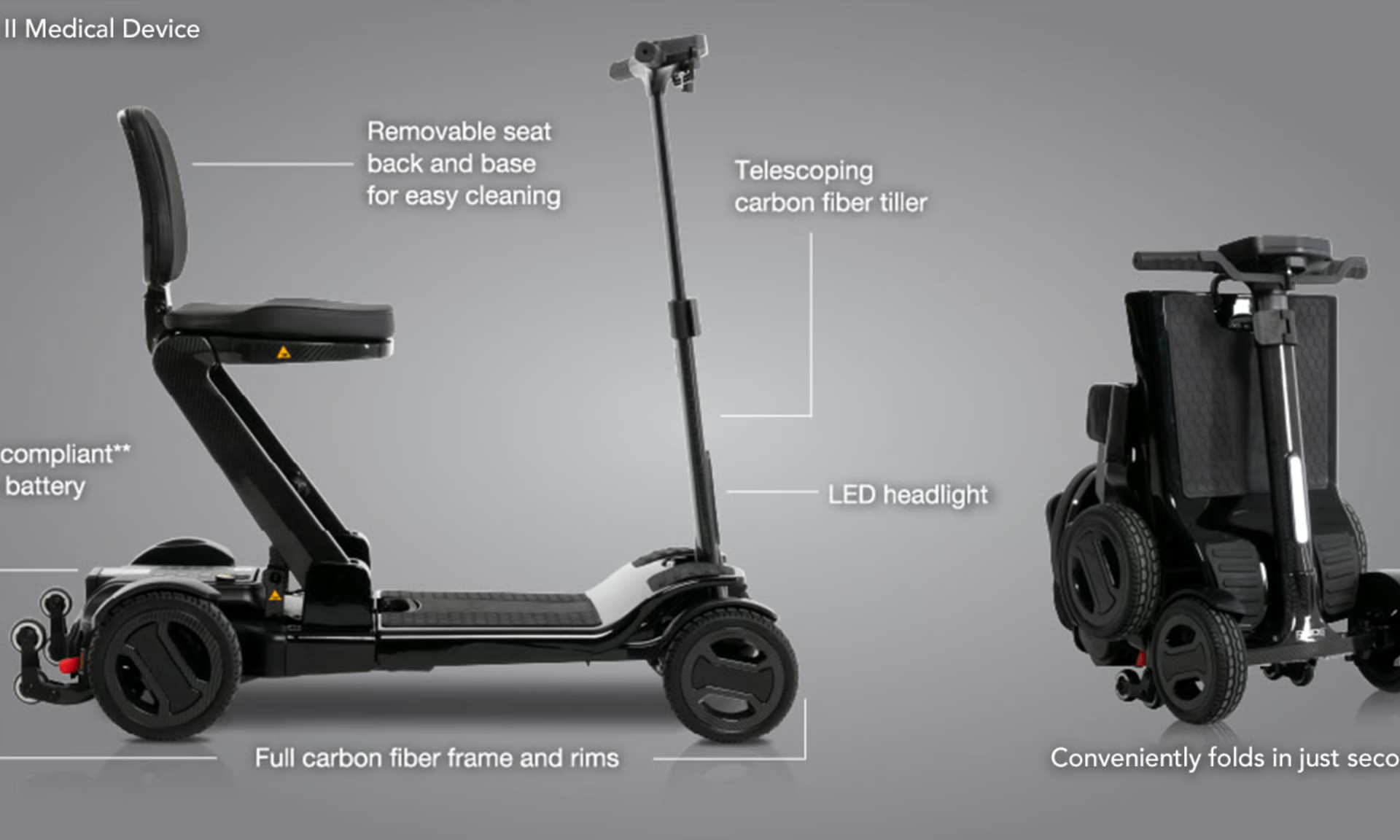
At 1000Mobility, our LUMA Carbon electric wheelchair weighs just 13.5 kg without the battery, making it one of the lightest carbon fiber power chairs in its class. This weight reduction directly enables single-handed car trunk loading — a capability that heavier aluminum models cannot match.
Durability and Fatigue Life: What ANSI/RESNA Testing Reveals
Durability is where the carbon fiber vs aluminum debate becomes most nuanced. Aluminum has a well-earned reputation for toughness — it can absorb impacts and deform plastically before failing. Carbon fiber, by contrast, does not typically show visible warning signs before failure, making proper engineering and testing critical.
However, the most rigorous independent testing available tells a compelling story. A 2019 study published in the journal Assistive Technology evaluated three full carbon fiber wheelchairs against ANSI/RESNA testing standards — the same standards used by the FDA and international regulators.
The results: carbon fiber frames survived more testing cycles than any other wheelchair type tested. The CFRP frames demonstrated unmatched structural durability, surviving hundreds of thousands of equivalent fatigue cycles without frame failure. However, the casters and rear tires failed at similar rates to other wheelchairs, indicating that component quality — not frame material — is the limiting factor for overall device longevity. Source: Gebrosky et al., “Comparison of carbon fibre and aluminium materials in the construction of ultralight wheelchairs,” 2019.
This finding has significant implications for B2B buyers: a carbon fiber frame will outlast an aluminum frame under repeated stress, but you must invest in quality components (casters, tires, bearings) to realize the full durability advantage.
Vibration Damping and Ride Comfort
Ride comfort is often overlooked in wheelchair specifications, but it directly impacts user health and satisfaction. Prolonged exposure to vibrations transmitted through the wheelchair frame can cause back pain, muscle fatigue, and even spinal compression over time.
A 2024 study published in the journal Materials measured vibration damping in wheelchairs with aluminum frames versus carbon fiber frames. Researchers attached accelerometers to seated users and applied controlled impulses to the rear wheels.
The findings were clear: carbon fiber frames dissipated mechanical energy significantly faster than aluminum. The damping decrement — a measure of how quickly vibrations decay — stabilized at 58-74% of total excitation duration for carbon fiber frames, compared to 85% for aluminum. This means carbon fiber frames absorb and neutralize road shock more rapidly, resulting in a smoother, quieter ride with less fatigue for the user. Source: Wieczorek et al., “Investigating the Impact of Carbon Fiber as a Wheelchair Frame Material,” Materials 2024, 17, 641.
For distributors, this translates into fewer comfort-related complaints and higher customer satisfaction scores. For users who navigate uneven urban terrain, cobblestones, or outdoor trails daily, the vibration damping advantage of carbon fiber can meaningfully improve quality of life.
Cost Analysis: Upfront Price vs Total Cost of Ownership
The upfront cost of carbon fiber wheelchairs is undeniably higher. At the factory level (FOB pricing), carbon fiber electric wheelchairs typically range from $1,200 to $2,200, compared to $600 to $1,200 for aluminum models — a 60-100% premium.
However, the more meaningful metric for B2B buyers is Total Cost of Ownership (TCO) over the product lifecycle. Carbon fiber’s superior fatigue resistance and corrosion immunity dramatically reduce long-term costs:
| Cost Factor (7-Year Horizon) | Carbon Fiber Wheelchair | Aluminum Wheelchair |
|---|---|---|
| Initial Purchase (FOB) | $1,200–$2,200 | $600–$1,200 |
| Expected Frame Lifespan | 10–15+ years | 5–8 years |
| Frame Repair/Replacement | Unlikely (warranty covered) | $800+ at Year 5 |
| Annual Maintenance | $75/year (fewer vibration-induced issues) | $150/year (loosening, wear) |
| 7-Year TCO (Estimated) | ~$8,025 | ~$11,450 |
| Warranty Claims (per 100 units) | Low | Moderate |
TCO model based on fleet management data from rental and healthcare facility deployments. Individual costs vary by usage intensity and component quality.
The carbon fiber chair shows approximately 30% lower TCO over 7 years, while delivering a superior user experience throughout. For distributors managing fleets of 50+ units, this represents thousands of dollars in saved replacement and maintenance costs.
Learn more about optimizing your procurement strategy in our Electric Wheelchair Buying Guide for B2B Distributors.
Corrosion Resistance and Maintenance
Carbon fiber is inherently immune to corrosion. Unlike aluminum, which requires anodizing or protective coatings to prevent oxidation, or steel which rusts, carbon fiber composites maintain their structural integrity indefinitely in rain, humidity, salt air, and temperature extremes.
This has practical implications for users in coastal climates, tropical regions, or areas with heavy winter road salt. An aluminum frame exposed to salt air may develop corrosion spots within 2-3 years, while a carbon fiber frame in the same environment shows zero degradation.
For B2B distributors serving markets in Southeast Asia, the Middle East, or coastal Europe, corrosion resistance is a significant selling point that reduces warranty claims and improves long-term customer satisfaction. Our quality certifications include ISO 13485 manufacturing standards that ensure consistent material performance across all climate conditions.
Manufacturing: Why Carbon Fiber Costs More
The cost premium of carbon fiber is driven by the manufacturing process, not just the raw material. While aluminum frames are extruded, welded, and finished using highly automated, mature processes, carbon fiber requires labor-intensive hand layup:
- Design & Layup Planning: Finite Element Analysis (FEA) software simulates stress distribution and optimizes fiber orientation for each frame section.
- Precision Cutting & Layup: Pre-impregnated carbon fiber sheets are cut by automated machines and hand-laid into molds by skilled technicians, ensuring proper fiber alignment without voids.
- Autoclave Curing: The layup is vacuum-bagged and cured in an industrial autoclave under high pressure and temperature. This step is critical — skipping autoclave curing for cheaper methods reduces ultimate strength by 15-20%.
- Trimming & Machining: The cured frame is trimmed and precision-drilled for component attachment points.
- Non-Destructive Testing: Every frame undergoes ultrasonic inspection to detect internal flaws, followed by load testing to 1.5x the ISO standard requirement.
This 5-step process ensures consistent quality but requires significant capital equipment (autoclaves, clean rooms) and skilled labor. As manufacturing technology advances and volumes increase, costs are expected to decrease — but the fundamental process complexity will always maintain a premium over aluminum welding.
Which Material Should You Choose?
For B2B Distributors and Healthcare Providers
Choose carbon fiber when your market includes:
- Frequent travelers who need airline-compatible weight and foldability
- Premium segments willing to pay for weight savings and aesthetics
- Regions with high humidity or salt air where corrosion is a concern
- Fleet operations where long-term TCO matters more than upfront cost
Choose aluminum when:
- Price sensitivity is the primary purchase driver
- Bulk tenders require proven, standardized supply chains
- Local repair infrastructure cannot service carbon fiber
- Maximum static load capacity is the priority
For End Users and Caregivers
If you or your loved one frequently lifts the wheelchair into a vehicle, travels by air, or navigates outdoor terrain, carbon fiber’s weight and vibration damping advantages will meaningfully improve daily life. If the wheelchair primarily stays indoors or budget is the primary constraint, a well-built aluminum model remains an excellent choice.
Explore our full range of carbon fiber and aluminum wheelchairs, or discuss OEM/ODM manufacturing options for your brand.
Conclusion
The carbon fiber vs aluminum debate doesn’t have a single winner — it depends on your priorities. Carbon fiber wins on weight (30-40% lighter), fatigue life (70-80% higher), vibration damping, and long-term TCO (30% lower over 7 years). Aluminum wins on upfront cost, repairability, and supply chain maturity.
As manufacturing costs continue to decrease and user expectations for portability rise, carbon fiber is positioned to capture increasing market share — particularly in the premium and travel segments. For distributors who position carbon fiber models as travel and lifestyle solutions rather than purely medical devices, the margin and differentiation opportunities are significant.
At 1000Mobility, we manufacture both carbon fiber and aluminum wheelchairs to ISO 13485-certified standards, giving you the flexibility to serve multiple market segments from a single supplier. Contact us for a quote or request a factory audit to verify our quality firsthand.
FAQ
Is a carbon fiber wheelchair always lighter than an aluminum one?
Not necessarily. While carbon fiber material is inherently lighter, the final wheelchair weight depends on frame structure, motors, battery, wheels, and accessories. Always compare the total configured weight, not just the frame weight. That said, in equivalent configurations, carbon fiber wheelchairs are typically 30-40% lighter than aluminum models.
Does carbon fiber crack or break easily?
No. Modern medical-grade carbon fiber composites are engineered with multi-directional layup for maximum durability. While carbon fiber can fracture under extreme point-impact forces (unlike aluminum which dents), ANSI/RESNA testing has shown carbon fiber frames survive more fatigue cycles than any other material tested. Surface scratches affect only the clear coat, not the structural fibers.
Why are carbon fiber wheelchairs more expensive?
The higher cost reflects the labor-intensive manufacturing process: FEA design, hand layup of pre-impregnated fiber sheets, autoclave curing under high pressure and temperature, and ultrasonic non-destructive testing of every frame. Raw material costs, clean room requirements, and skilled labor all contribute to the premium.
How long does a carbon fiber wheelchair frame last?
A well-maintained carbon fiber frame can last 10-15+ years, compared to 5-8 years for aluminum frames under similar usage. Carbon fiber’s superior fatigue resistance means it does not accumulate micro-fractures from repeated vibrations the way metal frames do. Component parts (casters, tires, batteries) will still need periodic replacement regardless of frame material.
Can carbon fiber wheelchairs be repaired if damaged?
Minor surface damage can be refinished cosmetically. Structural repairs require specialist composite repair services, which are less widely available than aluminum welding. For distributors, this means evaluating local repair infrastructure before committing to carbon fiber inventory. Most manufacturers offer frame warranties covering structural integrity for 5+ years.
Which material is better for airline travel?
Carbon fiber is generally better for air travel due to its lighter weight and more compact folded size (typically 15-20% smaller than aluminum equivalents). The weight savings directly reduce excess baggage fees and make the chair easier to manage through airport security. Ensure the lithium battery meets FAA requirements (under 300Wh for checked, under 160Wh for carry-on) regardless of frame material.
Interested in Wholesale Pricing?
Get OEM/ODM details, product specifications, and wholesale pricing within 24 hours.
Or send us a message directly:

 English
 Deutsch
 Français
 Español
 Italiano
 العربية
 Русский