By David Chen, Director of B2B Operations
Wheelchair Frame Materials: Carbon Fiber vs Aluminum vs Titanium vs Steel Comparison
Quick Answer
Carbon fiber wheelchair frames are 30–45% lighter than aluminum and 50–60% lighter than steel, with a service life of 7–10 years versus 5–7 for aluminum and 3–5 for steel. Titanium offers comparable weight to carbon fiber at $1,100–$3,500 but lacks composite manufacturing scalability. Steel remains the budget baseline at $100–$500 FOB. For B2B distributors, aluminum 6061-T6 offers the best value-to-performance ratio, while carbon fiber delivers superior total cost of ownership at higher volume.
Last updated: October 2026
By David Chen, Director of B2B Operations
What Are the Weight Differences Between Wheelchair Frame Materials?
Frame weight directly impacts user mobility, shipping costs, and caregiver burden. A standard steel frame manual wheelchair weighs 15–22 kg, while aluminum 6061-T6 frames range 11–16 kg — a 25–30% reduction. Carbon fiber frames achieve 7–12 kg, representing 30–45% lighter than aluminum and 50–60% lighter than steel. Titanium frames weigh 8–13 kg, comparable to mid-range carbon fiber. For electric wheelchairs, the motor and battery add 8–15 kg regardless of frame material, making the frame weight differential proportionally smaller but still significant for shipping and handling.
| Frame Material | Manual Weight | Electric Weight | Weight vs Steel |
|---|---|---|---|
| Steel (4130 Chromoly) | 15–22 kg | 25–35 kg | Baseline |
| Aluminum (6061-T6) | 11–16 kg | 20–28 kg | -25–30% |
| Carbon Fiber (T300/T700) | 7–12 kg | 16–24 kg | -50–60% |
| Titanium (Ti-6Al-4V) | 8–13 kg | 18–26 kg | -40–50% |
Source: 1000Mobility material engineering specifications, October 2026
How Does Tensile Strength Compare Across Materials?
Tensile strength determines a frame’s ability to withstand loads without permanent deformation. Steel 4130 Chromoly offers the highest ultimate tensile strength at 655–860 MPa, but its high density means more weight per unit of strength. Aluminum 6061-T6 provides 310 MPa tensile strength — sufficient for wheelchair applications when properly engineered with thicker wall sections. Carbon fiber T700 composite achieves 600–2,400 MPa directional strength depending on layup orientation, with the advantage of being anisotropic (engineered strength where needed). Titanium Ti-6Al-4V delivers 950 MPa, combining high strength with low density.
| Material | Tensile Strength (MPa) | Density (g/cm³) | Strength-to-Weight Ratio |
|---|---|---|---|
| Steel 4130 | 655–860 | 7.85 | 83–110 |
| Aluminum 6061-T6 | 310 | 2.70 | 115 |
| Carbon Fiber T700 | 600–2,400 | 1.55–1.60 | 387–1,500 |
| Titanium Ti-6Al-4V | 950 | 4.43 | 214 |
Carbon fiber’s strength-to-weight ratio is 3–14× superior to steel, which is why it achieves equivalent or better frame rigidity at 30–45% lower weight while meeting ISO 7176 strength and fatigue requirements.
What Is the Fatigue Life of Each Frame Material?
Fatigue life measures how many load cycles a material can withstand before structural failure. Steel 4130 has a defined fatigue limit of approximately 250 MPa at 10⁶ cycles, meaning it can endure indefinite stress below this threshold. Aluminum 6061-T6 has no true fatigue limit — it accumulates fatigue damage with every stress cycle, with an expected service life of 5–7 years under typical wheelchair duty cycles. Carbon fiber composites exhibit superior fatigue resistance, with some layup configurations exceeding 10⁷ cycles without significant strength degradation, translating to 7–10 years of service life. Titanium has excellent fatigue properties similar to steel, with a well-defined endurance limit.
| Material | Fatigue Limit | Expected Service Life | Failure Mode |
|---|---|---|---|
| Steel 4130 | ~250 MPa at 10⁶ cycles | 3–5 years | Rust, weld cracking |
| Aluminum 6061-T6 | No true limit | 5–7 years | Stress cracks, weld failure |
| Carbon Fiber T700 | >10⁷ cycles | 7–10 years | Delamination, matrix degradation |
| Titanium Ti-6Al-4V | ~450 MPa at 10⁶ cycles | 8–12 years | Rare; extremely durable |
Source: 1000Mobility lifecycle testing data: 7-10 year carbon fiber vs 5-7 year aluminum, October 2026
How Does Corrosion Resistance Vary by Material?
Corrosion resistance directly impacts maintenance costs and frame longevity, especially in humid climates or marine environments. Steel 4130 is highly susceptible to oxidation and requires powder coating or chrome plating for protection, which adds $3–$8 per unit to manufacturing cost. Aluminum 6061-T6 forms a natural oxide layer providing good corrosion resistance, though galvanic corrosion can occur at stainless steel fastener junctions. Carbon fiber is completely immune to galvanic corrosion, making it ideal for tropical and coastal markets. Titanium offers the best corrosion resistance of any structural metal — it is virtually inert in atmospheric and saltwater environments.
What Manufacturing Processes Are Required for Each Material?
Manufacturing complexity directly affects cost, lead time, and the number of qualified suppliers. Steel frames use MIG/TIG welding — a mature, widely available process with low tooling cost ($2,000–$8,000 per model). Aluminum requires TIG welding with specialized techniques for heat-affected zone management, with tooling at $3,000–$12,000. Carbon fiber demands manual layup, vacuum bagging, and autoclave curing at 120–150°C, requiring $15,000–$50,000 in mold tooling and skilled composite technicians. Titanium welding requires GTAW (gas tungsten arc welding) in argon-purged chambers, a specialized process with very few qualified wheelchair manufacturers globally.
| Material | Process | Tooling Cost | Cycle Time | Suppliers Available |
|---|---|---|---|---|
| Steel | MIG/TIG Welding | $2,000–$8,000 | 1.5–2.5 hrs | Many |
| Aluminum | TIG Welding | $3,000–$12,000 | 2–3.5 hrs | Many |
| Carbon Fiber | Layup + Autoclave | $15,000–$50,000 | 4–8 hrs | Few |
| Titanium | GTAW in Inert Gas | $8,000–$20,000 | 3–5 hrs | Very Few |
The manufacturing complexity explains why only factories with genuine composite experience can deliver consistent carbon fiber results, and why titanium wheelchair suppliers are extremely limited.
How Much Does Each Frame Material Cost per Unit?
FOB pricing reflects the combined cost of raw materials, labor, tooling amortization, and certification. Steel remains the cheapest at $100–$500 per unit, driven by low material cost ($0.80–$1.00/kg) and simple welding processes. Aluminum 6061-T6 costs $200–$800, with raw material at $2.00–$3.50/kg and moderate labor. Carbon fiber commands $2,100–$5,500 due to expensive raw material ($50–$200/kg for T700 tow), labor-intensive layup, and high tooling amortization. Titanium sits between at $1,100–$3,500, constrained by limited supply chain and specialized welding requirements.
| Material | FOB Price Range | Raw Material Cost | Labor Hours | Tooling per Model |
|---|---|---|---|---|
| Steel | $100–$500 | $0.80–$1.00/kg | 1.5–2.5 | $2K–$8K |
| Aluminum | $200–$800 | $2.00–$3.50/kg | 2–3.5 | $3K–$12K |
| Carbon Fiber | $2,100–$5,500 | $50–$200/kg | 4–8 | $15K–$50K |
| Titanium | $1,100–$3,500 | $25–$45/kg | 3–5 | $8K–$20K |
Source: Made-in-China 6061-T6 pricing; carbon fiber raw material pricing from AliExpress market data
What Are the Repairability and Maintenance Differences?
Repairability impacts long-term cost of ownership and warranty claim rates. Steel and aluminum frames are repairable through welding, with most wheelchair service technicians capable of TIG welding aluminum — typical repair cost $50–$150 per joint. Carbon fiber damage requires specialized composite repair (resin injection, patch layup, re-curing), costing $200–$500 per repair and requiring factory-level expertise not available at local dealers. Titanium is extremely difficult to weld in the field due to oxygen contamination sensitivity, meaning frame damage often requires factory return.
| Material | Field Repairable? | Repair Cost | Repair Complexity | Parts Availability |
|---|---|---|---|---|
| Steel | Yes (welding) | $30–$100 | Low | Excellent |
| Aluminum | Yes (TIG) | $50–$150 | Medium | Good |
| Carbon Fiber | Limited | $200–$500 | High (factory) | Poor |
| Titanium | No (factory only) | $300–$800 | Very High | Very Poor |
This is why carbon fiber’s longer fatigue life (7–10 years) must be weighed against higher repair costs. For B2B distributors in markets without factory-authorized service centers, aluminum offers the best balance of durability and field repairability.
Which Material Is Best for Different B2B Use Cases?
Material selection depends on the end-user application, target market, and distribution channel. Hospital and institutional procurement favors steel or aluminum for cost efficiency and repairability. Active user and premium retail markets prefer carbon fiber for weight advantage and brand positioning. Emerging markets prioritize aluminum as the optimal cost-to-performance compromise. Titanium serves niche ultralight markets where budget is not the primary constraint.
| Use Case | Recommended Material | Rationale |
|---|---|---|
| Hospital/institutional bulk | Steel or Aluminum | Cost, repairability, availability |
| Premium retail/distributor | Carbon Fiber | Weight, brand positioning, 48–55% margin |
| Emerging market distributor | Aluminum 6061-T6 | Best value-to-performance ratio |
| Bariatric/heavy-duty | Steel reinforced | Strength at acceptable cost |
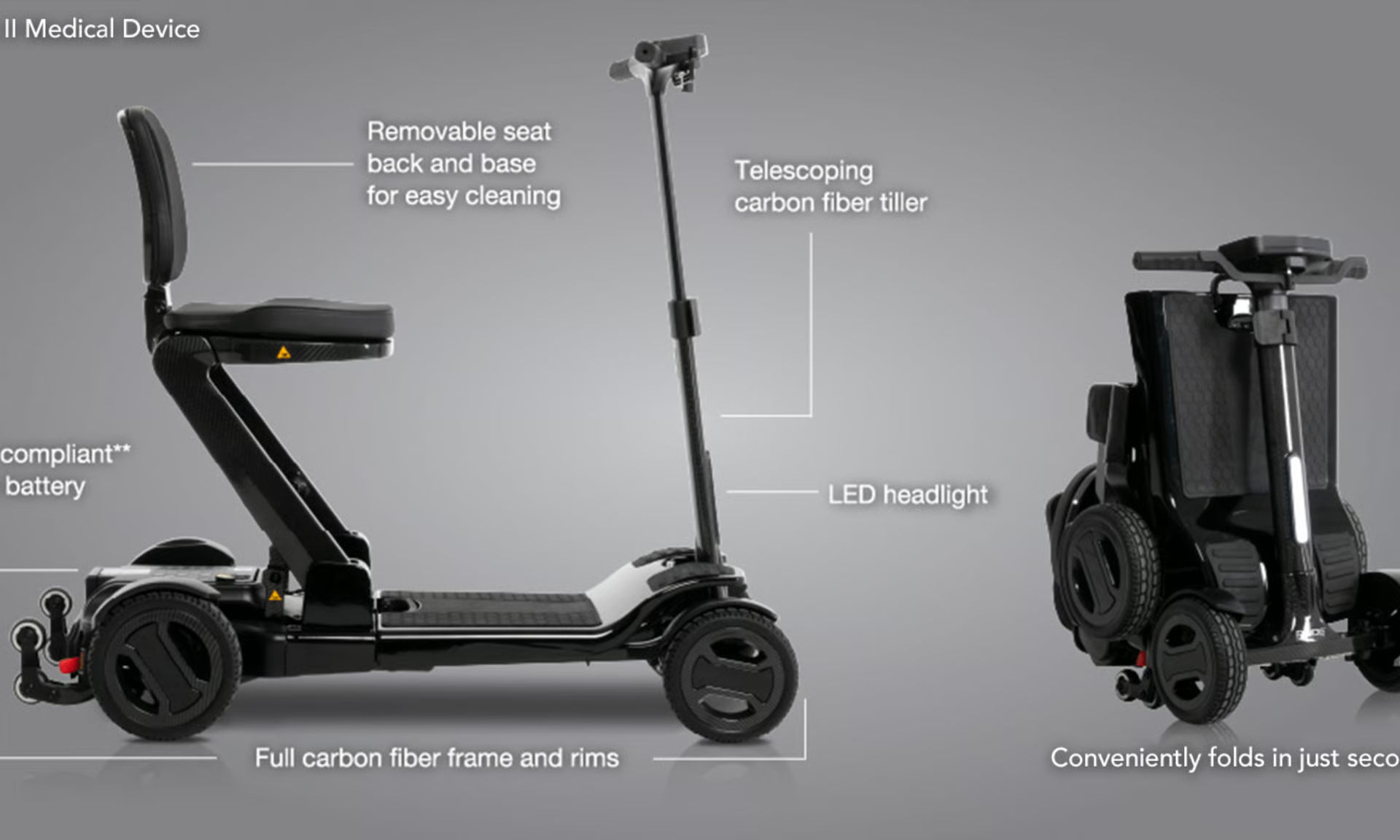
| Travel/portable electric | Carbon Fiber | Weight critical for air travel (UN38.3) |
| Sports/active user | Carbon Fiber or Titanium | Performance and weight |
Source: 1000Mobility B2B data, October 2026
How Does Carbon Fiber Compare to the Existing Wheelchair Types Guide?
This article supplements our wheelchair types comparison B2B guide (Post ID 2729) which compared 6 wheelchair types. That guide focused on functional categories (manual vs electric, standard vs lightweight, bariatric vs pediatric). This article provides material-level engineering depth across 4 frame materials. Together, they form a material comparison cluster: the types guide helps distributors select the right product category, while this guide informs the material specification within that category. For a complete B2B sourcing decision, also review our how to choose a wheelchair manufacturer 12-point framework and OEM/ODM services for custom material specifications.
FAQ
Is carbon fiber durable enough for daily wheelchair use?
Yes. Carbon fiber T700 composite frames exceed 10⁷ fatigue cycles without significant strength degradation, translating to 7–10 years of service life versus 5–7 years for aluminum. Carbon fiber meets or exceeds ISO 7176 strength and fatigue requirements for wheelchair frames. The primary failure mode is delamination from impact damage, not gradual fatigue, meaning frames that avoid hard impacts can exceed 10 years of service.
How much more expensive is titanium than aluminum?
Titanium wheelchairs cost $1,100–$3,500 FOB versus $200–$800 for aluminum, representing a 3–5× price premium. Titanium’s higher cost stems from specialized GTAW welding requirements (argon-chamber), limited global supplier base, and raw material cost of $25–$45/kg versus $2.00–$3.50/kg for aluminum 6061-T6. Most standard medical funding programs do not cover titanium frames.
Can carbon fiber wheelchair frames be repaired?
Carbon fiber repair is possible but requires specialized composite techniques (resin injection, patch layup, vacuum bagging, re-curing) that are not available at typical local wheelchair dealers. Repair costs range from $200–$500 per damaged area, versus $50–$150 for aluminum TIG welding. For distributors in markets without factory-authorized service, maintaining 5–7% spare frame inventory is recommended.
Which frame material is lightest for air travel?
Carbon fiber frames achieve 7–12 kg for manual wheelchairs, the lightest available. For electric wheelchairs with lithium batteries, carbon fiber models weigh 16–24 kg total. Carbon fiber’s weight advantage is most critical for air travel, where every kilogram impacts shipping cost ($8–$15 per kg for air freight) and airline weight restrictions. Carbon fiber electric models with UN38.3-certified batteries are specifically designed for air transport compliance.
What is the most cost-effective frame material for B2B distributors?
Aluminum 6061-T6 offers the best value-to-performance ratio for most B2B distribution scenarios. At $200–$800 FOB with 25–30% weight reduction over steel and good corrosion resistance, aluminum provides competitive retail positioning at achievable margins. For distributors targeting premium markets with 48–55% gross margins, carbon fiber factory-direct sourcing at $1,400–$2,200 FOB with retail prices of $3,200–$4,800 delivers superior ROI despite higher unit investment.
Conclusion
The four frame materials each serve distinct B2B market segments. Steel dominates institutional bulk procurement; aluminum is the universal value-to-performance choice; carbon fiber commands premium markets with superior total cost of ownership; titanium serves niche ultralight applications. For most distributors, building a portfolio with aluminum as the volume driver and carbon fiber as the premium flagship delivers optimal coverage. Explore our carbon fiber technology capabilities or contact us about OEM/ODM partnerships to discuss custom material specifications for your market.
Interested in Wholesale Pricing?
Get OEM/ODM details, product specifications, and wholesale pricing within 24 hours.
Or send us a message directly:
 English
  Deutsch
  Français
  Español
  Italiano
  العربية
  Русский