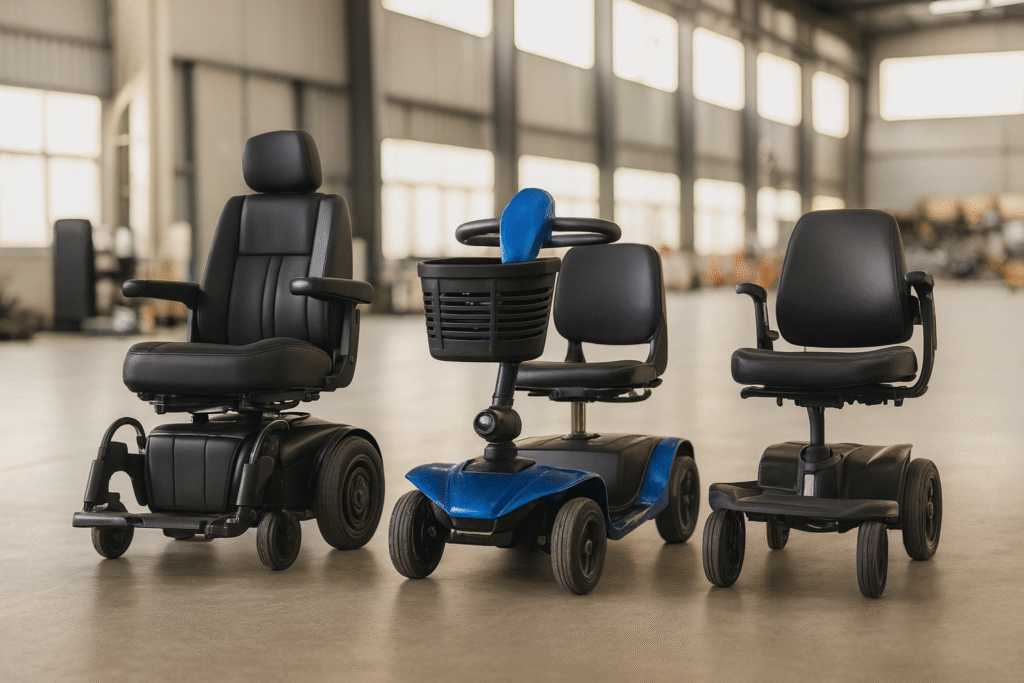
Manual Wheelchair Wholesale: Aluminum Transport Chairs & Self-Propelled Models from China
Source manual wheelchairs directly from 1000Mobility — manufacturer of the MIRA Self-Propelled and MIRA Transit. Compare specs, explore OEM options, and get factory-direct B2B pricing.
Manual wheelchairs remain the backbone of global mobility aid distribution — offering lower unit costs, simpler maintenance, and broader market applicability than powered alternatives. For B2B buyers, the manual wheelchair category delivers higher volume turnover, reduced warranty complexity (no batteries or electronics), and the ability to serve diverse channels from hospitals and rehabilitation centers to elderly care facilities and home healthcare providers. This guide covers both manual wheelchair models manufactured by 1000Mobility at our Zhangjiagang facility, with detailed specifications, a comprehensive purchasing guide, and practical guidance for distributors evaluating China-based suppliers. Request a wholesale quote to receive our 2026 manual wheelchair B2B price list.
Why Source Manual Wheelchairs from China
China is the world’s largest manufacturer of manual wheelchairs, producing over 15 million units annually across self-propelled, transit, and specialist categories. The country’s mature aluminum extrusion industry, competitive labor costs, and integrated component supply chains (for tires, casters, brake systems, and upholstery) enable manufacturers to deliver products at 40–55% lower FOB prices than European or North American factories, while meeting identical international quality standards.
The global manual wheelchair market was valued at approximately USD 2.8 billion in 2024 and is projected to reach USD 4.1 billion by 2030, growing at a CAGR of 6.5%. Key demand drivers include the expanding elderly population (persons aged 65+ will reach 1.5 billion globally by 2050), post-surgical rehabilitation needs, and increasing government healthcare expenditure in developing economies. For B2B distributors, manual wheelchairs represent a lower-risk entry product compared to powered mobility devices — they require no battery certification, have minimal after-sales servicing requirements, and can be stored indefinitely without degradation.
1000Mobility operates from a 50,000 m² ISO 13485-certified facility in Zhangjiagang, Jiangsu — one of China’s most established medical device manufacturing clusters. Our products are exported to 30+ countries, with manual wheelchairs serving hospitals, NGOs, government procurement programs, and retail pharmacy chains. Unlike trading companies that add markups without adding value, we are the actual manufacturer, giving you direct access to factory pricing, engineering teams, and full production traceability. Learn how to evaluate suppliers in our B2B wheelchair supplier selection guide.
For distributors also considering powered mobility products, our folding electric wheelchair wholesale guide provides a complementary perspective on the electric wheelchair category.
Manual Wheelchair Product Comparison
1000Mobility currently manufactures two manual wheelchair models, each designed for distinct use cases and user populations. Click any product name to view full specifications and request a quote.
| Product | Typ | Rahmenmaterial | Gewicht | Sitzbreite | Wichtigste Merkmale |
|---|---|---|---|---|---|
| MIRA Self-Propelled | Self-Propelled | Aluminum (double-braced) | 12.7 kg | 460mm & 510mm | Quick-release rear wheels, flip-up armrests, swing-away legrests, airless PU tires |
| MIRA Transit | Transport / Transit | Aluminum | 11.8 kg | — | Caregiver hand brakes with parking lock, ultra-lightweight transport chair |
Key Specifications to Evaluate When Sourcing Manual Wheelchairs
Frame Design & Material Quality
The frame is the structural backbone of any manual wheelchair, and its design directly impacts user safety, weight, durability, and cost. 1000Mobility uses aviation-grade aluminum tubing for both MIRA models. The MIRA Self-Propelled employs a double-braced frame architecture — meaning the main frame tubes are reinforced with secondary cross-braces at critical stress points (seat rail junctions, rear wheel mount areas, and caster fork attachments). This design distributes propulsion forces more evenly, reducing metal fatigue over years of active use. Double-bracing is particularly important for self-propelled chairs, where the repetitive pushing force on rear wheels creates cyclical loading that can cause frame failure in single-brace designs over extended periods.
The MIRA Transit uses a single-brace frame optimized for minimal weight (11.8 kg) while maintaining structural integrity for caregiver-assisted use. Transit chairs experience lower propulsion forces since the user is not self-propelling, allowing for a lighter frame without compromising safety. When evaluating suppliers, always request the frame’s static load test report — our frames are tested to 200 kg static load (well above the typical 100–136 kg user weight rating) to ensure a safety margin. For a deeper material comparison, our wheelchair material guide covers aluminum, carbon fiber, and steel trade-offs in detail.
Wheel Systems & Tire Technology
Wheel and tire selection significantly affects ride quality, maintenance requirements, and total cost of ownership. The MIRA Self-Propelled features quick-release rear wheels — a critical feature for institutional users who need to detach wheels for compact storage, vehicle transport, or replacement. Quick-release axles use a spring-loaded detent mechanism that allows tool-free wheel removal in under 5 seconds per wheel. The rear wheels are paired with airless polyurethane (PU) tires that eliminate the maintenance burden of pneumatic tires (no inflation, no punctures, no pressure monitoring) while providing comparable shock absorption. PU tires are ideal for indoor and smooth-surface outdoor use, with an expected lifespan of 3–5 years under normal institutional use.
Front casters on both models use precision-sealed bearings that require no lubrication, reducing maintenance intervals. When sourcing manual wheelchairs, verify that the supplier offers replacement wheels and tires as standard spare parts — we stock all wheel assemblies and can ship replacements within 5–7 days.
Weight & Portability
Frame weight is a primary purchasing criterion for both end-users and institutions. The MIRA Transit at 11.8 kg is among the lightest transport chairs in its class — light enough for most caregivers to lift into a vehicle trunk without strain. The MIRA Self-Propelled at 12.7 kg achieves its competitive weight despite the double-braced frame and quick-release wheel hardware, thanks to optimized tube wall thicknesses (1.2mm main tubes, 1.0mm secondary braces) and strategic material removal in low-stress areas.
For B2B distributors, lighter wheelchairs translate to lower shipping costs per unit and reduced storage space requirements. A 40ft container can accommodate approximately 350–400 manual wheelchairs depending on model mix, compared to 120–180 electric wheelchairs. This logistics advantage is a key reason many distributors start their China sourcing journey with manual wheelchairs. For container optimization guidance, see our MOQ and pricing negotiation guide.
Adjustability & User Accommodation
The MIRA Self-Propelled is available in two seat widths — 460mm (18 inches) and 510mm (20 inches) — covering the most common adult user dimensions. Flip-up armrests allow lateral transfers (from bed to wheelchair, wheelchair to toilet, etc.) without removing the armrest entirely, which is a significant workflow advantage in institutional settings. Swing-away legrests can be rotated outward and removed completely, enabling front access for standing transfers and reducing the chair’s footprint for storage.
The MIRA Transit’s caregiver hand brakes feature a parking lock mechanism — essential for safety when the chair is stationary on slopes or during user transfers. The brake lever is positioned ergonomically for the caregiver pushing the chair, allowing one-handed operation while maintaining control of the chair.
Manual Wheelchair Purchasing Guide for B2B Buyers
1. Define Your Target Market & User Profile
Before selecting a manual wheelchair model, map your end-user demographics. Self-propelled wheelchairs serve active users who can independently propel — typically younger patients, post-injury rehabilitation, and long-term mobility users. Transit chairs serve passive users who rely on caregiver assistance — typically elderly care, hospital transport, and palliative care. Many distributors carry both types to serve the full market spectrum. If you serve government healthcare procurement, self-propelled models are often preferred for rehabilitation programs; if you supply nursing homes, transit chairs are the higher-volume product.
2. Evaluate Frame Material Trade-offs
Aluminum is the optimal material for most B2B manual wheelchair applications. It offers the best balance of weight, strength, corrosion resistance, and cost. Steel frames (used by some budget manufacturers) are 30–40% heavier and prone to rust in humid environments or with frequent cleaning — unacceptable for healthcare settings. Carbon fiber manual wheelchair frames exist but command premium pricing (2–3× aluminum equivalents) without proportional weight savings for manual chairs. We recommend aluminum for all but the most premium market segments. Our manufacturing team can discuss alternative materials under ODM arrangements.
3. Verify Certifications & Regulatory Compliance
For import into regulated markets, certification is non-negotiable. Both MIRA models carry CE marking (EU MDR), are FDA-registered (Class I), and are manufactured under ISO 13485:2016 quality management. Request the following documentation from any supplier before placing an order: CE Declaration of Conformity with notified body number, FDA facility registration and device listing, ISO 13485 certificate (verify validity on the certification body’s website), mechanical test reports (static strength, dynamic strength, fatigue), and material certificates for frame tubing. Our wheelchair buying guide includes a regulatory compliance checklist.
4. Assess Supplier Manufacturing Capabilities
Distinguish between manufacturers and trading companies. Manufacturers offer factory-direct pricing, accept ODM modifications, provide full traceability, and can accommodate custom specifications. Trading companies add 10–25% markup and cannot modify products or guarantee production quality. Request: factory photos/videos showing production lines, a virtual factory tour (we offer these routinely), product test reports from accredited labs (not self-tested), references from existing B2B customers in your region, and sample units for quality evaluation before placing volume orders. Our supplier selection guide provides a 7-step factory audit checklist.
5. Understand Pricing & MOQ Structures
Manual wheelchair FOB pricing from Chinese manufacturers typically ranges from USD 45–120 per unit depending on frame material, features, and order volume. Our pricing includes volume discount tiers: orders of 20–49 units receive standard pricing, 50–199 units receive 5–8% discount, 200–499 units receive 10–12% discount, and 500+ units receive the best factory-direct pricing. MOQ is 20 units for stock configurations and 50 units for OEM-branded orders. Always confirm whether quoted prices include packaging, certification documentation, and spare parts kits. Read our MOQ and pricing negotiation guide for negotiation strategies.
6. Plan Logistics & Import Procedures
Manual wheelchairs ship efficiently by sea freight due to their compact folded size and lack of hazardous materials (no lithium batteries). A 40ft HQ container holds 350–400 units, keeping per-unit shipping costs low. For first-time orders, we recommend LCL (less than container load) shipping to test the market before committing to full-container volumes. Ensure your supplier provides: commercial invoice, packing list, bill of lading, certificate of origin (for tariff optimization under free trade agreements), and all certification documents required by your country’s customs authority. We can recommend experienced freight forwarders who handle medical device imports in your region.
OEM/ODM Customization Options
OEM Branding
For distributors building a private-label brand, our OEM program covers: custom frame colors (RAL color matching with 50-unit minimum per color), laser-etched or screen-printed logos on frame tubes and packaging, branded carton design with your barcodes and product labels, localized user manuals in your target market language(s), and custom controller labeling (for models with brake levers). OEM orders typically have MOQs of 50 units per model with lead times of 20–30 days. This is the most efficient path for distributors who want brand differentiation without investing in product development.
ODM Customization
For partners requiring functional modifications, our ODM services include: custom seat widths beyond the standard 460mm/510mm options, alternative upholstery materials and colors (including anti-microbial fabrics for healthcare settings), modified footrest designs (elevating legrests, amputee supports), additional accessories (anti-tip wheels, oxygen bottle holders, IV poles, seat belts), alternative wheel and tire configurations, and custom packaging for retail-ready display. ODM projects start at 100-unit MOQs with prototype delivery in 2–3 weeks. For a detailed OEM/ODM process overview, read our OEM/ODM manufacturing guide — the principles apply equally to manual wheelchair customization.
Distributors interested in exclusive territory agreements and partnership structures should review our distributor partnership guide.
Certifications & Compliance
Both MIRA manual wheelchair models are manufactured under internationally recognized quality and safety standards:
Class I Medical Device
EU MDR Compliant
Medical Device QMS
Quality Management
Compliant
Certification documentation provided with every wholesale order at no additional cost includes: CE Declaration of Conformity, FDA facility registration and device listing, ISO 13485 and ISO 9001 certificates, mechanical test reports covering static strength (tested to 200 kg), dynamic strength, fatigue cycling, and stability testing, and material certificates for aluminum frame tubing. For markets with additional regulatory requirements (TGA Australia, Health Canada, PMDA Japan), we supply the necessary technical documentation to support local registration. Manual wheelchairs, as Class I devices, generally have simpler regulatory pathways than powered mobility devices — another advantage for distributors entering new markets.
Frequently Asked Questions
What is the MOQ for manual wheelchairs from 1000Mobility?
Our standard MOQ for manual wheelchairs is 20 units per model for stock configurations. For OEM orders with custom branding and packaging, MOQ starts at 50 units. We accommodate trial orders of 5–10 units for new distributors evaluating product quality. Manual wheelchairs are more cost-effective to ship in volume due to their compact folded size — a 40ft container can hold 300–400 units depending on model mix. Contact our sales team for flexible MOQ arrangements tailored to your market entry strategy.
What is the difference between the MIRA Self-Propelled and MIRA Transit models?
The MIRA Self-Propelled is designed for independent user mobility, featuring large quick-release rear wheels that the user propels by hand. It includes flip-up armrests and swing-away legrests for easy transfers. The MIRA Transit is a transport chair designed for caregiver-assisted mobility, featuring a lighter 11.8 kg frame, caregiver hand brakes with parking lock, and smaller wheels for easy maneuvering in tight spaces. Self-propelled models suit active users who can wheel themselves; transit models are ideal for care facilities, hospitals, and elderly care where caregiver assistance is the norm.
Are your manual wheelchairs FDA and CE certified?
Yes. Both MIRA models are manufactured under our ISO 13485:2016 quality management system and carry CE marking for the EU market. The manual wheelchairs are classified as Class I medical devices under FDA regulations and our facility is FDA-registered. We provide full documentation including declarations of conformity, ISO certificates, and test reports for mechanical strength, stability, and flammability. Documentation is provided at no additional cost with every wholesale order.
Can I customize manual wheelchairs with my own brand?
Yes. We offer OEM branding including custom frame colors (RAL matching with 50-unit minimum), laser-etched logos, branded packaging, and localized user manuals. ODM options include custom seat widths, alternative upholstery materials and colors, modified footrest designs, and additional accessories such as anti-tip wheels or oxygen bottle holders. Prototype samples for custom configurations are typically delivered within 2–3 weeks.
What materials are used in your manual wheelchair frames?
Both MIRA models use high-grade aluminum frames. The MIRA Self-Propelled features a double-braced aluminum frame for enhanced structural rigidity, supporting active user propulsion and daily institutional use. The MIRA Transit uses a single-brace aluminum frame optimized for minimal weight (11.8 kg) while maintaining full load capacity. Aluminum offers inherent corrosion resistance — critical for wet environments and frequent cleaning in healthcare settings — and is approximately 30% lighter than equivalent steel frames.
How do manual wheelchairs compare to electric wheelchairs for B2B distribution?
Manual wheelchairs serve a complementary market segment to electric models. They have lower unit costs, simpler maintenance (no batteries or electronics), higher margins in volume, and broader market applicability across hospitals, elderly care, emergency services, and home care. Many distributors carry both categories to serve different customer needs. Manual wheelchairs also have shorter lead times (10–20 days) and lower shipping costs per unit. We recommend a mixed catalog approach — contact us for a combined electric and manual wheelchair wholesale proposal.
Do you provide spare parts and after-sales support for manual wheelchairs?
Yes. We provide a 3-year warranty on frames and structural components. Wearable parts (tires, brake cables, upholstery) carry a 1-year warranty. Every wholesale order includes a complimentary spare parts kit valued at 1–2% of order value, covering the most commonly replaced components. We stock spare parts for all models and ship replacements within 5–7 days of request. Technical support is available via WhatsApp, email, and video call.
Request Your Manual Wheelchair Wholesale Quote
Get factory-direct pricing on MIRA Self-Propelled and MIRA Transit models. Receive our 2026 B2B catalog with volume discount tiers, certification documentation, and OEM/ODM capabilities overview.
Explore our full manual wheelchair product catalog or learn more about becoming a 1000Mobility distributor. Also browse our electric wheelchair lineup for complementary product offerings.
Written by the 1000Mobility Editorial Team. This page is regularly updated to reflect current product specifications, certification status, and manufacturing capabilities. Last updated: 2026. For the most current pricing and availability, please contact our sales team directly.
 English
  Deutsch
  Français
  Español
  Italiano
  العربية
  Русский