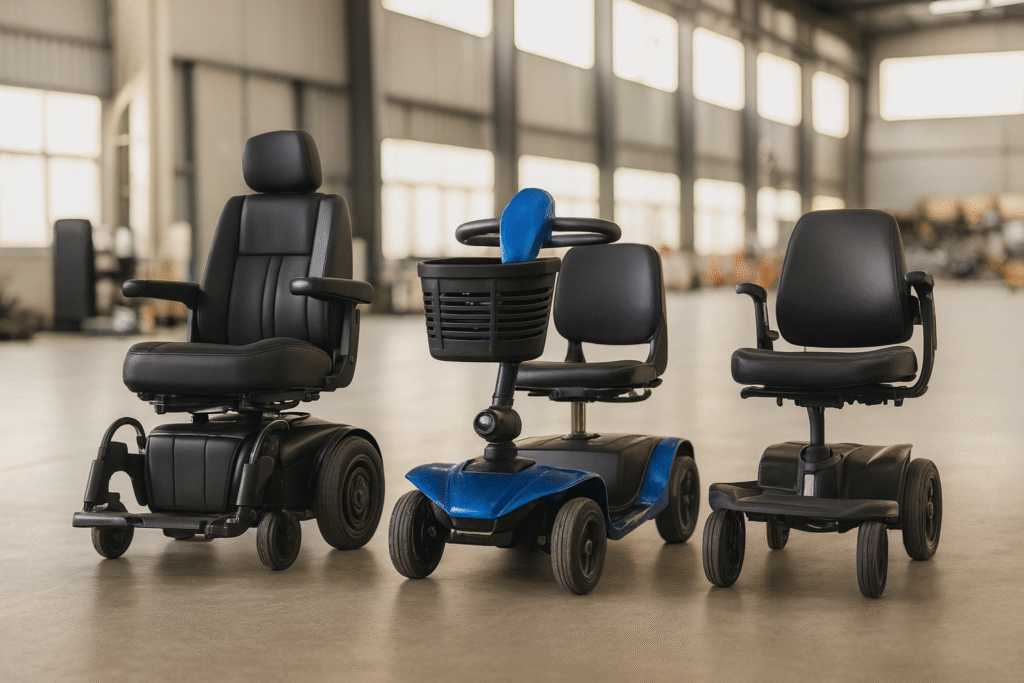
How to Negotiate Wheelchair MOQ and Pricing with Chinese Manufacturers: A B2B Playbook
Quick Answer
Negotiating wheelchair MOQ and pricing with Chinese manufacturers requires a structured approach: start with small trial orders (10–50 units) to validate quality, leverage tiered volume discounts (5–20% at 100+ units), and use long-term commitments to unlock additional 3–5% savings. Standard payment terms are 30% deposit via T/T with 70% before shipment, though established partners can negotiate 20/80 or 10/90 splits. This playbook provides actionable negotiation strategies, price breakdown analysis, and contract clauses that protect B2B buyers.
Last updated: August 2026
Understanding MOQ: What Drives Minimum Order Quantities
Minimum order quantity (MOQ) is not an arbitrary number—it reflects real manufacturing economics. Chinese wheelchair manufacturers set MOQs based on three factors: production batch efficiency, material procurement thresholds, and container loading optimization.
Production Batch Economics
Most factories operate on batch production lines where setup costs (machine calibration, mold preparation, worker training) are fixed regardless of order size. A production run of 10 units costs nearly the same in setup as 100 units, making small orders unprofitable for manufacturers. Standard manual wheelchairs typically have MOQs of 10–50 units per model, while electric wheelchairs require 20–50 units. For OEM/private label projects (logo + packaging, no structural changes), expect MOQs around 50 units. Deep structural customization with new molds requires 100–300 units minimum to amortize tooling costs (gracemedy.com).
Material Procurement Thresholds
Frame materials, batteries, motors, and upholstery fabrics are purchased in bulk from upstream suppliers who have their own MOQs. A factory ordering aluminum tubing for 50 wheelchairs pays more per unit than one ordering for 500. This cost differential is passed directly to buyers.
Container Loading Optimization
A 40-foot high-cube container can hold 180–280 wheelchairs depending on model and packaging. Manufacturers prefer full-container orders because they optimize shipping costs and simplify logistics. However, mixed-model loading—combining 2–3 wheelchair models or adding rollators and scooters—helps buyers meet volume targets across a product range without overcommitting to a single SKU (tousdamedical.com).
Understanding these drivers gives you leverage in negotiations. When a factory insists on 100-unit MOQ, you can counter by proposing a mixed-model container or a phased delivery schedule. Explore our why choose us page to learn about our flexible MOQ policies.
MOQ Negotiation Strategies: From Trial Order to Volume Commitment
Strategy 1: Start with a Trial Order (1–10 Units)
Most reputable manufacturers offer sample units at retail or slightly discounted prices ($500–$1,200 per unit including shipping). Use this phase for quality assessment, regulatory testing, and market validation. Some suppliers offer MOQs as low as 2 pieces for standard models, particularly on platforms like Made-in-China (Made-in-China).
Negotiation tip: Frame your trial order as the first step in a long-term partnership. Explicitly state your projected annual volume (e.g., “We plan to order 500+ units annually if the sample meets our standards”). This signals serious intent and may unlock better sample pricing.
Strategy 2: Leverage Phased Delivery
Instead of committing to a large upfront order, propose a phased delivery schedule:
- Phase 1: 20–50 units (trial production run)
- Phase 2: 50–100 units (if Phase 1 quality meets standards)
- Phase 3: 200+ units (ongoing supply agreement)
This approach reduces your capital risk while giving the manufacturer confidence in future volume. Include a clause stating that Phase 2 and 3 pricing is locked at the negotiated rate for 6–12 months.
Strategy 3: Mixed-Model Container Loading
A 40-foot container holding 180–280 wheelchairs can be filled with multiple models. If a manufacturer’s MOQ is 100 units per model, ordering 3 different models at 60 units each (180 total) may be acceptable. This strategy lets you:
- Test multiple products simultaneously
- Diversify your inventory risk
- Meet container-fill requirements for optimal shipping costs
Strategy 4: Long-Term Volume Agreements
A one-year commitment for monthly or quarterly shipments unlocks the strongest pricing leverage. Manufacturers can plan raw material purchases and workforce scheduling more accurately, passing savings forward. Long-term agreements typically yield an additional 3–5% discount beyond single-order volume tiers (tousdamedical.com).
Strategy 5: Seasonal Timing
Orders placed during peak procurement windows—Q2 through Q4, when European and North American hospital tenders run—can unlock an extra 2–5% on top of volume discounts. Factories compete aggressively for production commitments during these periods. Conversely, avoid emergency restocks: a 10–20 unit urgent top-up often gets repriced to low-volume rates.
Price Breakdown: What’s Inside Your FOB Quote
Understanding the cost components of a wheelchair helps you identify negotiation levers and evaluate whether a quote is genuinely competitive. Here’s a typical breakdown for a mid-range electric wheelchair ($450 FOB):
| Cost Component | Estimated Cost | Percentage of FOB |
|---|---|---|
| Frame material (aluminum alloy) | $90 | 20% |
| Motors (brushless 250W × 2) | $70 | 15.5% |
| Battery (lithium 24V/10Ah) | $65 | 14.4% |
| Controller & electronics | $45 | 10% |
| Wheels & tires | $35 | 7.8% |
| Upholstery & cushions | $25 | 5.6% |
| Labor & assembly | $55 | 12.2% |
| Quality control & testing | $15 | 3.3% |
| Packaging & documentation | $20 | 4.4% |
| Factory overhead & profit | $30 | 6.7% |
| Total FOB Price | $450 | 100% |
Key Price Drivers
According to gracemedy.com, four technical specs drive most unit cost differences (gracemedy.com):
- Motor type: Brushed → brushless adds $50–$100/unit (+15–25%)
- Battery chemistry: Lead-acid → lithium (24V/15–20Ah) adds $80–$150/unit
- Frame material: Steel → aluminum adds $40–$70/unit; carbon fiber adds $200+/unit
- Controller brand: Generic PWM → branded (PG Dynamics, Dynamic Controls) adds $30–$60/unit
Knowing these variables lets you make informed trade-offs. For example, choosing a generic controller with a lithium battery saves $30–$60/unit while delivering the range and performance your customers care about most.
FOB Pricing Tiers by Wheelchair Category
Based on current market data, here are the FOB price ranges by wheelchair type (gracemedy.com):
| Wheelchair Type | FOB Price Range | MOQ | Key Specs |
|---|---|---|---|
| Standard manual wheelchair | $45–$90 | 10–50 units | Steel/aluminum folding, 16–20″ seat |
| Commode wheelchair | $55–$110 | 10–50 units | Steel frame, removable bucket |
| Children’s wheelchair | $60–$130 | 20–50 units | Adjustable growth frame |
| Basic electric wheelchair | $200–$400 | 50+ units | Steel, brushed 250W, lead-acid |
| Mid-range electric wheelchair | $350–$650 | 20–50 units | Aluminum, brushless, lithium |
| Premium electric wheelchair | $450–$600 | 10–20 units | Aviation aluminum, CE/ISO certified |
| High-end OEM (carbon fiber) | $800–$1,100 | 100+ units | Carbon fiber, 500W+, custom controllers |
For manual wheelchairs around the $100/unit range, volume pricing is tighter: 200+ units typically yield 5–8% off, with annual volume commitments pushing discounts to 8–10% (gracemedy.com).
Payment Terms: T/T vs. L/C and Everything in Between
Standard T/T (Telegraphic Transfer)
The most common payment structure is 30% deposit upon order confirmation and 70% balance before shipment. This splits risk between buyer and seller but requires the buyer to trust the manufacturer’s quality before final payment.
Negotiation tips:
- Established partners with good payment history can secure 20/80 or even 10/90 terms
- Some manufacturers offer 1–2% additional discount for confirmed letters of credit or faster final payment
- Always include a pre-shipment inspection clause: final 70% is released only after QC approval
Letter of Credit (L/C)
L/C provides the strongest buyer protection but adds 1–3% in bank fees. The manufacturer receives payment only when they present shipping documents (bill of lading, commercial invoice, packing list, certificate of origin) that match L/C terms exactly. Recommended for first-time orders exceeding $50,000.
Key L/C considerations:
- Specify inspection certificate from SGS, TÜV, or Intertek as a required document
- Include a 15–21 day inspection window before shipment
- Allow partial shipments if the order exceeds one container
Other Payment Methods
- PayPal/Alibaba Trade Assurance: Suitable for sample orders under $5,000; offers buyer protection but adds 2.9–4.4% fees
- Western Union: Avoid for large orders; no buyer protection
- Open account (O/A): Available only to established partners after 12+ months of transaction history; typically net 30–60 days
Lead Time Management & Production Scheduling
Lead time management is critical for maintaining inventory levels and meeting seasonal demand. Typical production timelines:
| Order Size | Lead Time | Notes |
|---|---|---|
| Sample (1–2 units) | 7–15 days | Often from existing stock |
| Small batch (<20 units) | 15–25 days | Standard models only |
| Container order (50–150 units) | 30–45 days | Most common B2B order |
| New tooling/structural changes | 45–75 days | Add 15–30 days for prototyping |
Lead Time Protection Clauses
Include these clauses in your purchase contract:
- Liquidated damages: 0.5–1% of order value per week of delay, capped at 5–10%
- Production milestones: Factory provides weekly progress reports with photos at 30%, 60%, and 90% completion
- Force majeure: Define specific acceptable delays (natural disasters, government actions) vs. unacceptable delays (capacity overallocation, material shortages)
- Air freight compensation: If delay threatens your seasonal window, manufacturer covers the difference between sea and air freight
Quality Control Contract Clauses
A 5% defect rate on a 1,000-unit order means 50 defective units—each representing a warranty claim, return shipping cost, and damaged reputation. Protect yourself with these contract provisions:
Pre-Shipment Inspection (PSI)
Mandate third-party inspection when 80% of production is complete and 20% is packaged. AQL (Acceptable Quality Limit) sampling per ISO 2859-1:
- Critical defects: AQL 0 (zero tolerance)
- Major defects: AQL 1.0 (1% acceptance)
- Minor defects: AQL 2.5 (2.5% acceptance)
Inspection costs ($300–$500/day) should be split or borne by the manufacturer if defects exceed AQL thresholds.
Warranty Terms
Negotiate warranty coverage into the contract:
- Frame: 2–3 years (structural integrity)
- Motors: 1–2 years (brushless motors typically 2,000+ hours)
- Battery: 1 year (lithium), 6 months (lead-acid)
- Controller: 1 year
- Upholstery: 6 months
Include a spare parts package (1–2% of order value) for warranty servicing, shipped with the main order at no additional cost.
Certification Documentation
Require the manufacturer to provide:
- CE certificate with notified body number
- FDA registration confirmation
- ISO 13485 certificate (current and valid)
- Test reports (EN 12182, ISO 7176, ISO 9999)
- Material certificates (aluminum alloy grade, battery MSDS, UN38.3)
Verify all certifications independently—counterfeit certificates are not uncommon in the industry. Our quality certifications page provides verifiable documentation for all our products.
Building a Long-Term Supplier Relationship
The most successful B2B wheelchair buyers treat procurement as a partnership rather than a one-time price contest. Here’s how to build lasting supplier relationships:
Communication & Transparency
Maintain open communication about your market conditions, customer feedback, and demand forecasts. Manufacturers who understand your business can proactively suggest cost-saving alternatives, such as:
- Substituting equivalent components during supply chain disruptions
- Adjusting production schedules to accommodate your seasonal peaks
- Recommending specification changes that reduce costs without sacrificing quality
Factory Visits & Audits
Visit your manufacturer’s facility at least once annually. A physical visit demonstrates commitment, builds personal relationships with key decision-makers, and gives you firsthand insight into production capabilities. If travel isn’t feasible, commission a virtual factory audit ($200–$400) with live video walkthrough.
Schedule a factory tour with 1000Mobility to experience our manufacturing capabilities firsthand.
Performance Reviews
Conduct quarterly performance reviews covering:
- On-time delivery rate (target: 95%+)
- Defect rate (target: <2%)
- Communication responsiveness (target: <8 hours)
- Price stability and transparency
- Continuous improvement initiatives
FAQ
What is the standard MOQ for electric wheelchairs from Chinese manufacturers?
Standard production electric wheelchairs typically require 20–50 units per model. Economy models (steel frame, lead-acid battery) may have MOQs of 50+ units, while premium models with flexible production lines accept 10–20 units. OEM/private label projects start at 50 units, and deep structural customization requires 100–300 units minimum.
Can I negotiate MOQ below the manufacturer’s stated minimum?
Yes, MOQs are often negotiable. Strategies include: proposing mixed-model container loading, committing to phased delivery schedules, leveraging long-term volume agreements, and ordering during off-peak seasons. Some factories on 1688.com have introduced “small order quick response” programs with MOQs as low as 50–100 units for verified buyers (1688.com).
What payment terms should I negotiate for my first order?
For first-time orders, use 30/70 T/T (30% deposit, 70% before shipment) with a mandatory pre-shipment inspection clause. For orders exceeding $50,000, consider a Letter of Credit (L/C) for maximum buyer protection. After establishing a 12+ month transaction history, negotiate for 20/80 or 10/90 terms, or open account (net 30–60 days).
How much discount can I expect for volume orders?
Typical volume discount tiers: 100–299 units (5–10% off list), 300–999 units (12–18%), 1,000+ units (20%+). Long-term annual commitments add 3–5% beyond single-order discounts. Mixed-model containers and early payment incentives can yield additional 1–2% savings (tousdamedical.com).
What should I do if the manufacturer’s quality doesn’t meet expectations?
First, document all defects with photos and detailed descriptions. If defects are within AQL limits, negotiate partial refunds or replacement units in the next order. If defects exceed AQL thresholds, halt the final payment (if using T/T) or reject the documents (if using L/C). For critical failures, invoke the warranty clause and require the manufacturer to cover return shipping and replacement costs. Always conduct pre-shipment inspections to catch issues before goods leave the factory.
Fazit
Negotiating wheelchair MOQ and pricing with Chinese manufacturers is a skill that compounds over time. Buyers who invest in relationship-building, understand cost structures, and implement rigorous quality control protocols consistently achieve 15–25% better total cost of ownership than those who chase the lowest unit price. The strategies in this playbook—from trial orders and phased delivery to L/C protection and performance reviews—provide a proven framework for sustainable B2B procurement success.
At 1000Mobility, we partner with distributors who value long-term relationships. Our flexible MOQs (starting at 10 units for standard models), transparent pricing tiers, full CE/FDA/ISO 13485 certification, and comprehensive OEM/ODM services make us the ideal manufacturing partner for B2B buyers at every stage of growth.
Ready to negotiate your best wheelchair wholesale deal? Request a Quote and receive our 2026 pricing sheet with volume discount tiers, MOQ options, and payment term flexibility.
Written by the 1000Mobility Editorial Team
Interested in Wholesale Pricing?
Get OEM/ODM details, product specifications, and wholesale pricing within 24 hours.
Or send us a message directly:
 English
  Deutsch
  Français
  Español
  Italiano
  العربية
  Русский