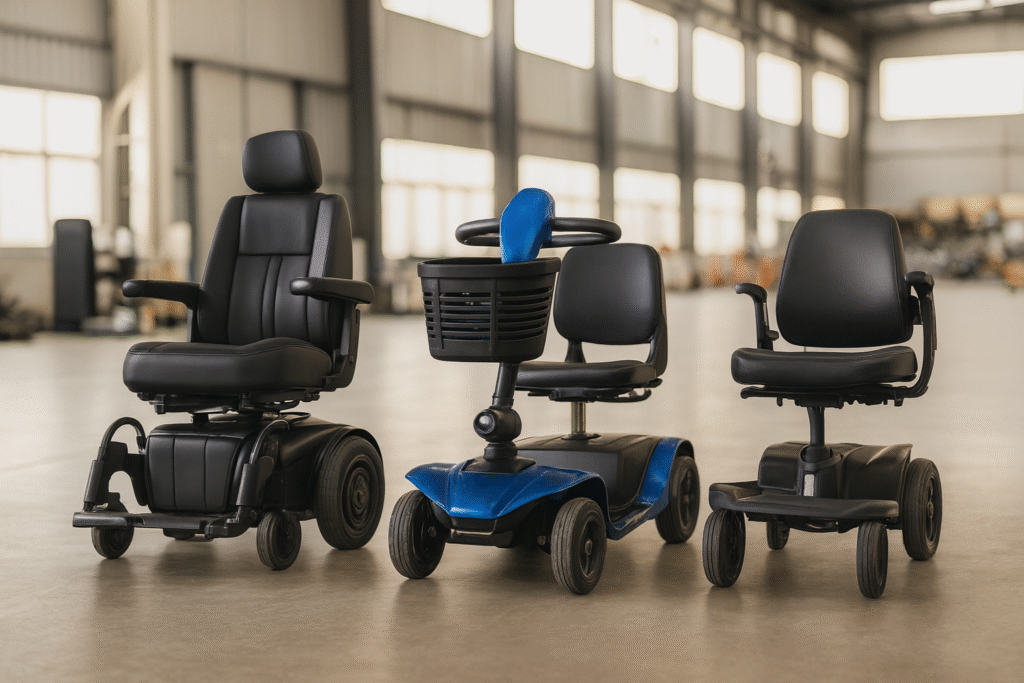
Electric Wheelchair Weight Comparison: Why Every Pound Matters in 2026
Last updated: November 2026
Weight is the single most overlooked factor when buying an electric wheelchair. It affects who can lift it, what car it fits in, whether you can travel with it, and how easy it is to maneuver. This guide breaks down real-world weights for every category and explains why manufacturers’ advertised weights don’t tell the full story.
Why Weight Matters More Than You Think
A wheelchair that’s too heavy causes three specific problems:
- Transport injuries: Caregivers (often elderly spouses) strain backs, shoulders, and wrists lifting heavy components into car trunks. The average safe lifting limit for a 65-year-old is 25 lbs per arm.
- Travel restrictions: Airlines limit mobility device batteries by Watt-hour rating, but the device itself must fit through the aircraft cargo door — typically 34 inches wide.
- Daily maneuverability: A heavier wheelchair requires more battery power to move, reducing range. It also causes faster tire wear and puts more stress on brakes.
Electric Wheelchair Weight Categories
| Category | Total Weight | Heaviest Component | Price Range | Best For |
|---|---|---|---|---|
| Travel/Folding | 50-70 lbs (23-32 kg) | 25-35 lbs | $1,500-$3,500 | Car transport, air travel |
| Standard | 70-120 lbs (32-54 kg) | 40-60 lbs | $1,200-$3,000 | Home use, local outings |
| Heavy-duty | 120-200 lbs (54-91 kg) | 70+ lbs | $2,000-$5,000 | Users over 250 lbs |
| Bariatric | 200-350 lbs (91-159 kg) | 100+ lbs | $2,500-$8,000 | Users over 400 lbs |
| Carbon fiber | 45-60 lbs (20-27 kg) | 20-28 lbs | $3,500-$8,000 | Travel, frequent lifting |
Component Weight Breakdown
Understanding which parts weigh the most helps you make smart trade-offs:
| Component | Typical Weight | Lighter Alternative | Weight Savings |
|---|---|---|---|
| Battery (lead-acid) | 25-35 lbs | Lithium-ion | 15-22 lbs |
| Frame (steel) | 30-45 lbs | Aluminum | 10-20 lbs |
| Frame (aluminum) | 20-30 lbs | Carbon fiber | 8-12 lbs |
| Motors (2x) | 12-20 lbs | Brushless hub motors | 4-8 lbs |
| Wheels/tires | 8-15 lbs | PU foam-filled | 3-5 lbs |
| Seat/upholstery | 8-12 lbs | Mesh seat | 3-5 lbs |
Key insight: Switching from lead-acid to lithium batteries saves more weight than switching from aluminum to carbon fiber frame — and costs far less.
The “Advertised Weight” Trap
Manufacturers often advertise the lightest possible configuration:
- “55 lbs!” → often excludes the battery (add 15-25 lbs for lithium, 25-35 lbs for lead-acid)
- “Folds to 12 inches!” → width only, not depth or height
- “Lifts with one hand!” → refers to the folded frame only, not the assembled chair
Always ask the manufacturer for the fully assembled weight with batteries installed and the heaviest single component weight when disassembled.
Car Trunk Compatibility Guide
| Car Type | Trunk Opening | Max Lift Weight | Compatible Chairs |
|---|---|---|---|
| Sedan (compact) | 28″ wide x 18″ tall | 35 lbs per piece | Travel/folding only |
| Sedan (midsize) | 32″ wide x 20″ tall | 40 lbs per piece | Travel/folding, some standard |
| SUV/Crossover | 36″ wide x 28″ tall | 50 lbs per piece | Standard, some heavy-duty |
| Minivan | Ramp/lift access | N/A | All types (with ramp) |
| Truck (bed) | Full access | 60+ lbs | All types |
Real-World Weight Comparisons
Travel/Folding Models
These are designed to break down into 3-4 manageable pieces:
- Frame: 25-30 lbs (folds in half)
- Battery: 15-20 lbs (lithium, removable)
- Motors/wheels: 10-15 lbs (quick-release)
- Total assembled: 55-65 lbs
Standard Models
Most insurance-covered power wheelchairs fall here:
- Frame: 35-45 lbs (non-folding or limited fold)
- Battery: 25-35 lbs (often two 12V lead-acid)
- Total assembled: 80-110 lbs
Carbon Fiber Models
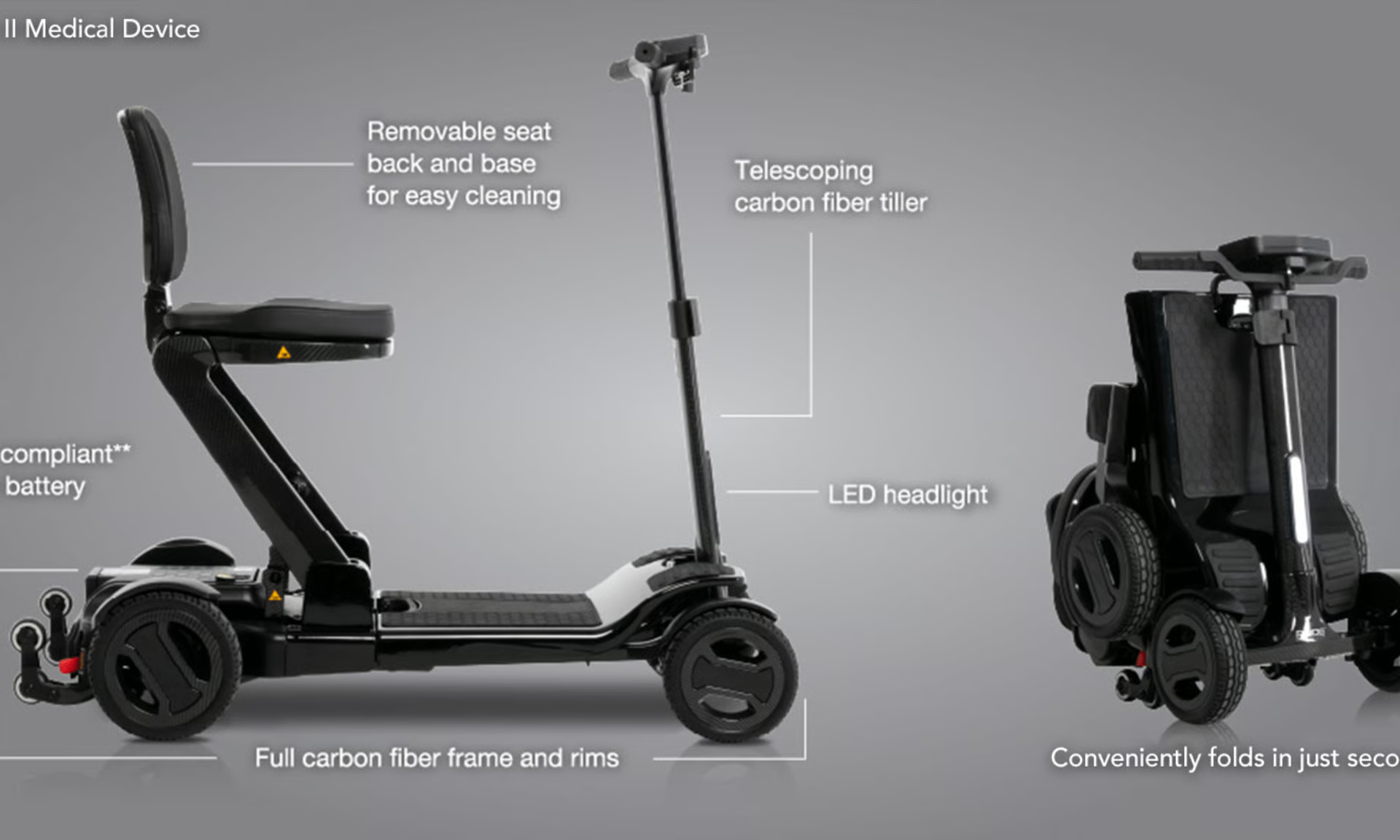
Our Magna Carbon represents the premium category:
- Frame: 18-22 lbs (carbon fiber monocoque)
- Battery: 12-18 lbs (integrated lithium)
- Total assembled: 48-55 lbs
For a detailed comparison of carbon fiber vs aluminum wheelchair construction, see our carbon fiber vs aluminum guide.
Weight and Battery Range Relationship
Heavier wheelchairs consume more battery power. Here’s how weight affects real-world range:
| Total Weight | Advertised Range | Real-World Range (level ground) | Real-World Range (mixed terrain) |
|---|---|---|---|
| 55 lbs | 15 miles | 10-12 miles | 7-9 miles |
| 80 lbs | 15 miles | 9-11 miles | 6-8 miles |
| 120 lbs | 15 miles | 7-9 miles | 4-6 miles |
| 200 lbs | 15 miles | 5-7 miles | 3-4 miles |
For a deep dive into why real-world range is 60-70% of advertised, see our electric wheelchair range guide.
Caregiver Lifting Safety
If a caregiver will be lifting the wheelchair into a vehicle, follow these guidelines:
| Caregiver Profile | Safe Lift (single piece) | Recommended Chair Type |
|---|---|---|
| Elderly spouse (65+) | 25 lbs per arm / 35 lbs total | Carbon fiber travel |
| Adult child (30-50) | 40 lbs per arm / 55 lbs total | Aluminum travel/standard |
| Professional transporter | 60+ lbs | Any type |
Never ask an elderly spouse to lift more than 35 lbs repeatedly. This is the leading cause of caregiver injuries in mobility equipment transport.
FAQ
What is the lightest electric wheelchair available?
The lightest electric wheelchairs weigh 45-55 lbs (20-25 kg) fully assembled, using carbon fiber frames and lithium batteries. These include our Magna Carbon and similar premium models. Be cautious of manufacturers advertising weights under 40 lbs — these typically exclude the battery or motors.
How much does a Medicare-covered electric wheelchair weigh?
Medicare-covered power wheelchairs are typically standard models weighing 80-120 lbs (36-54 kg). They use lead-acid batteries and steel or basic aluminum frames. They’re not designed for transport in passenger vehicles — they require a wheelchair-accessible van with a ramp or lift.
Can one person lift an electric wheelchair into a car?
It depends on the chair type and the person’s strength. Travel/folding models that break into pieces under 35 lbs can be loaded by one adult. Standard models (70+ lbs assembled) typically require two people or a vehicle lift. Carbon fiber models are designed for single-person transport.
Does wheelchair weight affect Medicare coverage?
Medicare doesn’t consider weight directly, but their “least costly alternative” rule means they’ll only cover a chair that meets your medical needs. If a lighter chair costs more but isn’t medically necessary (just more convenient), Medicare won’t cover the difference.
How does weight affect electric wheelchair range?
Every additional 10 lbs of wheelchair weight reduces real-world range by approximately 1-2 miles. This is because the motor draws more current to move the additional mass. The effect is more pronounced on inclines and rough terrain. For detailed range data, see our range comparison guide.
What’s the weight limit for flying with an electric wheelchair?
Airlines don’t limit the wheelchair’s total weight, but they do limit battery capacity. Lithium batteries over 300 Wh cannot be transported as checked baggage on passenger flights. Most travel wheelchairs use 240-288 Wh batteries to stay under this limit. See our airline battery rules guide for full details.
Conclusion
When choosing an electric wheelchair, weight affects every aspect of daily use — from transport to range to caregiver safety. The best approach is to determine your heaviest acceptable single-piece weight first, then find a chair that breaks down to meet that limit. Carbon fiber models offer the best weight-to-performance ratio but come at a premium price.
For B2B buyers sourcing lightweight wheelchairs, our OEM pricing RFQ template includes weight specification fields that ensure you get accurate quotes for lightweight configurations. For individual product inquiries, browse our carbon fiber wheelchair collection.
Interested in Wholesale Pricing?
Get OEM/ODM details, product specifications, and wholesale pricing within 24 hours.
Or send us a message directly:

 English
 Deutsch
 Français
 Español
 Italiano
 العربية
 Русский