Best Mobility Scooter for Outdoors: Top Picks and Buying Guide 2026
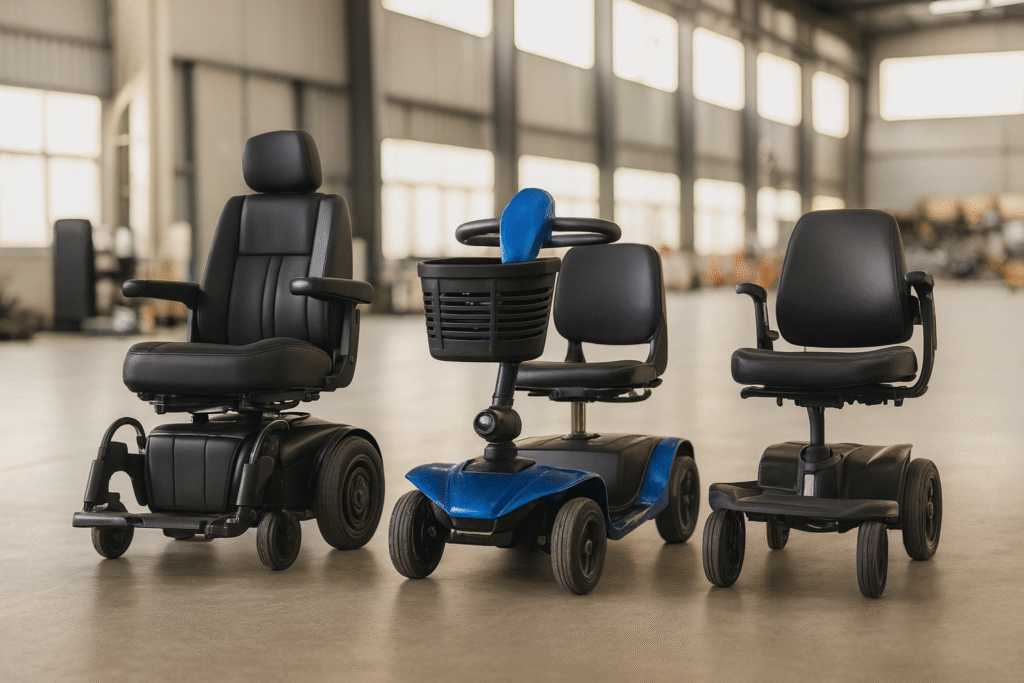
Finding the best mobility scooter for outdoor use means looking beyond motor power and battery range. The scooters that perform best on sidewalks, park trails, grass, and gravel share specific features: wide pneumatic tires, high ground clearance, four-wheel stability, and robust suspension systems. This guide covers what matters most when choosing an outdoor mobility scooter.
Quick Answer
The best outdoor mobility scooters feature four-wheel configurations, pneumatic tires at least 10 inches wide, ground clearance above 9 cm, and independent suspension. Class 3 road-legal models with 8 mph top speed and 20+ mile range are ideal for outdoor use. Tire width and ground clearance matter more than motor wattage for handling uneven terrain, grass, and gravel.
Last updated: July 2026
What Makes a Mobility Scooter “Outdoor-Ready”?
Not all mobility scooters handle outdoor environments equally. Several engineering factors determine whether a scooter will glide smoothly over park paths or struggle on the first crack in the sidewalk. Understanding these factors helps you avoid costly mistakes.
Ground Clearance
Ground clearance is the distance between the lowest point of the scooter’s chassis and the ground. For outdoor use, this is arguably the most critical specification. Scooters with less than 5 cm of clearance will scrape on curbs, tree roots, and uneven pavement transitions. Outdoor-ready models should have at least 9 cm of clearance, with heavy-duty models offering 11+ cm for true off-road capability.
Tire Width and Type
Tire specifications affect traction, comfort, and obstacle navigation more than any other single factor:
- Pneumatic (air-filled) tires absorb shocks from bumps and provide superior grip on wet or loose surfaces. For outdoor use, tire width matters: wider tires (10+ inches) distribute weight over a larger contact area, preventing the scooter from sinking into soft ground or getting caught in gaps.
- Solid tires are maintenance-free but transmit every vibration directly to the rider, making them unsuitable for rough outdoor terrain.
- Knobby tread patterns on pneumatic tires provide additional traction on grass, gravel, and dirt paths.
Four-Wheel vs Three-Wheel Configuration
For outdoor use, four-wheel scooters are strongly recommended. The four-wheel platform distributes weight across a wider base, significantly improving stability on slopes, uneven surfaces, and during turns. Three-wheel scooters offer tighter turning radiuses for indoor use but are prone to tipping on lateral slopes and can feel unstable on rough terrain.
Suspension Systems
Quality outdoor scooters feature independent suspension on at least the rear wheels, with premium models offering full four-wheel independent suspension. Suspension absorbs shocks from curbs, potholes, and uneven surfaces, reducing rider fatigue and preventing the jarring impacts that can cause back pain over longer rides.
Motor Power and Climbing Ability
While motor wattage is often emphasized in marketing materials, it’s less important than the factors above for typical outdoor use. A 400W motor with good tires and adequate ground clearance will outperform a 1000W motor with narrow solid tires on most outdoor surfaces. However, for steep hills (15°+ inclines), motor torque becomes critical. Look for scooters rated for at least 12° climbing ability for hilly areas.
Top Outdoor Mobility Scooter Categories
Class 3 Road-Legal Scooters
Class 3 scooters are the natural choice for outdoor use. They’re legally permitted on roads (excluding motorways), can reach 8 mph, and typically feature larger frames, bigger wheels, and more powerful motors than Class 2 models. They come equipped with headlights, taillights, indicators, mirrors, and horns for road safety.
Key specs to look for:
- Range: 25–35 miles per charge
- Ground clearance: 9–11+ cm
- Tire size: 10–13 inch pneumatic
- Weight capacity: 150–226 kg
- Climbing ability: 12°+
Our Cooper mobility scooter and Milo mobility scooter represent our Class 3 outdoor models, designed with the terrain-handling features discussed above.
All-Terrain Scooters
For users who venture beyond paved paths—onto grass, gravel, sand, or light trails—all-terrain scooters offer enhanced capability. These models typically feature:
- Fat tires (13+ inches wide) for maximum surface contact
- High ground clearance (11+ cm)
- Powerful motors (800W–1000W) for steep inclines
- Extended range batteries (30+ miles)
- Anti-tip stabilizer wheels
- Full suspension systems
Folding Outdoor Scooters
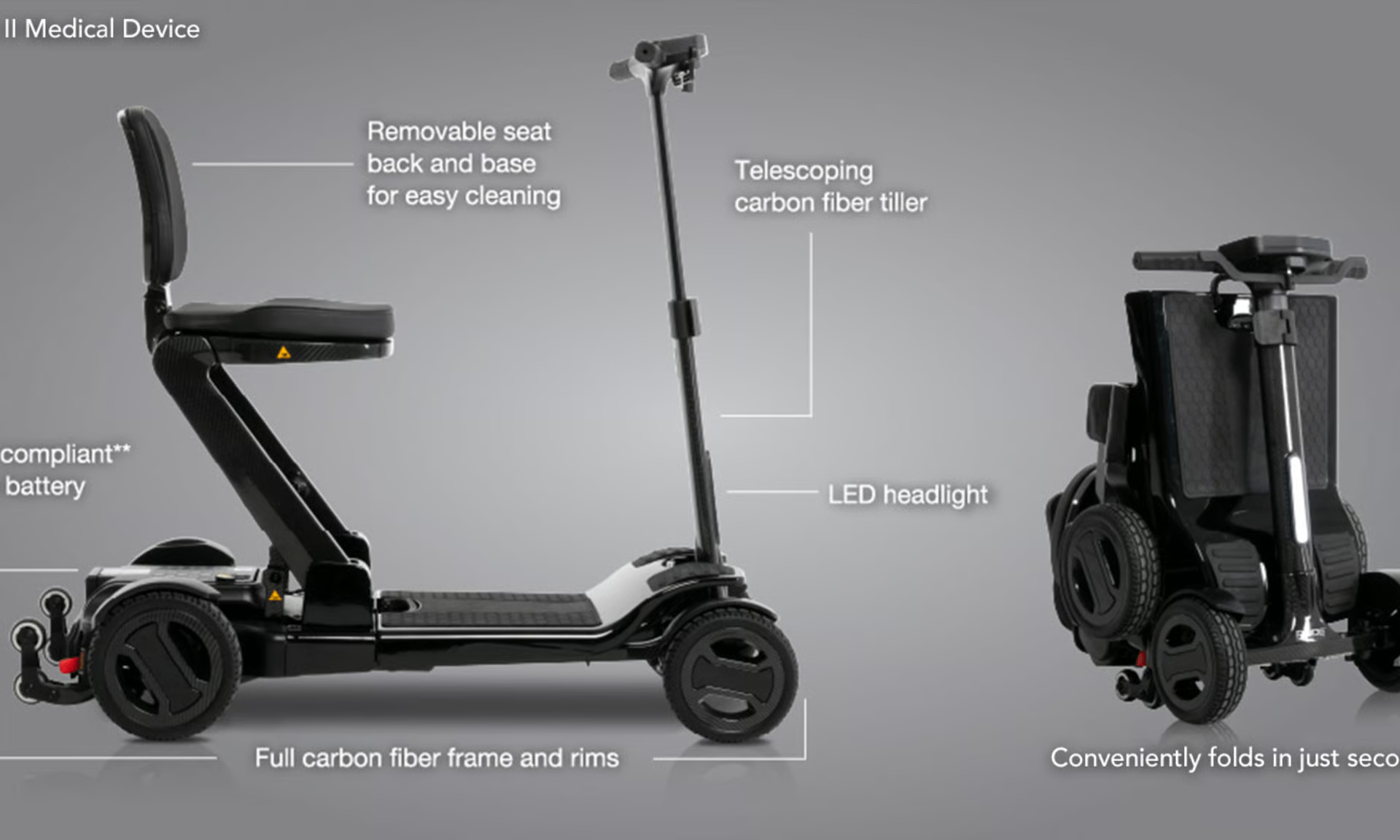
A growing category combines outdoor capability with portability. These models use carbon fiber or aircraft-grade aluminum frames to keep weight low while maintaining four-wheel stability. While they can’t match heavy-duty models for extreme terrain, they handle sidewalks, park paths, and moderate outdoor surfaces while folding compactly for car transport. The PIXIE folding scooter exemplifies this category.
Comparison: Key Outdoor Features
| Feature | Entry-Level Outdoor | Mid-Range Outdoor | Heavy-Duty All-Terrain |
|---|---|---|---|
| Ground Clearance | 5–7 cm | 9–10 cm | 11+ cm |
| Tire Type | Solid or thin pneumatic | 10″ pneumatic | 13″+ fat pneumatic |
| Suspension | None or basic | Rear independent | Full 4-wheel |
| Max Speed | 4 mph | 8 mph | 8–15 mph |
| Range | 10–15 miles | 25–30 miles | 30+ miles |
| Weight Capacity | 136 kg | 182 kg | 226+ kg |
| Climbing Ability | 8° | 12° | 20°+ |
| Price Range | $600–$2,000 | $2,000–$4,000 | $4,000–$6,000+ |
From the Field
We field-test every scooter model across multiple terrain types before approving it for production, and the data consistently shows that tire width and ground clearance matter far more than motor power for outdoor performance. During our last testing cycle, a 400W scooter with 13-inch pneumatic tires and 11 cm clearance outperformed a 700W model with 8-inch solid tires and 5 cm clearance on grass, gravel, and uneven pavement. The narrower-tire scooter struggled with traction and bottomed out on curb transitions, while the wider-tire model rolled over the same obstacles smoothly. We now specify minimum tire widths and clearance standards for every outdoor-rated model in our catalog. Distributors can see our testing protocols during a factory tour, and our carbon fiber technology page explains how advanced materials help reduce scooter weight without sacrificing the structural rigidity needed for outdoor durability.
Buying Tips for Outdoor Scooters
- Prioritize tires over motor: Wide pneumatic tires (10″+) with knobby treads will transform any scooter’s outdoor capability more than upgrading motor wattage.
- Check ground clearance: Measure the lowest chassis point. Anything under 7 cm will cause problems on typical outdoor terrain.
- Test on real terrain: If possible, test the scooter on grass, gravel, and curb transitions—not just showroom floors.
- Consider battery type: Lithium-ion batteries perform better in cold weather and provide more consistent power output on demanding terrain.
- Evaluate suspension: For rides longer than 30 minutes, suspension isn’t a luxury—it’s essential for preventing back pain and fatigue.
- Verify legal classification: Ensure the scooter’s Class rating matches your intended use environment. Using a Class 2 scooter on roads is illegal in most jurisdictions.
For comprehensive guidance on scooter selection, our mobility scooter buying guide covers additional factors including battery maintenance, warranty considerations, and accessories.
FAQ
What is the best tire type for outdoor mobility scooters?
Pneumatic (air-filled) tires with knobby treads are the best choice for outdoor use. They absorb shocks, provide superior traction on wet and loose surfaces, and handle grass and gravel far better than solid tires. The main trade-off is maintenance—pneumatic tires require regular air pressure checks and can puncture. For maximum outdoor capability, look for tires at least 10 inches wide.
How much ground clearance does an outdoor scooter need?
For typical outdoor use (sidewalks, park paths, moderate terrain), a minimum of 9 cm (3.5 inches) of ground clearance is recommended. For more challenging terrain like grass, gravel, or trails, look for 11+ cm (4.3+ inches). Scooters with less than 5 cm of clearance will struggle with standard curb transitions and may bottom out on uneven pavement.
Are Class 3 scooters better for outdoor use than Class 2?
Generally yes. Class 3 scooters are designed for road and outdoor use, with larger frames, bigger wheels, more powerful motors, and longer ranges than Class 2 models. They can legally travel at 8 mph on roads and typically have ground clearance and tire specifications better suited for outdoor terrain. However, some premium Class 2 travel scooters with pneumatic tires can handle light outdoor use adequately.
Can mobility scooters go on grass and gravel?
Yes, but only models with adequate ground clearance (9+ cm), wide pneumatic tires (10+ inches), and four-wheel stability. Narrow-tire or solid-tire scooters will struggle on soft ground and may get stuck. All-terrain models with fat tires and high clearance handle grass, gravel, and even light trails confidently. Always check the manufacturer’s terrain recommendations.
How far can an outdoor mobility scooter travel on one charge?
Range varies significantly by model and conditions. Entry-level outdoor scooters typically achieve 10–15 miles per charge. Mid-range Class 3 models offer 25–30 miles. Heavy-duty all-terrain scooters can reach 30+ miles on a single charge under optimal conditions. Real-world range is reduced by hills, rough terrain, rider weight, cold weather, and battery age.
Conclusion
The best mobility scooter for outdoor use isn’t necessarily the one with the most powerful motor—it’s the one with the right combination of ground clearance, tire width, suspension, and stability for your specific terrain. By prioritizing these engineering factors over marketing specifications, you’ll find a scooter that performs reliably on sidewalks, park trails, and everything in between. For businesses sourcing outdoor-capable scooters, our OEM/ODM services and trade show appearances demonstrate our commitment to manufacturing scooters that perform in real-world outdoor conditions.
1000Mobility Editorial Team
Product specialists with hands-on experience in mobility equipment manufacturing and B2B export. Learn more →
Interested in Wholesale Pricing?
Get OEM/ODM details, product specifications, and wholesale pricing within 24 hours.
Or send us a message directly:
 English
  Deutsch
  Français
  Español
  Italiano
  العربية
  Русский