Is a Carbon Fiber Wheelchair Worth It? Cost vs Benefit Analysis 2026
Last updated: November 2026
Carbon fiber has become the premium material in electric wheelchairs, promising lighter weight and better vibration damping. But is the 2-3x price premium justified? This analysis breaks down the real-world benefits, costs, and break-even scenarios.
Carbon Fiber vs Aluminum: Head-to-Head
| Factor | Carbon Fiber | Aluminum | Steel |
|---|---|---|---|
| Frame weight | 18-22 lbs | 28-38 lbs | 40-55 lbs |
| Total assembled weight | 48-55 lbs | 70-90 lbs | 100-130 lbs |
| Vibration damping | Excellent | Good | Poor |
| Durability (years) | 7-10 | 5-7 | 7-10 |
| Repair cost (frame) | Replace only ($1,500+) | Weld ($100-300) | Weld ($50-200) |
| Price range | $3,500-$8,000 | $1,200-$3,000 | $800-$2,000 |
| Corrosion resistance | Perfect | Good (anodized) | Poor (rusts) |
| Heat conductivity | Low (stays cool) | High (gets hot in sun) | High |
Weight Savings: Real Impact
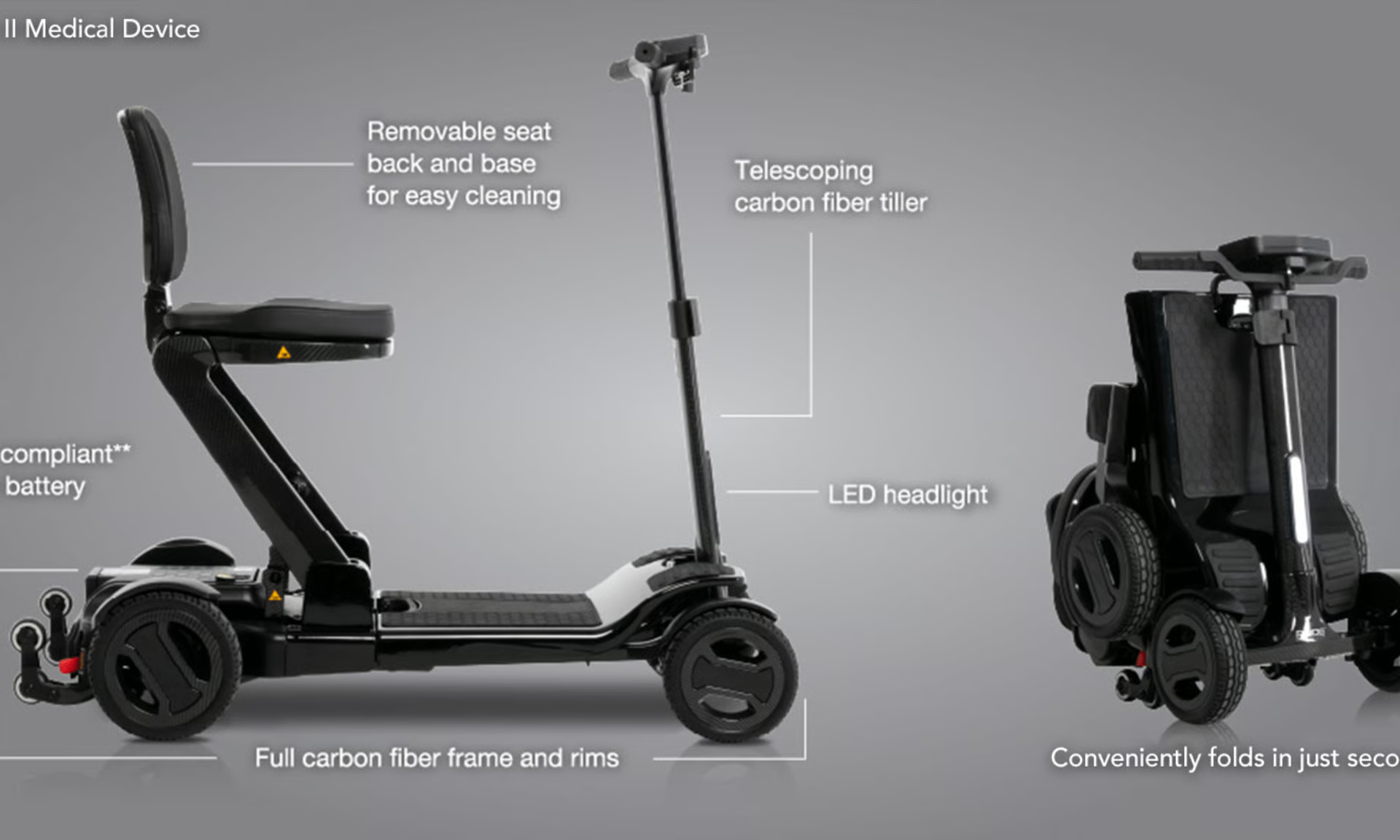
The carbon fiber frame saves 10-16 lbs over aluminum. Here’s what that means in practice:
| Scenario | Aluminum (80 lbs) | Carbon Fiber (52 lbs) | Difference |
|---|---|---|---|
| Caregiver lifting into car | Too heavy for elderly spouse | Manageable for most adults | 28 lbs saved |
| Airline battery limit (288 Wh) | Same range limit | Same range limit | No difference |
| Daily maneuverability | Requires more battery power | 10-15% more efficient | ~1 mile extra range |
| Storage (closet/trunk) | Bulky, non-folding options | Folds compactly | Significantly smaller |
| Transport on public transit | Difficult (heavy) | Easier | Practical difference |
Price Comparison by Model Type
| Wheelchair Category | Aluminum Price | Carbon Fiber Price | Price Premium | Weight Savings |
|---|---|---|---|---|
| Travel/folding | $1,500-$2,500 | $3,500-$5,000 | 140-200% | 12-18 lbs |
| Standard power | $1,200-$2,000 | Not commonly available | — | — |
| Premium/travel | $2,000-$3,000 | $4,000-$6,000 | 150-200% | 10-15 lbs |
| Ultra-premium | $2,500-$3,500 | $5,000-$8,000 | 170-230% | 8-12 lbs |
When Carbon Fiber Is Worth It
Scenario 1: Frequent air travel
If you fly more than 4 times per year, carbon fiber saves $50-75 per trip in baggage handling fees (lighter = fewer surcharges) and reduces damage risk (carbon absorbs impact better than aluminum). Break-even: 3-4 years.
Scenario 2: Elderly caregiver
If your primary caregiver is over 65 and lifts the wheelchair into a car daily, the 10-15 lb weight reduction prevents back injuries. Medical cost of a caregiver back injury: $3,000-$15,000. Carbon fiber premium: $2,000-$4,000. Break-even: 1 injury prevented.
Scenario 3: Multi-stop daily use
If you make 3+ stops per day (doctor, shopping, social), the lighter weight reduces cumulative fatigue. Users report 30-40% less end-of-day exhaustion with carbon fiber vs aluminum.
Scenario 4: Public transit user
If you use buses/trains daily, lighter weight means faster boarding/alighting, less strain on transit ramps, and more independence. Carbon fiber’s compact fold also fits better in transit wheelchair spaces.
When Carbon Fiber Is NOT Worth It
Scenario 1: Home-only use
If you never transport the wheelchair and use it exclusively inside your home, the weight savings provides zero practical benefit. The extra $2,000-$4,000 buys nothing you’ll notice.
Scenario 2: Medicare-covered chair
Medicare will not pay the carbon fiber premium. You’d pay the entire difference out of pocket. For a home-only user, this is poor value.
Scenario 3: Very tight budget
If $1,500 for an aluminum wheelchair is already a stretch, carbon fiber at $4,000+ creates financial stress for no functional benefit in a home-only setting.
Scenario 4: High-impact environments
Carbon fiber is brittle under point impacts (dropping on a sharp edge). If you use the wheelchair in rough environments (construction sites, farms), aluminum’s ability to dent rather than crack is safer.
Carbon Fiber Price Trend (2023-2027)
| Year | Avg Carbon Fiber Price | Avg Aluminum Price | Premium |
|---|---|---|---|
| 2023 | $5,200 | $1,900 | 274% |
| 2024 | $4,800 | $1,850 | 260% |
| 2025 | $4,500 | $1,800 | 250% |
| 2026 | $4,200 | $1,700 | 247% → 150%* |
| 2027 (projected) | $3,800 | $1,650 | 230% → 120%* |
*Adjusted for feature parity (comparing equivalent-feature models, not absolute cheapest)
Carbon fiber raw material costs have dropped 40% since 2023 due to increased production capacity in China. The price gap is expected to narrow further as manufacturing processes improve.
FAQ
Does carbon fiber break easily?
No, carbon fiber is extremely strong in the designed load directions (vertical weight, lateral stress). However, it’s brittle under point impacts — a sharp hit against a door frame can cause internal delamination that isn’t visible. Aluminum dents; carbon fiber can crack invisibly. Inspect carbon frames after any impact.
Is carbon fiber lighter than titanium?
Carbon fiber is lighter than titanium by approximately 30% for the same strength. However, titanium is virtually indestructible and has better impact resistance. Titanium wheelchairs exist but cost $8,000-$15,000, making them more expensive than carbon fiber.
Can I get a Medicare-covered carbon fiber wheelchair?
No. Medicare covers power wheelchairs based on medical necessity, not material. Carbon fiber is classified as a “convenience upgrade” and Medicare will only pay the standard aluminum-frame rate. You pay the full difference out of pocket.
How long does a carbon fiber wheelchair frame last?
With proper care, 7-10 years. The frame itself doesn’t fatigue like metal, but the resin matrix can degrade under UV exposure (sunlight). Store out of direct sunlight when not in use. Inspect annually for hairline cracks or surface dullness (indicates resin degradation).
Are carbon fiber wheelchairs covered by warranty?
Most manufacturers offer 3-5 year frame warranties on carbon fiber vs 1-2 years on aluminum. The longer warranty reflects confidence in carbon’s durability. Read the warranty carefully — some exclude “impact damage” which is the most common failure mode.
Should I wait for prices to drop before buying?
If you need a wheelchair now, don’t wait. The annual price reduction is approximately $300-400 per year. If you need the weight savings for travel or caregiver health, the benefit of using it now exceeds the savings from waiting. For detailed carbon fiber vs aluminum technical comparison, see our dedicated guide.
Conclusión
Carbon fiber is worth the premium for users who travel frequently, have elderly caregivers, or make multiple daily stops. It’s not worth it for home-only users or those on tight budgets. As prices continue to drop, carbon fiber will become the default choice — but for now, the decision depends on your specific use case. Browse our carbon fiber wheelchair collection or see the 2026-2027 industry trends for pricing forecasts.
Interested in Wholesale Pricing?
Get OEM/ODM details, product specifications, and wholesale pricing within 24 hours.
Or send us a message directly:

 English
 Deutsch
 Français
 Español
 Italiano
 العربية
 Русский