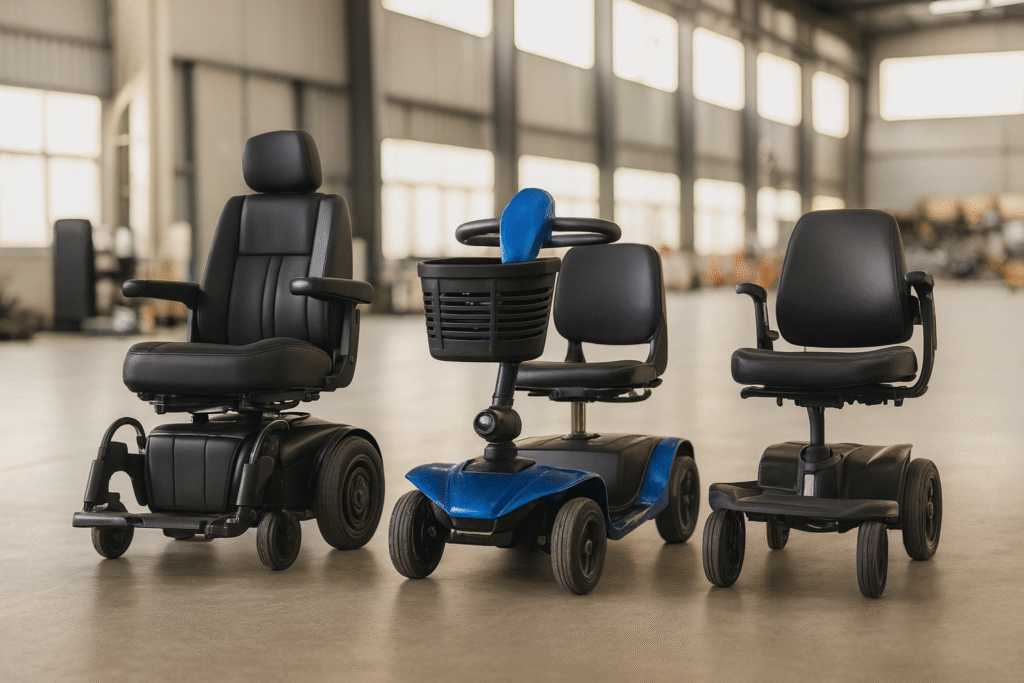
Global Wheelchair Market Trends 2026
From the Field
Our export data from the past 18 months paints a clear picture of shifting global demand. APAC orders grew 15% year-over-year, driven primarily by Japan’s aging population and Southeast Asia’s expanding middle class. Japan alone now accounts for 22% of our APAC shipments, with demand concentrated in lightweight folding models under 12 kg. The EU market tells a different story — distributors in Germany and the Netherlands consistently request premium carbon fiber models, and our average order value in Europe is 40% higher than in other regions. We also observed a sharp increase in inquiries from Brazil and Mexico, though regulatory approval timelines in LATAM still average 4-6 months longer than our EU certifications. Our production planning now allocates separate lines for APAC-focused lightweight models and EU-focused premium builds, a split that has reduced lead times by 20 days on average for both markets.
1000Mobility Editorial Team
Product specialists with hands-on experience in mobility equipment manufacturing and B2B export. Learn more →
Last updated: July 2026
The global wheelchair market is undergoing a period of remarkable transformation. Driven by demographic shifts, technological innovation, and evolving healthcare policies, the industry is expanding at a pace that presents significant opportunities for manufacturers, distributors, and importers alike. For B2B stakeholders evaluating market entry or expansion strategies, understanding the forces shaping this landscape is essential.
This analysis synthesizes data from leading market research firms to provide a comprehensive view of wheelchair market trends in 2026 and beyond.
How Large Is the Global Wheelchair Market in 2026?
Market sizing varies across research firms due to differences in methodology, product scope, and geographic coverage. Here’s a synthesis of the most recent estimates:
| Source | 2025 Market Size | 2026 Estimated Size | Forecast Period | Forecast Value | CAGR |
|---|---|---|---|---|---|
| Fortune Business Insights | $5.58B | $6.11B | 2026–2034 | $13.14B (2034) | 10.05% |
| Precedence Research | $9.34B | $10.23B | 2026–2035 | $20.78B (2035) | 8.33% |
| Research Nester | $6.94B | $7.47B | 2026–2035 | $15.69B (2035) | 8.5% |
| Verified Market Reports | $5.97B | — | 2026–2034 | $9.56B (2034) | 5.4% |
| Business Research Insights | — | $12.51B | 2026–2035 | $20.36B (2035) | 5.56% |
Sources: Fortune Business Insights, Precedence Research, Research Nester, Verified Market Reports, Business Research Insights
The variation in estimates reflects different product definitions — some reports include only manual and powered wheelchairs, while others encompass mobility scooters, components, and accessories. Regardless of the specific figure, all sources agree on the fundamental trajectory: the market is growing steadily, with CAGRs ranging from 5.4% to 10.05%.
What Are the Key Drivers of Wheelchair Market Growth?
Population Aging
The most significant long-term driver is global demographic aging. According to the United Nations, the number of persons aged 60 or older will nearly double from current levels to 2.1 billion by 2050, while those aged 80 or older will double in high-income countries and triple in lower-middle-income countries (UN Social Summit Facts).
By 2080, persons aged 65 or older will outnumber children under 18 globally. This demographic shift directly expands the pool of potential wheelchair users, as older adults face higher rates of arthritis, stroke-related disability, Parkinson’s disease, and other mobility-impairing conditions.
Rising Disability Prevalence
An estimated 1.3 billion people — approximately 16% of the world’s population — experience some form of disability, according to the UN. The WHO reports that 80 million people worldwide need a wheelchair, yet only 5–35% have access to one depending on their country (WHO Assistive Technology).
In the United States alone, more than one in four adults (28.7%) have a disability, with mobility being the most common functional difficulty (CDC). Approximately 5.5 million Americans use mobility devices, creating sustained replacement demand across hospitals, rehabilitation centers, and households.
Technological Innovation
Advances in materials science, battery technology, and smart systems are reshaping product capabilities:
- Carbon fiber and lightweight composites: Carbon fiber frames are 30–40% lighter than aluminum equivalents, improving portability and reducing user fatigue. Learn more about carbon fiber technology in mobility devices.
- Lithium-ion batteries: Extended range and faster charging for powered wheelchairs.
- Smart features: IoT connectivity, pressure monitoring, GPS functionality, and programmable driving profiles are emerging in premium segments. Smart wheelchairs account for approximately 12% of advanced mobility demand.
- AI and autonomous navigation: Brain-computer interface research and semi-autonomous navigation systems are advancing, though still largely experimental.
Healthcare Policy and Reimbursement
Government programs like Medicare and Medicaid in the U.S., along with national health systems in Europe, provide coverage for wheelchairs and mobility devices, reducing out-of-pocket costs and stimulating demand. The WHO’s push for universal access to assistive technology, with an estimated 3.5 billion people projected to need assistive products by 2050, is driving policy changes that expand market access globally.
How Does the Market Vary by Region?
North America
North America dominates the global wheelchair market, holding approximately 35–44% of global market share across various reports. The U.S. market alone was valued at approximately USD 2.94 billion in 2025 and is projected to reach USD 6.80 billion by 2035, growing at a CAGR of 8.75% (Precedence Research).
Key factors driving North American growth include:
- Extensive Medicare and Medicaid reimbursement infrastructure
- High prevalence of mobility-impairing conditions
- Strong presence of major manufacturers
- Advanced healthcare infrastructure
Europe
Europe represents approximately 29% of the global market. Countries like Germany, the U.K., and France have well-established healthcare systems with comprehensive coverage for mobility devices. The U.K. alone has approximately 16.8 million people with a disability, representing 25% of the total population (Fortune Business Insights).
Asia Pacific
Asia Pacific is the fastest-growing region, driven by:
- Large aging populations in Japan and China
- Improving healthcare infrastructure
- Growing manufacturing capacity in China and India
- Government initiatives supporting assistive device access
China’s wheelchair market is projected at approximately USD 0.69 billion in 2026, representing roughly 11.1% of global sales. Japan’s market is estimated at USD 0.37 billion, and India’s at USD 0.12 billion for the same year (Fortune Business Insights).
Latin America and Middle East & Africa
These regions collectively account for approximately 10–13% of the global market. Growth is driven by gradual public health initiatives, NGO-supported mobility programs, and improving healthcare access. The Middle East & Africa region generated USD 0.24 billion in 2025, with Latin America at USD 0.31 billion.
What Does the Competitive Landscape Look Like?
The global wheelchair market is moderately fragmented. The top 5 manufacturers collectively account for approximately 30% of the advanced powered-mobility segment, with leading individual companies holding approximately 8%, 7%, 6%, 5%, and 4% market share respectively (Business Research Insights).
Key global players include:
| Company | Headquarters | Key Strengths |
|---|---|---|
| Invacare Corporation | USA | Broad DME portfolio, global distribution |
| Pride Mobility Products | USA | Power wheelchairs and scooters |
| Sunrise Medical | USA/Germany | Premium manual and power chairs |
| Ottobock Healthcare | Germany | Advanced rehabilitation technology |
| Permobil | Sweden | Complex rehab technology |
| Drive Medical | USA | Value-oriented DME |
| Karman Healthcare | USA | Lightweight and ergonomic designs |
Recent product launches highlight the industry’s innovation trajectory:
- Sunrise Medical launched the QUICKIE QS5 X lightweight folding wheelchair (November 2024) and the Quickie Q700M SE high-performance electric wheelchair with six-wheel suspension (January 2024).
- eFOLDi introduced the Navigator, its lightest folding powered wheelchair, in March 2025.
- Yamaha Motor launched the JWG-1 wheelchair electric power unit in October 2024, enabling motorization of manual wheelchairs.
- IIT Madras developed NeoStand, a fully motorized standing electric wheelchair, in March 2024.
For manufacturers and distributors looking to differentiate, OEM/ODM partnerships offer a path to developing branded products without the overhead of full-scale manufacturing. Understanding why buyers choose specific suppliers — from quality certifications to production capacity — is equally critical in this competitive landscape.
What Are the Emerging Product Trends in 2026?
Electric Wheelchairs Continue to Gain Share
Electric wheelchairs accounted for 56% of product demand in 2025, up from historical levels, reflecting user preference for powered mobility that reduces physical effort (Precedence Research). Within this segment, carbon fiber electric wheelchairs are gaining traction as manufacturing costs decrease and consumer awareness of weight-to-strength advantages grows.
Lightweight and Portable Designs
Approximately 28% of recent product innovation focuses on lightweight construction, reflecting strong demand from users who frequently transport their wheelchairs in vehicles or on flights. Carbon fiber and advanced aluminum alloys can reduce overall wheelchair weight by more than 20%, improving portability and user handling (Business Research Insights).
Smart and Connected Wheelchairs
Smart wheelchairs account for approximately 12% of advanced mobility demand, with joystick-based systems representing 59% of smart-wheelchair configurations. Advanced models increasingly incorporate Bluetooth connectivity, GPS functionality, pressure sensors, and programmable driving profiles. Connected monitoring influences approximately 17% of purchasing decisions in the premium segment.
Circular Economy and Sustainability
The industry is shifting toward circular economy models, with companies developing modular, recyclable, and refurbishable wheelchairs. In March 2022, Etac launched its first circular wheelchair, the Etac Cross revive, in partnership with Medux. This trend reflects both regulatory pressure and growing consumer preference for sustainable products (Fortune Business Insights).
Standing and Postural Support Technology
Standing wheelchairs and advanced postural support systems are addressing clinical needs beyond basic mobility. These devices improve blood flow, reduce pressure injuries, and enhance user independence. IIT Madras’s NeoStand and Chulalongkorn University’s Exoskeleton Wheelchair represent the cutting edge of this trend.
What Challenges and Barriers Does the Market Face?
Despite strong growth fundamentals, the wheelchair market faces several challenges:
-
High acquisition costs: Approximately 31% of potential users face affordability limitations, particularly for powered, standing, and customized rehabilitation wheelchairs.
-
Reimbursement complexity: About 26% of underserved users encounter reimbursement complexity or delayed authorization, creating friction in the purchasing process.
-
Infrastructure and accessibility barriers: Lack of suitable infrastructure in public spaces, transport systems, and workplaces limits wheelchair users’ independence and can constrain market growth in developing regions.
-
Supply chain constraints: Raw material costs, component shortages, and logistics challenges can affect production timelines and pricing.
-
Professional fitting gaps: Approximately 10% of potential users face insufficient professional wheelchair fitting and assessment services, particularly in emerging markets.
What Is the Future Outlook for the Wheelchair Market?
The wheelchair market is at an inflection point. Several structural forces will shape its trajectory through 2035 and beyond:
- AI and generative AI integration: Autonomous navigation, predictive maintenance, and personalized control systems will redefine product capabilities, opening new revenue streams through subscription services and remote monitoring.
- Demographic tailwinds: The aging population trend is irreversible and will sustain demand for decades. The UN projects the global population aged 60+ will reach 2.1 billion by 2050.
- Reg harmonization: International safety standards (ISO 7176 revisions) and reimbursement policy reforms are reducing market access barriers and encouraging innovation.
- Emerging market expansion: As healthcare infrastructure improves in Asia Pacific, Latin America, and the Middle East, millions of currently underserved users will gain access to mobility devices.
For B2B stakeholders — importers, distributors, and healthcare procurement specialists — the implications are clear. The market is growing, technology is advancing, and the competitive landscape is evolving. Staying informed about industry trade shows and market developments is essential for identifying new products, suppliers, and partnership opportunities.
FAQ
Conclusione
The global wheelchair market in 2026 is defined by robust growth, technological innovation, and expanding access across both developed and emerging markets. With market values ranging from USD 6 to 10 billion and CAGRs of 5.4–10%, the industry offers significant opportunities for manufacturers, distributors, and importers who can navigate the competitive landscape and deliver products that meet evolving user needs.
Key takeaways for B2B stakeholders: electric wheelchairs and lightweight carbon fiber designs represent the fastest-growing product segments; North America remains the largest market while Asia Pacific offers the highest growth potential; and partnerships with established manufacturers through OEM/ODM services can accelerate market entry. Understanding supplier selection criteria and staying connected through industry trade shows will be essential for capitalizing on this expanding market.
Interested in Wholesale Pricing?
Get OEM/ODM details, product specifications, and wholesale pricing within 24 hours.
Or send us a message directly:
 English
  Deutsch
  Français
  Español
  Italiano
  العربية
  Русский