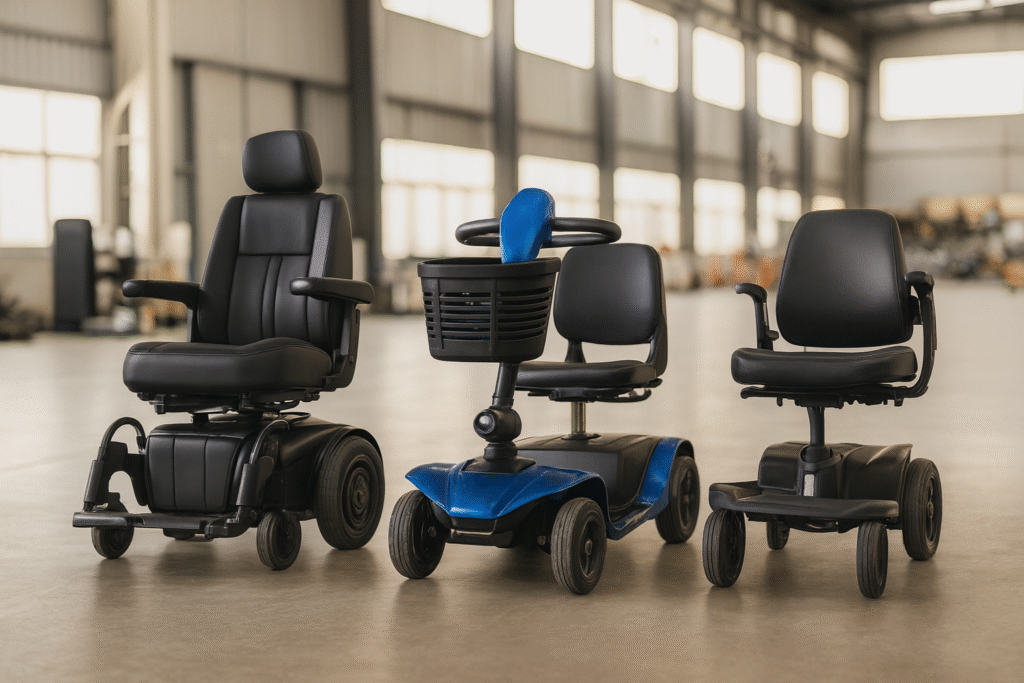
Quick Answer: Yes \xe2\x80\x94 you can fly with an electric wheelchair if its lithium-ion battery is 300 watt-hours (Wh) or less and meets FAA PackSafe requirements. Non-spillable and dry batteries can stay installed if terminals are protected. Notify your airline’s accessibility desk 48\xe2\x80\x9372 hours before departure with your battery specifications. Spare batteries travel in the cabin only, never in checked baggage.
\n\n
Last updated: October 2026
The One Number That Decides Everything: 300 Watt-Hours
The FAA classifies mobility device batteries separately from general lithium-ion batteries. Under 49 CFR 175.10(a)(17), an installed lithium-ion battery on a wheelchair or mobility aid has no watt-hour limit if it is permanently protected by the device’s design. However, if the battery must be removed for transport — which is the case for most folding electric wheelchairs — the limit is 300 Wh.
This single number determines whether your chair flies or stays home. Most travel-friendly electric wheelchairs use 24V batteries between 5Ah and 12Ah, which translates to 120–288 Wh — comfortably under the limit. Problems arise when buyers choose a general-purpose chair with a high-capacity battery never designed for airline approval.
How to Calculate Your Battery’s Watt-Hours
Check the label on your battery or the manufacturer’s spec sheet. The formula is straightforward:
Volts × Amp-hours = Watt-hours
| Common Battery Configurations | Calculation | Watt-Hours | Airline Approved? |
|---|---|---|---|
| 24V × 5Ah | 120 Wh | 120 Wh | ✅ Yes |
| 24V × 10Ah | 240 Wh | 240 Wh | ✅ Yes |
| 24V × 12Ah | 288 Wh | 288 Wh | ✅ Yes (close to limit) |
| 24V × 15Ah | 360 Wh | 360 Wh | ❌ No (exceeds 300 Wh) |
| 48V × 20Ah | 960 Wh | 960 Wh | ❌ No (far exceeds limit) |
If your battery exceeds 300 Wh and is not permanently installed with protective housing, you cannot fly with that wheelchair. Contact the manufacturer for a smaller battery option or consider a model specifically designed for air travel.
For a deeper look at battery types and their trade-offs for B2B buyers, see our Wheelchair Battery Technology Guide.
Battery Types and Their Airline Rules
The FAA and TSA apply different rules depending on battery chemistry:
Lithium-Ion Batteries (Most Common)
Lithium-ion batteries are the standard in modern folding electric wheelchairs. They are lightweight, energy-dense, and rechargeable. Under FAA PackSafe guidance:
- If the battery is removable: Maximum 300 Wh. The battery must be removed, protected from damage, and carried in the passenger cabin — never checked.
- If the battery is permanently installed and protected by design: No watt-hour limit. The wheelchair travels as checked baggage with the battery in place.
- Spare batteries: One spare up to 300 Wh, or two spares up to 160 Wh each. All spares must be in carry-on baggage with terminals protected (original packaging, tape, or individual plastic bags).
- Lithium metal (non-rechargeable) batteries: Forbidden entirely on mobility devices.
Non-Spillable Batteries (Sealed Lead-Acid / AGM / Gel)
Common on heavier mobility scooters and some power chairs:
- The battery can remain installed if securely attached, the housing provides protection, and terminals are protected from short circuits.
- The wheelchair must be loaded, stowed, secured, and unloaded in an upright position.
- The battery must conform to 49 CFR 173.159a(d) requirements.
- Airline personnel may inspect the battery visually and, if necessary, remove it (performed by qualified staff only).
Spillable (Wet Cell) Batteries
Increasingly rare in modern mobility equipment:
- The battery must be disconnected, removed, and packaged separately in a strong, rigid container.
- Terminals must be protected against short circuits.
- The wheelchair must be loaded and stored upright.
- Most airlines discourage spillable batteries; some refuse them entirely.
Airline-by-Airline Rules: What Actually Happens at Check-In
FAA regulations set the ceiling, but individual airlines can be stricter. Always check with your specific carrier. Here is what the major U.S. and international airlines currently enforce:
| Airline | Battery Limit | Removal Required? | Key Notes |
|---|---|---|---|
| Alaska Airlines | 300 Wh | Yes, cabin | Removal required regardless of design |
| Southwest | 300 Wh | Yes, cabin, no tools | Battery must be removable without tools |
| JetBlue | 300 Wh | Only if no protective housing | Case-by-case inspection |
| United | 300 Wh (removable); no limit (installed) | If collapsible | Only major U.S. carrier stating “no Wh limit” for installed batteries |
| Delta | Not published | Sometimes | Call accessibility desk |
| American | Not published — call | Not stated | Contact 48–72h before departure |
| Qantas | 300 Wh (removable) | If designed for removal | Must declare at check-in; free-wheel mode activated |
| Virgin Atlantic | 300 Wh (removable) | If designed for removal | Battery must meet UN test standards |
| Air Canada | 300 Wh | Check with carrier | Follows CATSA guidelines |
| Lufthansa | 300 Wh (removable) | Case-by-case | Follows EASA/IATA rules |
The strategic takeaway: Build for the strictest airline on your route. A device under 300 Wh with a hand-removable battery and a clearly labeled watt-hour rating clears every carrier on this list. The reverse is not true.
Step-by-Step: Preparing Your Electric Wheelchair for a Flight
1. Check Your Battery Watt-Hours (2 Weeks Before)
Look at the battery label or contact the manufacturer. Calculate Wh using the formula above. If you are close to 300 Wh, verify the exact rating — do not estimate.
2. Call the Airline Accessibility Desk (48–72 Hours Before)
Provide:
- Your flight number and departure date
- Wheelchair make and model
- Battery type (lithium-ion, non-spillable, etc.)
- Battery watt-hour rating
- Whether the battery is removable
- Overall wheelchair weight and folded dimensions
Request a written confirmation or reference number. This protects you if ground staff are unfamiliar with the rules.
3. Prepare the Wheelchair for Transport
- Disconnect the battery if the airline requires removal (most do for lithium-ion)
- Protect battery terminals with tape or original packaging
- Place the battery in a protective pouch for cabin carry-on
- Activate free-wheel mode if your wheelchair has one (this disengages the motor)
- Switch off the power completely
- Fold the wheelchair and secure any moving parts
- Remove accessories (cushions, cup holders, bags) and carry them separately
4. Document Everything (Before You Leave Home)
Take clear photos of:
- The wheelchair from all angles (proving pre-flight condition)
- The battery label showing watt-hour rating
- The battery properly packaged for transport
- Any existing scratches or damage
If the airline damages your wheelchair during transport, these photos are your evidence for a claim.
5. Pack a Reassembly Toolkit
After landing, you may need to reattach the battery or reconfigure the chair. Bring:
- Allen wrench set (metric and imperial)
- Small adjustable wrench
- Zip ties (for temporary cable management)
- Battery terminal tape
- Copy of your airline confirmation
Keep this kit in your carry-on, not in checked baggage.
What Happens at the Airport
Check-In
Arrive at least one hour before the standard check-in closing time (the airline can require this for battery-powered wheelchairs under 14 CFR 382.127(b)). The agent will verify your battery type and watt-hours, tag the wheelchair, and log the battery location for the pilot-in-command notification.
TSA Screening
TSA officers are trained to screen mobility devices. Your wheelchair will go through the advanced imaging technology or receive a pat-down inspection. If the battery is removed, it goes through the X-ray separately. CATSA and TSA both permit wheelchair batteries through the checkpoint.
Gate Check and Loading
Your wheelchair is gate-checked — you use it to the boarding door, then transfer to your seat. Ground staff load it into the cargo hold. If the battery is removed, you carry it into the cabin yourself.
Arrival and Recovery
Your wheelchair is returned at the gate or baggage claim (airline policy varies). Unpack your reassembly toolkit, reattach the battery if needed, and verify that everything functions before leaving the airport. If you notice damage, file a report with the airline immediately — before leaving the terminal.
Common Mistakes to Avoid
- Buying a wheelchair without checking the battery Wh rating — This is the most frequent reason travelers are denied boarding. Verify the Wh before purchase, not at the gate.
- Assuming all airlines follow the same rules — Southwest requires no-tools removal; United allows installed batteries. Always check.
- Not calling ahead — Showing up without pre-notification can result in delayed boarding or refused transport.
- Forgetting to photograph the chair — Without pre-flight photos, damage claims are nearly impossible to prove.
- Packing tools in checked baggage — If your bag is delayed, you cannot reassemble your wheelchair at the destination.
- Not knowing the difference between “airline-approved” and “FAA-compliant” — “Airline approved” is a marketing term, not a certification. No agency issues it. The only number that matters is watt-hours.
Frequently Asked Questions
Can I bring spare batteries for my electric wheelchair on a plane?
Yes. Under FAA rules, you may carry one spare battery up to 300 Wh, or two spare batteries up to 160 Wh each. All spare batteries must be in your carry-on baggage with terminals protected (original packaging, tape over terminals, or individual plastic bags). Spare batteries are never allowed in checked baggage.
Do I need to remove the battery from my wheelchair before flying?
It depends on your airline and your wheelchair’s design. If the battery is lithium-ion and removable, most U.S. airlines require removal and cabin transport. If the battery is non-spillable (sealed lead-acid) and the wheelchair can be loaded upright, the battery can usually stay installed. United Airlines is the only major carrier that explicitly allows installed lithium-ion batteries with no watt-hour limit if they are protected by design. Always confirm with your airline.
Can I gate-check my electric wheelchair like a stroller?
Yes. You use your wheelchair to the boarding door, then transfer to your seat. Ground staff gate-check the wheelchair and return it at the gate upon arrival (or at baggage claim, depending on the airport). This applies to both manual and powered wheelchairs.
Are mobility scooters subject to the same battery rules?
Yes. The FAA does not distinguish between electric wheelchairs and mobility scooters — both are “mobility aids” under 49 CFR 175.10. The same 300 Wh lithium-ion limit, terminal protection, and spare battery rules apply. For a complete guide specific to mobility scooters, see our article Can You Take a Mobility Scooter on a Plane?.
What about international flights?
Most international airlines follow IATA Dangerous Goods Regulations, which align closely with FAA rules. The 300 Wh limit is effectively global. However, some countries have additional documentation requirements. For example, Qantas requires you to declare the mobility aid at check-in and activate free-wheel mode. Always check with your specific airline and destination country’s aviation authority.
My wheelchair battery is over 300 Wh. What are my options?
If your battery is permanently installed and protected by the wheelchair’s design, United Airlines may accept it with no Wh limit. For all other airlines, you have three options: (1) contact the manufacturer for a smaller, airline-compliant battery; (2) rent a travel-specific wheelchair at your destination; or (3) ship your wheelchair via a medical equipment freight service and use a manual chair at the airport.
Conclusion
Flying with an electric wheelchair is entirely possible when you understand the rules and prepare ahead. The key is knowing your battery’s watt-hour rating, calling your airline in advance, and packing for reassembly at your destination.
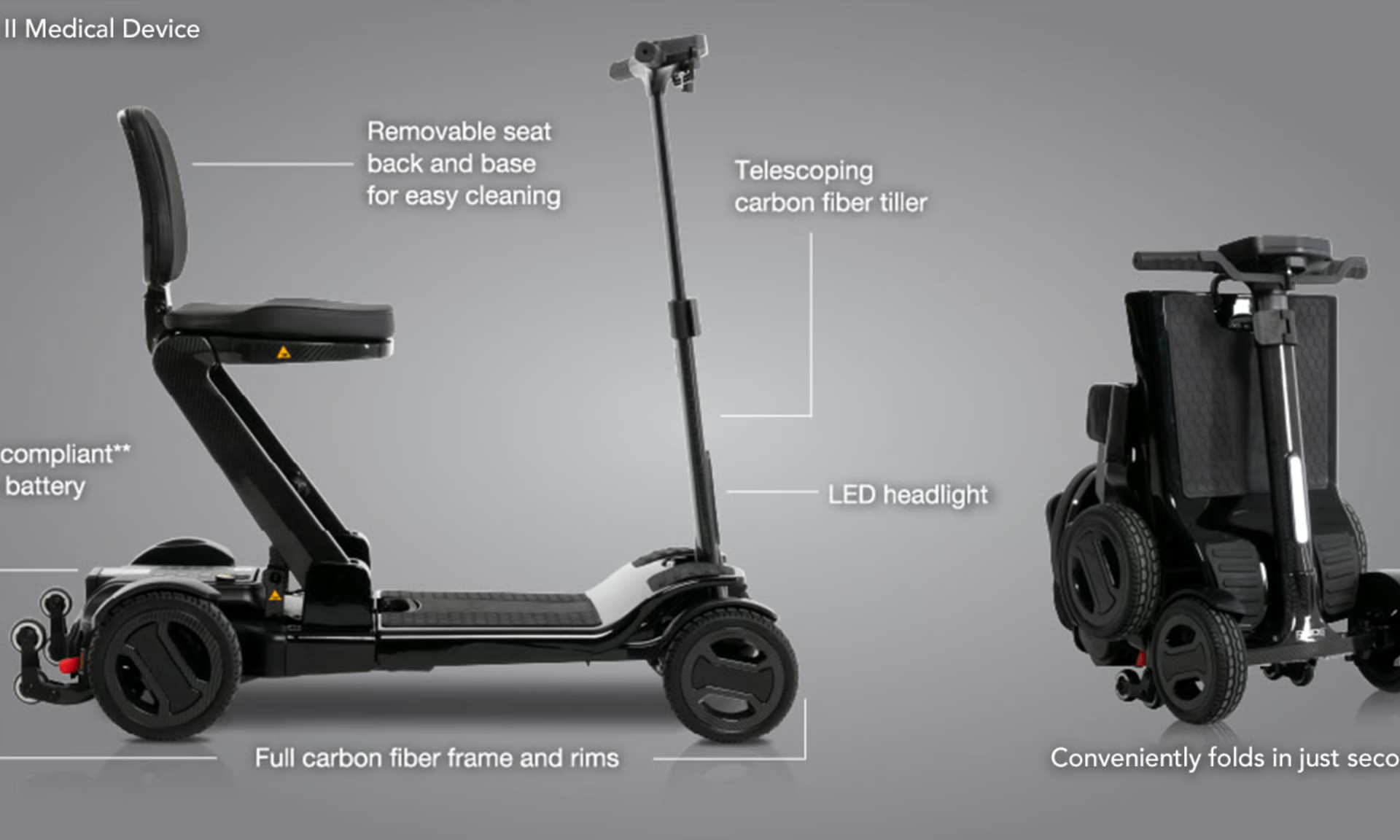
If you are a distributor or importer sourcing travel-friendly electric wheelchairs, ensuring your products meet the 300 Wh FAA standard is not optional — it is a market requirement. At 1000Mobility, our folding electric wheelchairs are designed with removable lithium-ion batteries under 300 Wh, FAA-compliant labeling, and tool-free battery removal. Contact us to discuss OEM/ODM specifications for your market, or explore our carbon fiber electric wheelchair options for ultra-lightweight travel models.
Interested in Wholesale Pricing?
Get OEM/ODM details, product specifications, and wholesale pricing within 24 hours.
Or send us a message directly:

 English
 Deutsch
 Français
 Español
 Italiano
 العربية
 Русский