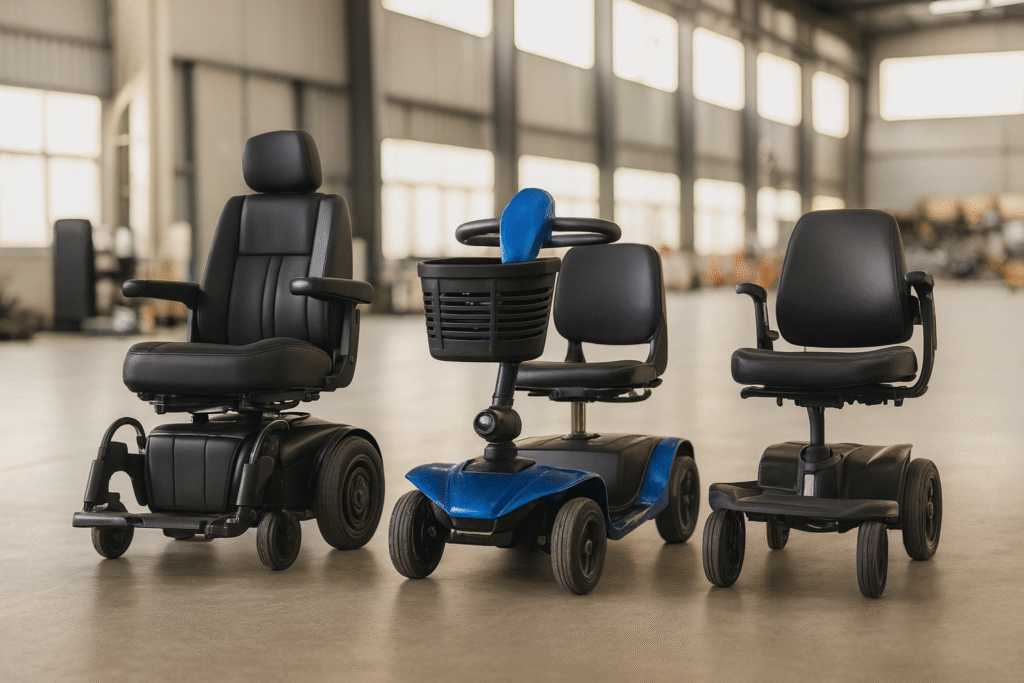
Portable Mobility Scooter Market Outlook 2026-2030: Growth, Trends & B2B Opportunities
Quick Answer: The global portable mobility scooter market is valued at $5.7 billion (2025) and projected to reach $10.11 billion by 2030 at a 12.2% CAGR. Key growth drivers include aging populations, lithium battery advancements, foldable design innovation, and expanding e-commerce distribution channels—creating a strategic B2B procurement window through 2028.
Last updated: August 2026
The portable mobility scooter market is experiencing one of the most dynamic growth trajectories in the broader medical device and assistive technology sector. For B2B buyers—distributors, wholesalers, healthcare procurement managers, and retail chain buyers—understanding the market’s trajectory, technology trends, and regional dynamics is essential for making informed sourcing and inventory decisions.
This comprehensive outlook covers market sizing, technology evolution, regional growth patterns, and actionable B2B opportunities. Whether you are evaluating new product lines, planning inventory for the next 24 months, or assessing market entry timing, this analysis provides the data-driven insights you need.
Market Size and Growth Projections
Current Market Valuation
The portable mobility scooters market was valued at approximately $5.7 billion in 2025, with projections indicating growth to $6.39 billion in 2026 and $10.11 billion by 2030, representing a compound annual growth rate (CAGR) of 12.2% (The Business Research Company).
It is worth noting that different research firms report varying figures depending on segmentation methodology:
| Source | 2025 Value | Forecast Year | Projected Value | CAGR |
|---|---|---|---|---|
| The Business Research Company | $5.7B | 2030 | $10.11B | 12.2% |
| Verified Market Reports | $5.7B (2024) | 2033 | $10.11B | 8.53% |
| Data Insights Market | $2.31B (2025) | 2031 | $3.37B | 6.5% |
| PMarketResearch | $28.5B (2025)* | 2032 | $50.44B | 8.5% |
*Note: PMarketResearch’s significantly higher figure likely includes all portable scooter categories (including recreational/personal transport), while others focus specifically on medical mobility scooters.
The variation underscores the importance of understanding which market segment a given forecast covers. For B2B buyers in the medical mobility space, the $5.7B–$10.11B range (TBR/VMR) is most relevant.
Historical Growth Context
The market has grown from approximately $4.0 billion in 2020 to $5.7 billion in 2025, representing a historical CAGR of roughly 7.3%. The forecast acceleration to 12.2% CAGR signals a structural shift in market dynamics—not merely organic growth but a fundamental change in demand drivers, technology, and distribution channels.
Growth Drivers: What’s Fueling the Acceleration
Several converging factors explain the projected growth acceleration:
- Aging global population: The WHO projects the global population aged 60+ will reach 2.1 billion by 2050, up from 1.0 billion in 2020 (WHO Ageing and Health)
- Lithium battery cost reduction: Battery costs have declined approximately 40% from peak prices, making lithium-powered scooters more affordable (Portable Scooter Market Report)
- E-commerce expansion: Online medical equipment sales channels are expanding, reducing distribution friction and enabling direct-to-consumer and B2B online procurement
- Design innovation: Foldable, lightweight, and travel-friendly designs are opening new use cases beyond traditional mobility aid applications
- Government funding programs: NDIS (Australia), Medicare (US), and European national health systems continue to fund mobility equipment
Technology Trends Shaping the 2026-2030 Landscape
1. Foldable and Ultra-Compact Designs
The “boot scooter” segment—scooters designed to fit in a car trunk—is the fastest-growing category. Key innovations include:
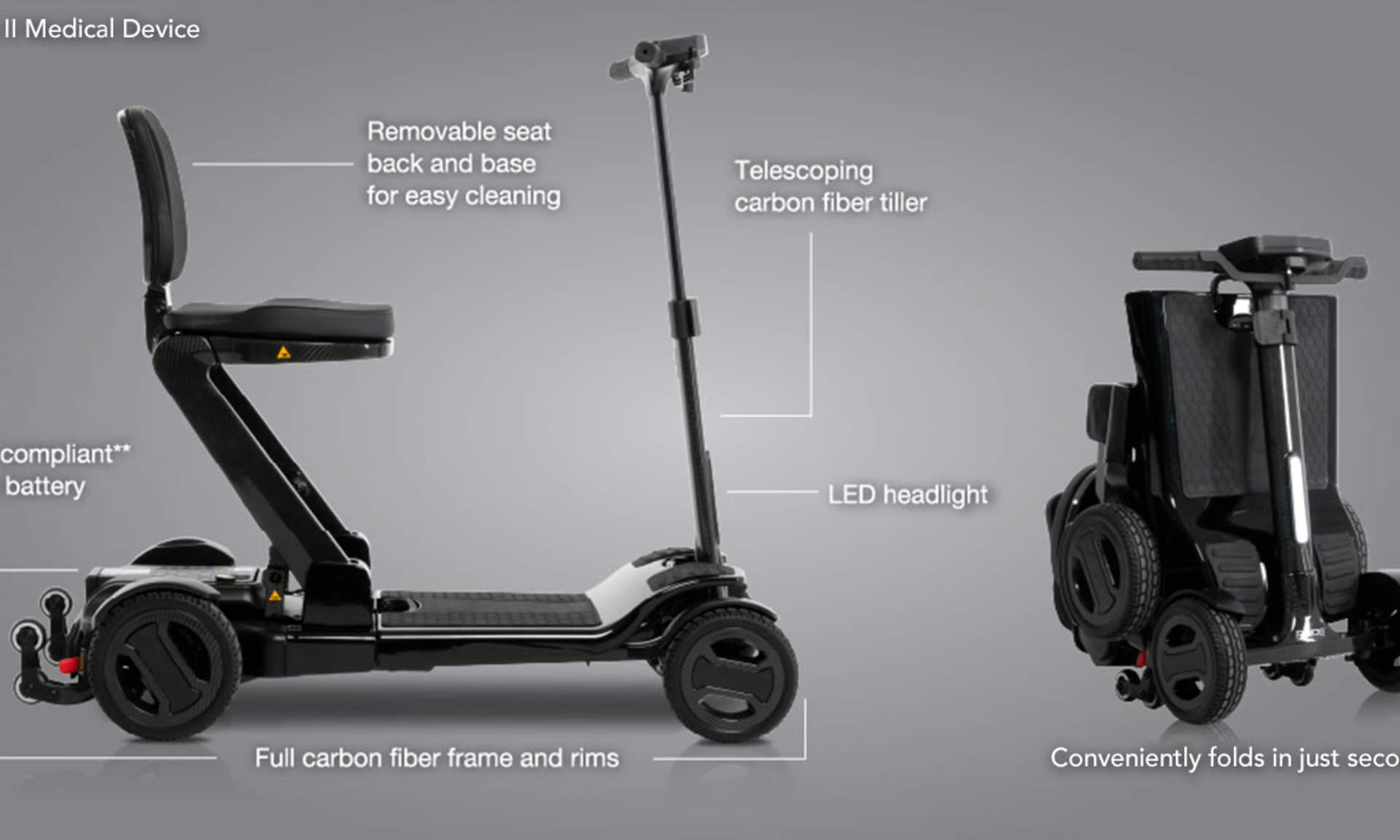
- One-hand folding mechanisms that allow users to collapse the scooter in under 10 seconds
- Detachable battery systems that reduce carrying weight to under 20 kg for the base unit
- Telescopic steering columns that minimize folded dimensions for air travel
This trend directly responds to the aging population’s desire to maintain active lifestyles—including travel, shopping, and social outings—rather than viewing mobility scooters as last-resort devices.
2. Lithium-Ion Battery Dominance
Lithium-ion batteries accounted for 85.8% of the portable scooter market share in 2025 (PMarketResearch). The shift from lead-acid to lithium-ion delivers:
- 60-70% weight reduction in battery systems
- 2-3x longer range per charge (typically 25-40 km vs. 10-15 km for lead-acid)
- Faster charging (4-6 hours vs. 8-12 hours)
- Longer battery life (500-1000 charge cycles vs. 300-500)
For B2B buyers, this transition has critical implications for product specifications, warranty terms, and shipping compliance. Lithium batteries require UN38.3 certification for international transport, adding a compliance layer that lead-acid batteries did not.
3. Smart Control Systems and IoT Integration
Connected mobility scooters are emerging as a differentiator in the premium segment:
- GPS tracking for theft prevention and fleet management
- Mobile app integration for battery monitoring, route planning, and diagnostic alerts
- Geofencing capabilities for rental and fleet operators
- OTA (over-the-air) firmware updates for controller optimization
The IoT module adoption rate in Asia Pacific has reached approximately 75% for premium portable scooters, reflecting consumer expectations for smart device integration. For fleet operators and rental businesses, these features reduce maintenance costs and improve asset utilization.
4. Advanced Frame Materials
The materials landscape is shifting from traditional steel toward:
- Aircraft-grade aluminum: Reduces weight by 30-40% while maintaining structural integrity
- Carbon fiber composite: Premium segment, reduces weight by up to 60% with superior strength-to-weight ratio. See our carbon fiber technology overview for technical details
- Magnesium alloy: Emerging material offering weight savings between aluminum and carbon fiber at a moderate price point
Material selection directly impacts shipping costs, user handling, and product positioning. Distributors should align material choices with their target market’s price sensitivity and performance expectations.
5. Improved Comfort and Stability Features
Manufacturers are investing in features that extend usage sessions:
- Suspension systems (front and rear) for smoother rides on uneven surfaces
- Ergonomic seating with adjustable lumbar support and pressure relief
- Anti-tip wheels and enhanced stability control algorithms
- Weather-resistant electronics for outdoor durability
These features bridge the gap between medical-grade mobility aids and consumer lifestyle products, expanding the addressable market beyond traditional users.
Regional Market Analysis
Asia Pacific: The Growth Engine
Asia Pacific represents the largest regional market, valued at approximately $12.5 billion in 2025 (broader portable scooter category including personal transport) (PMarketResearch). Key dynamics:
- China: Both the largest manufacturer and a rapidly growing consumer market. Domestic demand is rising as the middle class expands and aging population grows
- Japan: Already a mature market with high per-capita mobility scooter adoption; demand driven by the world’s oldest population
- Southeast Asia: Emerging markets with growing middle classes and increasing healthcare investment
- India: Early-stage market with significant long-term potential as infrastructure and healthcare access improve
Europe: Premium Segment Leader
Europe (valued at ~$7.9B in the broader category) is characterized by:
- Strict regulatory environment: CE marking, MDR compliance, and EN 12184 standards
- Premium product preference: Average price points of €450-600 for personal transport scooters
- Strong reimbursement frameworks: National health systems in Germany, UK, France, and Nordic countries fund mobility equipment
- Sustainability focus: EU Battery Regulation and Digital Product Passport requirements are shaping product design
Distributors targeting Europe should ensure quality certifications are comprehensive and up to date.
North America: Established but Evolving
North America (~$6.1B in the broader category) features:
- Medicare/Medicaid funding: Significant B2B procurement through government programs. See our analysis of Medicaid coverage for mobility scooters
- Aging baby boomer demographic: Large cohort entering mobility aid age range
- Direct-to-consumer trends: Growing e-commerce and DTC channels reducing traditional distributor margins
- Fragmented regulation: Varies by state, creating complexity for nationwide distribution
Latin America and MEA: Emerging Opportunities
These regions represent smaller but rapidly growing markets:
- Latin America (~$1.2B): Growing middle class, improving healthcare access, limited domestic manufacturing
- Middle East & Africa (~$0.8B): Government healthcare investment in GCC countries; aid-funded procurement in Africa
B2B Procurement Window: Why Now Matters
The Strategic Timing Argument
The period from 2026 to 2028 represents a strategic procurement window for several reasons:
- Battery cost trajectory: Lithium battery costs are still declining but approaching a floor. Prices are expected to stabilize by 2028-2029 as raw material demand catches up with supply
- Manufacturing capacity expansion: Chinese manufacturers are scaling production capacity, creating competitive pricing pressure. This window may close as consolidation occurs
- Regulatory convergence: Standards are harmonizing globally (MDR, FDA, TGA), reducing compliance complexity—but the transition period offers first-mover advantages
- Demand acceleration: Aging population demographics are entering the steepest growth phase. Distributors who build inventory and supplier relationships now will be positioned to capture accelerating demand
Sourcing Strategy Recommendations
For B2B buyers, we recommend the following approach:
| Strategy | Action | Timing |
|---|---|---|
| Diversify suppliers | Establish relationships with 2-3 manufacturers to mitigate supply chain risk | 2026 Q3-Q4 |
| Lock in pricing | Negotiate annual pricing agreements before battery cost stabilization | Before 2027 |
| Invest in compliance | Ensure all products meet upcoming regulatory requirements (MDR, FDA, TGA) | Ongoing |
| Build inventory buffers | Maintain 3-6 months of inventory for key SKUs | 2026-2027 |
| Develop private label | Use OEM/ODM services to build brand equity before market consolidation | 2026-2028 |
Product Portfolio Recommendations
Based on market trends, B2B buyers should consider stocking:
- Entry-level folding scooters (aluminum frame, lithium battery, 20-25 km range): Captures the fastest-growing segment
- Mid-range travel scooters (aluminum frame, suspension, 30+ km range): Appeals to active seniors and travel market
- Premium carbon fiber models: Differentiates from competitors and captures high-margin segment. See our carbon fiber wheelchair guide for material benefits
- Fleet/rental models (robust construction, GPS tracking, swappable batteries): Targets rental businesses and care facilities
Competitive Landscape: Key Players
The portable mobility scooter market features a mix of established Western brands and emerging Chinese manufacturers:
Western brands: Pride Mobility, Golden Technologies, Sunrise Medical, Invacare, Drive Medical—strong brand recognition but higher manufacturing costs
Chinese manufacturers: Growing market share through competitive pricing, improving quality, and OEM/ODM flexibility. The top 15 electric wheelchair manufacturers in China includes several companies active in the portable scooter segment
Emerging players: Specialized manufacturers focusing on carbon fiber, smart connectivity, and ultra-portable designs are creating new market niches
For distributors, the strategic question is whether to partner with established Western brands (higher margins per unit, lower volumes) or Chinese manufacturers (lower per-unit cost, higher volumes, customization options). Many successful distributors maintain both relationships to serve different market segments.
Market Risks and Challenges
B2B buyers should be aware of potential headwinds:
- Raw material price volatility: Lithium, cobalt, and nickel prices can impact manufacturing costs unpredictably
- Regulatory tightening: EU Battery Regulation, FAA lithium battery rules, and evolving MDR requirements may require product redesigns
- Supply chain disruptions: Geopolitical tensions and trade policies may affect Chinese manufacturing exports
- Market saturation in mature segments: Standard mobility scooters face commoditization pressure; differentiation through innovation is essential
- Warranty and liability exposure: Lithium battery failures, while rare, carry significant liability risk—ensure manufacturers provide adequate warranty terms
Conclusion
The portable mobility scooter market is on a trajectory to nearly double in size between 2025 and 2030, driven by demographic shifts, technology advancement, and expanding distribution channels. For B2B buyers, the next 24 months represent a critical window to establish supplier relationships, lock in favorable pricing, and build product portfolios aligned with market trends.
The technology trends—foldable designs, lithium-ion dominance, smart connectivity, and advanced materials—are creating product categories that didn’t exist five years ago. Distributors who understand these trends and position their inventory accordingly will capture disproportionate market share.
Position your business for the portable mobility scooter boom. Request wholesale pricing on our range of folding and portable scooters, or become a distributor to access exclusive territory rights and marketing support. Our factory tour program is available for verified B2B buyers ready to evaluate manufacturing capabilities firsthand.
— 1000Mobility Editorial Team
Interested in Wholesale Pricing?
Get OEM/ODM details, product specifications, and wholesale pricing within 24 hours.
Or send us a message directly:
 English
  Deutsch
  Français
  Español
  Italiano
  العربية
  Русский