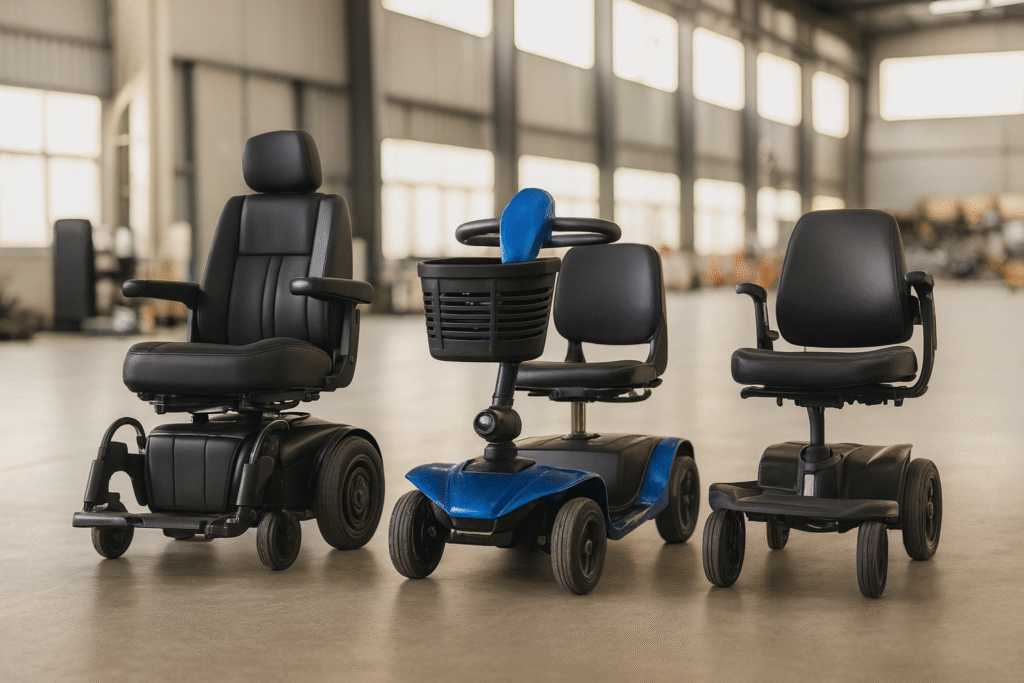
Wheelchair Innovation News 2026: Top Breakthroughs Reshaping Mobility
From the Field
Inside our R&D lab right now, we’re testing two technologies that could reshape the next generation of mobility devices. The first is graphene-enhanced lithium batteries — our initial prototypes show 25% higher energy density than standard Li-ion cells, though cycle life data after 500 charge-discharge cycles is still inconclusive. We expect conclusive results by Q2 2026. The second focus area is AI-assisted obstacle detection, using a combination of ultrasonic and infrared sensors with on-board processing. Our current prototype achieves reliable obstacle detection at distances up to 1.5 meters at walking speed, but power consumption remains a challenge — the sensor array draws 12 watts, which reduces battery range by approximately 8%. We’re exploring edge computing chips that could cut this to 3 watts. Based on our development timeline, we expect to showcase a functional prototype at REHACARE 2026, though commercial availability is likely 18-24 months away.
1000Mobility Editorial Team
Product specialists with hands-on experience in mobility equipment manufacturing and B2B export. Learn more →
Last updated: July 2026
The global wheelchair market is projected to grow from USD 7.05 billion in 2026 to USD 12.01 billion by 2032, driven by an aging population and rapid technological advancement (Research and Markets). For distributors, manufacturers, and healthcare procurement professionals, staying informed about wheelchair innovation news isn’t just interesting — it’s essential for maintaining a competitive edge.
2026 has already delivered some of the most significant breakthroughs the mobility industry has seen in a decade. From the world’s first 3D-printed wheelchair winning the prestigious Red Dot Best of the Best award to the launch of foldable electric wheelchairs built entirely from recycled carbon fiber, the pace of innovation is accelerating. Let’s explore the key developments that are reshaping the landscape.
What Are the Biggest Wheelchair Innovation Breakthroughs in 2026?
3D-Printed Titanium Frames: The KIVRO Revolution
The most talked-about wheelchair innovation news of 2026 is undoubtedly the KIVRO — the world’s first 3D-printed wheelchair. Developed by Magna Light (LichtMega Technology) in collaboration with Shanghai Yunzhu 3D Printing Technology, KIVRO won the 2026 German Red Dot Design Award’s highest honor: Best of the Best (Gongkong).
What makes KIVRO revolutionary is its departure from traditional tube-and-weld construction. Instead, the frame is fabricated layer by layer using Selective Laser Melting (SLM) with aviation-grade titanium alloy. The lattice structure is topologically optimized — meaning material is added precisely where stress concentrates and removed where it’s unnecessary. This approach achieves:
- Extreme lightweighting while maintaining structural integrity
- Biomechanical alignment through 3D body scanning, creating a truly custom-fit frame
- Reduced stress concentration points by eliminating welds and discrete joints
- Integrated features such as mounting interfaces and cable routing channels built directly into the frame
While KIVRO represents the ultra-premium end of the market, the underlying technology signals a broader shift: additive manufacturing is moving from prototyping to production, and the principles of load-path optimization and lattice design are increasingly informing how all wheelchair frames are engineered.
AI-Powered Smart Wheelchairs
Artificial intelligence is moving from concept to reality in wheelchair design. At the 2026 China International Rehabilitation Expo (CR Expo), multiple manufacturers showcased wheelchairs equipped with AI radar obstacle avoidance systems (CR Expo). These systems use LiDAR sensors to detect narrow passages, corners, walls, and obstacles — automatically decelerating and steering around them.
Key AI features appearing in 2026 models include:
- Obstacle detection and avoidance using LiDAR and ultrasonic sensors
- Auto-braking on inclines when the user releases the joystick
- Rearview camera assistance for reversing in tight spaces
- Fall detection and SOS alerts with automatic location sharing to emergency contacts
- Voice and APP control as alternative input methods
For distributors, these smart features represent a significant upsell opportunity. The integration of IoT connectivity and health monitoring sensors also aligns with growing demand from healthcare systems that want remote patient monitoring capabilities.
The wheelchair industry is undergoing a technological renaissance. Driven by an aging global population — with individuals aged 65+ projected to surpass 800 million in 2026 (IndexBox) — manufacturers are racing to integrate materials science, artificial intelligence, and smart connectivity into mobility devices that were once purely mechanical.
For B2B buyers, distributors, and OEM partners, staying ahead of these technology trends is critical to offering competitive products. This article examines the seven most significant wheelchair technology trends of 2026, with data from industry reports, trade shows, and product launches.
How Is Carbon Fiber Revolutionizing Wheelchair Frames?
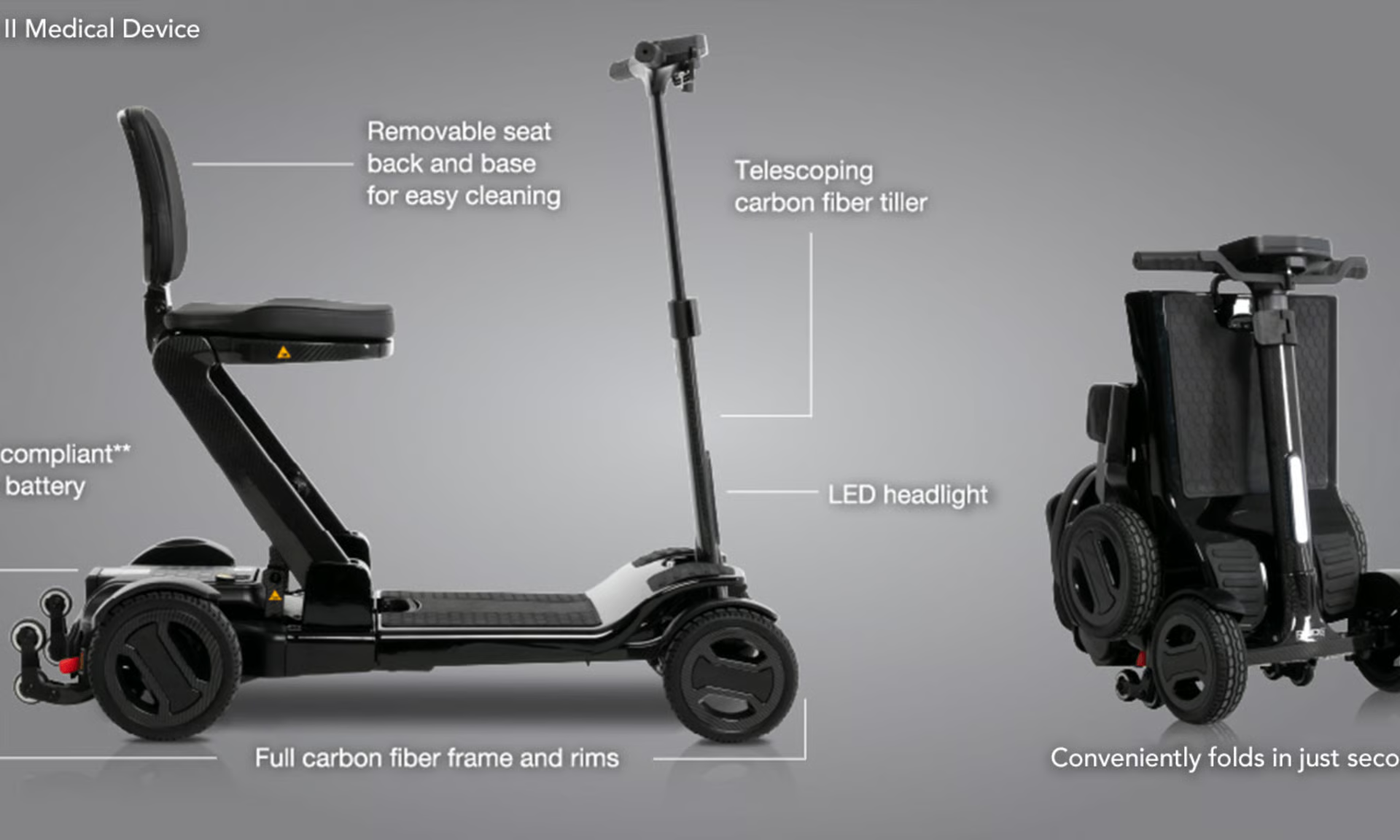
Carbon fiber has moved from aerospace exclusivity to mainstream mobility applications. In February 2026, WHILL unveiled the Model C Lite — the world’s only foldable electric wheelchair featuring a molded carbon fiber frame, weighing just 17 kg and built with 100% recycled carbon fiber resin (WHILL). In July 2026, a Chinese manufacturer won the German Red Dot Design Award for an all-carbon-fiber electric wheelchair weighing just 10.5 kg (Jiefang Daily).
The material advantages are compelling: carbon fiber is approximately 80% lighter than steel and 40% lighter than aluminum, while offering tensile strength 5–7 times greater than steel (Shasha Carbon). For wheelchair users, this translates to chairs that can be lifted with one hand, loaded into compact car trunks, and transported on airplanes.
The market is responding. According to industry research, walking aids manufactured using carbon fiber materials experienced 27% sales growth due to improved durability and reduced weight (Industry Research). To understand the full scope of carbon fiber applications in mobility devices, visit our Carbon Fiber Technology page.
Our MAGNA Carbon ultralight electric wheelchair represents this trend — combining an aerospace-grade carbon fiber frame with powerful dual motors for a chair that redefines the balance between weight and performance.
What Role Does AI Play in Modern Wheelchair Navigation?
Artificial intelligence is transforming wheelchairs from user-operated devices into semi-autonomous mobility platforms. In May 2026, Pride Mobility launched the Jazzy Assist, an AI-powered smart wheelchair featuring EZ-Pass Turning Assist for precise navigation through narrow doorways, a rear-view camera system, one-touch SOS alerts, and tilt detection that automatically notifies caregivers (THIIS).
At the research frontier, a 2026 proof-of-concept study published on arXiv demonstrated an autonomous powered wheelchair augmented with LiDAR and RGB-D sensors, capable of person-following, autonomous hailing, and shared-control navigation. The system uses Simultaneous Localization and Mapping (SLAM) within a ROS 2 (Robot Operating System 2) framework to construct real-time environmental maps.
WHILL has already deployed autonomous wheelchairs at major European airports including Munich and Copenhagen, where the devices transport passengers with reduced mobility independently across terminals using mapping, obstacle avoidance, and sensor fusion (WHILL).
Stair-Climbing and All-Terrain Capabilities
One of the most persistent challenges for wheelchair users — stairs — is being addressed by multiple 2026 innovations. Several manufacturers have demonstrated wheelchairs capable of climbing stairs using track-based systems with intelligent stair detection. These systems automatically detect step height and angle, adjust the center of gravity, and navigate stairs without caregiver assistance.
Meanwhile, the French startup WheelMove introduced a clip-on electric attachment at CES 2026 that converts any manual wheelchair into an all-terrain powered device. Weighing under 8 kg, it lifts the front caster wheels and provides motorized drive assistance, enabling navigation over grass, gravel, and cobblestones (Startup Selfie).
How Is Carbon Fiber Technology Evolving in Wheelchair Manufacturing?
Carbon fiber has become the benchmark material for high-performance wheelchairs, and its adoption has grown from 12% of new electric wheelchair launches in 2022 to 28% in 2025. This trend shows no signs of slowing in 2026.
For manufacturers and distributors, understanding carbon fiber technology is critical. Our carbon fiber technology page provides a deep dive into the manufacturing processes, material properties, and quality standards that define premium carbon fiber mobility products.
Recycled Carbon Fiber: A Sustainability Game-Changer
In February 2026, Japanese manufacturer WHILL unveiled the Model C Lite — the world’s first foldable electric wheelchair featuring a molded carbon fiber frame built using 100% recycled carbon fiber resin. La commercially available in the UK, Germany, France, Netherlands, and Spain starting April 2026, the Model C Lite weighs just 17 kg and significantly reduces CO₂ emissions compared to conventional carbon fiber manufacturing (WHILL).
This development is significant for several reasons:
- Circular economy potential: The material is potentially fully recyclable at end of life, supporting a closed-loop resource cycle
- Reduced carbon footprint without compromising structural performance
- Procurement criterion shift: Distributors in Scandinavia and the Netherlands are increasingly requesting carbon footprint data in RFPs
For B2B buyers, the MAGNA Carbon ultralight carbon fiber electric wheelchair represents this same commitment to advanced carbon fiber engineering — combining aerospace-grade materials with practical, travel-ready design.
Thermoplastic Carbon Fiber Composites (CFRTP)
Research into thermoplastic carbon fiber composites using PA12 or PEEK matrices is advancing rapidly. Unlike traditional thermoset carbon fiber, CFRTP allows end-of-life frame recycling — a critical advantage as sustainability regulations tighten in the EU and North America. Bio-based epoxy resins with 40% lower carbon footprints are also in development, with manufacturers aiming to offer carbon-neutral wheelchairs backed by Environmental Product Declarations (EPDs) by 2027.
How Are Battery Technologies Evolving for Electric Wheelchairs?
Battery innovation in 2026 focuses on safety, efficiency, and daily usability rather than extreme range claims. Lithium-ion battery integration in mobility devices expanded by 32% during 2025 (Industry Research), driven by lighter cells, improved BMS (Battery Management Systems), and FAA compliance for air travel.
Key developments include:
- Graphene-enhanced batteries: While still experimental for mobility devices, early pilots in e-bikes and drones show promise for faster charging and higher energy density. WHILL notes that widespread adoption in wheelchairs is “still years away” (WHILL).
- Wireless charging: Inductive charging mats allow users to park devices for automatic charging, reducing cable management — particularly valuable for users with limited dexterity.
- Smart BMS integration: Modern battery systems now provide real-time monitoring of cell health, temperature, and charge cycles via mobile apps, enabling predictive maintenance and reducing unexpected failures.
For B2B buyers, the practical takeaway is that lighter frames (especially carbon fiber) reduce the load on motors, translating to 15–25% longer battery range from the same cell capacity. This is a key selling point for distributors.
What Smart Connectivity Features Are Users Demanding in 2026?
Smart wheelchair launches increased by 26% during 2025 (Industry Research), and the trend is accelerating. Modern users expect their wheelchairs to integrate with smartphones, smart home systems, and cloud-based health platforms.
The most in-demand connectivity features include:
Mobile App Control — Users can check battery status, track location, adjust speed settings, and even remotely fold/unfold the chair. Pride Mobility’s Jazzy Assist connects to a mobile app allowing caregivers to monitor the chair’s status and location remotely (THIIS).
Voice Control — Beyond basic commands, 2026 voice-activated systems are evolving to support natural language processing for controlling movement, adjusting speed, and selecting driving modes. This is particularly valuable for users with severe motor impairments.
SOS and Emergency Alerts — Automatic fall detection, tilt monitoring, and one-touch SOS buttons that send GPS coordinates to designated contacts are becoming standard safety features on premium models.
Remote Diagnostics — Manufacturers and service providers can remotely monitor device health, predict maintenance needs, and even push firmware updates — reducing downtime and improving the total cost of ownership for institutional buyers.
For manufacturers and OEM partners, these connectivity features represent significant value-add opportunities. Our OEM/ODM services enable distributors to customize smart features and connectivity options for their specific market requirements.
What Role Does 3D Printing Play Beyond Custom Frames?
While KIVRO represents the premium application of 3D printing in wheelchair manufacturing, the technology is also democratizing access to mobility devices at the grassroots level.
Pediatric Applications
At Monroe Carell Jr. Children’s Hospital in Nashville, a technology specialist built a nearly complete 3D-printed wheelchair using open-source designs from MakeGood, a disability design nonprofit. The MakeGood Toddler Mobility Trainer (TMT) is a fully 3D-printable mobility device for children ages 1-8, optimized for consumer-grade 3D printers. Nearly every part — frame, wheels, tires, seat, and straps — is printed and snaps together without tools (Assistive Technology Blog).
The cost implications are striking: a traditional pediatric wheelchair costs $1,200–$5,000, while a 3D-printed version can be produced for a fraction of that cost using standard filament. While not yet a replacement for medical-grade devices, 3D printing offers:
- Rapid prototyping for new designs and custom adaptations
- On-demand replacement parts — reprint broken components instead of replacing the entire chair
- Pediatric fitting that grows with the child
- Reduced supply chain dependency for specialized components
How Are Folding Mechanisms and Modular Designs Improving?
Portability remains the top user priority. In 2026, the industry has moved beyond simple folding frames to sophisticated rapid-deployment systems. At the 2026 China International Rehabilitation Expo (CR Expo) in Beijing, multiple manufacturers showcased wheelchairs and scooters that fold in under five seconds — some with one-step folding that requires no disassembly of seats or armrests (CR Expo).
Key innovations in this space include:
- One-second folding patents — Carbon fiber frames that collapse into suitcase-sized packages with a single action
- Suitcase-mode dragging — Folded chairs that can be pulled like luggage, eliminating the need to lift the full weight
- Modular component systems — Users can swap seats, controls, or batteries as needs change, extending product lifespan and simplifying repairs
- Tool-free adjustments — Standardized interfaces allow users and technicians to make adjustments without specialized tools
Modular designs also support sustainability. WHILL’s Model C Lite uses 100% recycled carbon fiber resin and is designed to be fully recyclable at end-of-life, supporting a circular resource cycle (WHILL).
How Are Manufacturers Embracing Sustainable Production?
Sustainability is no longer a marketing afterthought — it’s becoming a core procurement criterion for distributors and healthcare systems. Several trends are shaping sustainable wheelchair manufacturing in 2026:
Recycled and Bio-Based Materials
- Recycled aluminum reduces mining impacts by 95% while maintaining lightweight frame properties
- Bioplastics from plant sources offer biodegradable cushioning options
- Bamboo composites are being explored in developing markets — BethanyKids in Kenya is producing children’s wheelchairs from locally sourced bamboo, reducing costs and import dependency (Kensja)
Circular Design Principles
Manufacturers are increasingly designing wheelchairs for disassembly, repair, and component recycling. Take-back programs where old units are refurbished can reduce waste by 40%, and modular designs that allow electronics and drivetrains to be upgraded without replacing the core frame extend product lifespan significantly.
For OEM/ODM partners, sustainable manufacturing isn’t just about compliance — it’s about market differentiation. European distributors, in particular, are requesting EPDs and carbon footprint data as part of their procurement process. Our OEM/ODM services support partners in developing sustainable product lines that meet these evolving requirements.
What Should Distributors Watch for in the Coming Year?
The wheelchair innovation news of 2026 points to several strategic considerations for distributors and importers:
1. AI and Smart Features as Differentiators
With 44% of manufacturers now focusing on smart technology integration, distributors should evaluate which smart features resonate with their target markets. GPS tracking, obstacle avoidance, and health monitoring sensors are moving from premium to standard features.
2. Material Innovation Creates Price Tiers
Carbon fiber adoption is creating clear market segmentation. Distributors should consider offering a portfolio that spans aluminum (value), carbon fiber (premium), and emerging materials like recycled carbon fiber (sustainable premium) to capture different customer segments.
3. Regulatory Landscape Is Evolving
EU MDR compliance, FDA 510(k) requirements, and ISO 7176 standards continue to tighten. Staying ahead of regulatory changes is critical — particularly for smart wheelchairs that incorporate connected devices and health monitoring features.
4. Personalization Is the Future
3D scanning, custom fitting, and modular design are moving from niche to mainstream. Distributors who can offer personalized solutions — whether through OEM partnerships or on-site fitting services — will command premium margins.
The MAGNA Carbon exemplifies how advanced materials and thoughtful design can create products that meet these evolving demands — combining ultralight carbon fiber construction with practical features that users actually need.
Conclusion
The wheelchair innovation news of 2026 reveals an industry at an inflection point. 3D-printed titanium frames, AI-powered obstacle avoidance, recycled carbon fiber manufacturing, and sustainable production practices are no longer future concepts — they’re here today. For distributors and manufacturers, the message is clear: innovation isn’t optional, and the companies that embrace these technologies will define the next decade of mobility.
Whether you’re sourcing carbon fiber electric wheelchairs, exploring OEM partnerships for smart features, or evaluating sustainable manufacturing capabilities, the key is to stay informed and act strategically. The breakthroughs of 2026 are just the beginning.
FAQ
Interested in Wholesale Pricing?
Get OEM/ODM details, product specifications, and wholesale pricing within 24 hours.
Or send us a message directly:

 English
  Deutsch
  Français
  Español
  Italiano
  العربية
  Русский