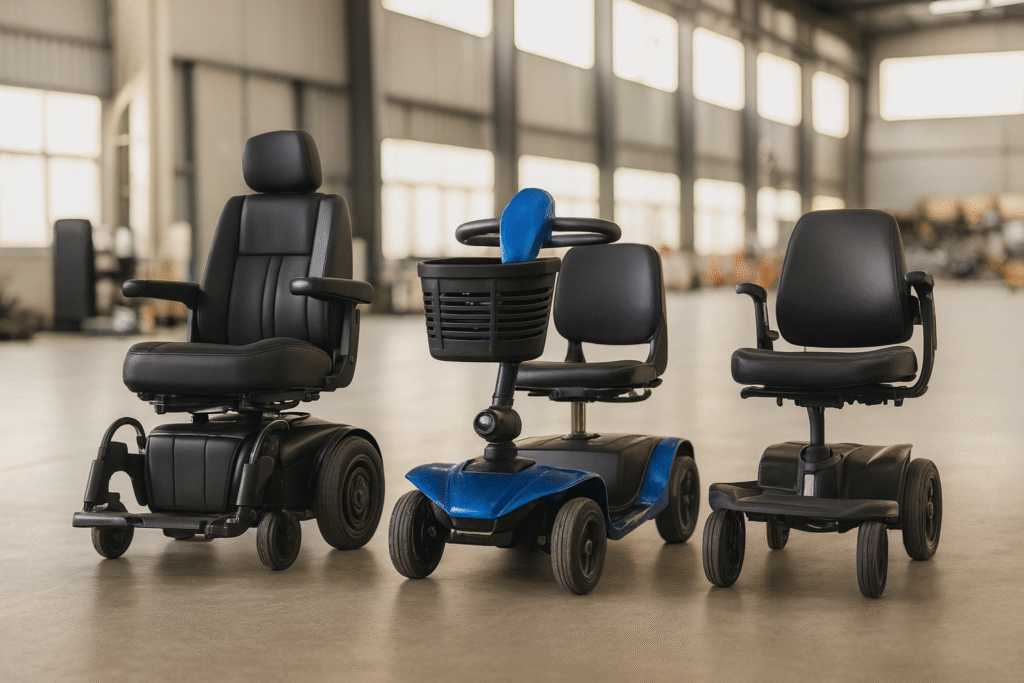
GCC Mobility Aid Market 2026: Import Guide for Middle East Wheelchair & Scooter Distributors
Quick Answer: The GCC wheelchair market reached USD 154.79 million in 2025 and is projected to grow at a 7.12% CAGR through 2035, with Saudi Arabia and the UAE driving demand. Distributors entering this market need SFDA registration, Arabic labeling, and ISO 13485-certified suppliers to navigate import requirements successfully.
Last updated: September 2026
GCC Mobility Aid Market Overview: Six Countries, One Growth Engine
The Gulf Cooperation Council (GCC) region — comprising Saudi Arabia, the United Arab Emirates, Qatar, Kuwait, Bahrain, and Oman — represents one of the world’s fastest-growing markets for mobility aids. According to Market Research Future, the GCC wheelchair market was valued at USD 144.5 million in 2024 and is projected to reach USD 308 million by 2035, growing at a compound annual growth rate (CAGR) of 7.12% from 2025 to 2035.
The broader Middle East and Africa wheelchair market tells an even more compelling story. Data from Market Data Forecast shows this regional market was valued at USD 276.27 million in 2025 and is estimated to reach USD 329.67 million in 2026, with a projected CAGR of 19.33% through 2033.
Country-Level Market Breakdown
| Country | Key Drivers | Market Position |
|---|---|---|
| Saudi Arabia | Vision 2030 healthcare investments, hospital fleet renewals, aging population | Largest market (~USD 65.7M in 2025, projected USD 142M by 2033) |
| UAE | Medical tourism, home-care expansion, Dubai Disability Strategy | Fastest import growth (10% increase in mobility aid imports in 2023) |
| Qatar | Event infrastructure, accessibility mandates | Steady demand growth |
| Kuwait | Aging population, healthcare modernization | Stable import volumes |
| Bahrain | Healthcare infrastructure development | Emerging market |
| Oman | Government disability support programs | Developing market |
As TOUSDA Medical reports, Saudi Arabia’s wheelchair market alone stood at approximately USD 65.7 million in 2025 and is expected to reach USD 142 million by 2033. Vision 2030 programs prioritize care for people with disabilities, while high diabetes prevalence and road traffic incidents increase the need for both hospital and homecare solutions.
Import Duties and Customs Framework in GCC Countries
One of the most attractive aspects of the GCC market for wheelchair distributors is the favorable tariff structure. Under the unified GCC Common Customs Law, medical devices — including wheelchairs and mobility scooters — are generally exempt from customs duties (0%), provided they carry the necessary regulatory approvals.
According to World Bank WITS data, wheelchairs classified under HS Code 8713 (invalid carriages) fall within the medical devices category that benefits from this exemption. However, importers must still account for:
- 15% VAT applied on the CIF value (Cost + Insurance + Freight) plus any applicable customs duty
- 0.15% ZATCA administration fee (capped at SAR 500 per declaration)
- SABER product conformity registration costs for regulated product categories
- SFDA establishment license fees for the importing entity
For distributors sourcing from reputable Chinese mobility aid manufacturers, the total landed cost calculation becomes: CIF value + 0% duty + 15% VAT on (CIF + duty) + 0.15% ZATCA fee. This makes the GCC significantly more cost-competitive than markets with 5-20% medical device tariffs.
SFDA and GHIC Certification Requirements for Saudi Arabia
Saudi Arabia’s regulatory framework for medical devices is administered by the Saudi Food and Drug Authority (SFDA). As of 2026, the SFDA updated its frameworks to strengthen safety oversight while offering some streamlined pathways for compliant manufacturers.
SFDA Registration Process
The core requirements for importing wheelchairs into Saudi Arabia include:
- Medical Device Marketing Authorization (MDMA): The device must have valid SFDA MDMA registration before import
- SABER Registration: Obtain Product Certificate of Conformity (PCoC) and Shipment Certificate of Conformity (SCoC) for each shipment
- Licensed Importer: Only entities with valid Commercial Registration (CR) and SFDA establishment license can import
- Customs Declaration: Filed electronically via ZATCA’s FASAH platform
- Documentation Package: Registration certificate, CoC, commercial invoice, packing list, bill of lading
Well-prepared applications from ISO 13485-certified factories with a local authorized representative in Saudi Arabia typically clear faster. Incomplete submissions can face extended technical queries lasting several months. New guidance on bundling multiple devices into single applications can shorten review times for product families such as wheelchairs supplied with accessories.
GCC Unified Recognition
While each GCC member state maintains its own regulatory body, there is growing harmonization. The UAE requires EDE (Emirates Drug Establishment) registration, while other GCC countries have their own national authorities. However, products that achieve SFDA registration often find a smoother path to registration in other GCC markets, making Saudi Arabia a strategic entry point for regional distribution.
For distributors looking to become authorized mobility equipment distributors, understanding these certification pathways is critical. Manufacturers with prior SFDA application experience and robust quality certifications can significantly reduce time-to-market.
Arabic Product Labeling and Packaging Requirements
Arabic labeling is not optional in GCC markets — it is a regulatory requirement enforced at customs. The SFDA mandates that all medical devices sold in Saudi Arabia carry labeling in both Arabic and English. Key labeling elements include:
- Product name and description in Arabic
- Manufacturer name and address
- Instructions for use (IFU) in Arabic
- Batch/lot number and expiry date
- SFDA registration number on packaging
- Storage and handling instructions
- Contraindications and warnings in Arabic
Factories that support OEM/ODM programs can add distributor branding and Arabic labeling without extra delays. This capability is particularly valuable for distributors building private-label mobility aid brands in the GCC.
Packaging Considerations for GCC Climate
The extreme heat and humidity of the GCC region demand specialized packaging considerations:
- Heat-resistant packaging materials that withstand 50°C+ container temperatures
- Corrosion protection for metal components during transit and storage
- Battery handling instructions for electric wheelchairs in high-temperature environments
- Desiccant packets to prevent moisture damage during sea freight
Halal Cultural Considerations: Material and Design Adaptation
While wheelchairs and mobility scooters are not food products and therefore not subject to Halal certification per se, cultural and religious considerations influence product design and material selection in GCC markets:
Material Preferences
- Pig-derived materials: Some Muslim users may prefer products free from porcine-derived gelatin or other animal byproducts in cushioning materials. Manufacturers offering vegan or synthetic alternatives gain a competitive edge
- Modesty-friendly designs: Wheelchair designs that accommodate traditional clothing such as abayas and thobes are preferred. Wider seat options and adjustable armrests that allow comfortable use with flowing garments are valued
- Prayer-friendly features: Some users require wheelchairs that can be positioned for prayer. Designs that allow easy repositioning or feature removable footrests are appreciated
Color and Aesthetic Preferences
GCC buyers often prefer understated, professional color schemes. Dark metallic finishes, matte black, and silver-gray tones are more culturally appropriate than bright primary colors. Distributors should work with manufacturers who can offer customizable color options for the regional market.
Logistics and Distribution Strategy for GCC Markets
Successful wheelchair distribution in the GCC requires careful logistics planning. The region’s major ports and entry points include:
| Entry Point | Country | Strategic Advantage |
|---|---|---|
| Jeddah Islamic Port | Saudi Arabia | Largest port on Red Sea, serves western Saudi Arabia |
| King Abdullah Port | Saudi Arabia | Modern automated facility, faster clearance |
| Jebel Ali Port | UAE | Largest port in Middle East, free zone options |
| Hamad Port | Qatar | Serves Qatar and transshipment to other GCC |
| Shuwaikh Port | Kuwait | Serves Kuwait market |
Many distributors use UAE free zones (particularly Jebel Ali Free Zone) as regional distribution hubs, benefiting from 0% corporate tax, 100% foreign ownership, and strategic location for re-export to other GCC countries.
Sourcing Strategy: Direct Factory vs. Trading Company
When sourcing wheelchairs and mobility scooters for the GCC market, distributors face a key decision between direct factory sourcing and using trading companies:
| Approach | Lead Time | Compliance Risk | Cost Position | Best Suited For |
|---|---|---|---|---|
| Direct from ISO 13485 factory | 6-10 weeks after sample approval | Low (when docs complete) | Competitive | Volume distributors and tender bidders |
| Trading company or agent | 4-6 weeks | Medium to high | Often lower | New market entrants testing demand |
| Local GCC stockist | Varies widely | Medium | Premium | High-end or urgent small orders |
For distributors serious about building a sustainable GCC business, direct factory relationships with ISO 13485-certified manufacturers offer the best combination of cost control, quality assurance, and regulatory compliance support.
Climate-Adapted Product Selection
Beyond packaging, the products themselves must be engineered for GCC conditions. Electric wheelchair batteries must maintain performance in ambient temperatures exceeding 45°C (113°F). Manufacturers should specify high-temperature battery cells and provide thermal management documentation. Manual wheelchair frames benefit from anodized aluminum finishes that resist corrosion in coastal humidity environments. Puncture-resistant solid tires outperform pneumatic options on the region’s hot asphalt surfaces, where temperatures can cause air-filled tires to expand and burst.
Additionally, cushioning materials must withstand prolonged UV exposure without degradation. Distributors should verify that seat fabrics and cushion foams carry UV resistance certifications appropriate for Middle East climate conditions. These specification details, while seemingly minor, significantly impact customer satisfaction and warranty claim rates in the GCC environment.
Competitive Landscape: Key Players and Market Share in GCC
The GCC wheelchair market features a mix of established international brands and emerging regional distributors. According to Market Research Future, the key players include Invacare Corporation (US), Permobil AB (Sweden), Sunrise Medical LLC (US), Ottobock SE & Co. KGaA (Germany), Pride Mobility Products Corporation (US), Drive DeVilbiss Healthcare (UK), and Karma Medical Products Co. Ltd. (Taiwan).
These international brands primarily enter the GCC market through local authorized distributors and regional agents. The competitive dynamics differ by country:
- Saudi Arabia: Government tenders dominate procurement, favoring manufacturers with strong compliance documentation and competitive pricing. Local content requirements under Vision 2030 may influence future tender criteria
- UAE: Private healthcare chains and retail distributors drive volume, with growing e-commerce channels for direct-to-consumer sales
- Qatar and Kuwait: Smaller markets where relationships with key medical equipment importers are critical for market entry
For new entrants, the opportunity lies in offering products that combine competitive pricing with the regulatory compliance that established brands command at premium prices. Chinese manufacturers with ISO 13485 certification and SFDA registration experience are particularly well-positioned to serve this gap.
Pricing Strategy and Distributor Margins
Understanding the pricing structure in the GCC mobility aid market is essential for distributors planning their market entry. Typical margin structures include:
| Tier | Product Type | Factory Price Range (FOB) | Distributor Markup | Retail Price Range |
|---|---|---|---|---|
| Entry | Standard manual wheelchair | USD 120-220 | 40-60% | USD 250-400 |
| Mid-range | Folding electric wheelchair | USD 400-700 | 35-50% | USD 700-1,200 |
| Premium | Carbon fiber wheelchair | USD 800-1,500 | 30-45% | USD 1,400-2,500 |
| Specialty | Bariatric/rehab wheelchair | USD 600-1,200 | 40-55% | USD 1,000-2,000 |
These margins assume direct factory sourcing without intermediary trading companies. Distributors using trading companies typically see 10-15% lower margins due to additional markup layers. The GCC’s 0% customs duty on medical devices provides a significant advantage compared to markets with 5-20% import tariffs.
Tender Participation Guide for Saudi Healthcare Projects
Saudi Arabia’s government healthcare procurement system represents the largest single-source opportunity for wheelchair distributors in the GCC. Hospital fleet renewals, rehabilitation center equipment, and disability support programs are primarily procured through structured tenders.
Tender Process Overview
- Registration: Register on the Etimad portal (Saudi government procurement platform) with valid Commercial Registration and SFDA establishment license
- Pre-qualification: Submit company profile, product certifications, and past performance records for pre-qualification screening
- Bid submission: Technical proposals must include product specifications, compliance certificates, and warranty terms
- Price competitiveness: Price quotes must be competitive while meeting minimum quality thresholds specified in tender documents
- Local content: Some tenders may include local content requirements or preferences for products with Saudi Authorized Representatives
- Award and delivery: Successful bidders must deliver within specified timelines, typically 60-90 days from contract signing
Distributors who partner with manufacturers experienced in government tenders gain a significant advantage. The ability to provide complete technical documentation, warranty commitments, and spare parts availability often differentiates winning bids from losing ones.
UAE-Specific Regulatory Requirements: EDE Registration
While Saudi Arabia requires SFDA registration, the UAE has its own regulatory framework administered by the Emirates Drug Establishment (EDE). Key differences include:
- EDE registration is required for all medical devices sold in the UAE mainland
- Free zone advantage: Products stored in UAE free zones (like JAFZA) for re-export do not require EDE registration, making free zones ideal for regional distribution hubs
- Dubai Health Authority (DHA): Additional registration may be required for products sold to DHA-affiliated facilities
- Ministry of Health and Prevention (MOHAP): Governs medical device registration for federal-level healthcare facilities
Strategic distributors often establish their regional base in UAE free zones, holding inventory without EDE registration, and completing EDE registration only for products intended for UAE mainland sale. This approach minimizes upfront compliance costs while maintaining flexibility for re-export to other GCC markets.
Risk Management for GCC Mobility Equipment Importers
Entering the GCC market involves several risks that distributors should proactively manage:
Regulatory Risk
SFDA regulations are subject to periodic updates. In 2026, new guidance on bundling multiple devices into single applications was introduced. Distributors should maintain ongoing relationships with local regulatory consultants and their manufacturers’ compliance teams to stay ahead of regulatory changes that could affect their product registrations.
Currency and Payment Risk
While GCC currencies are pegged to the US dollar (Saudi Riyal at 3.75 SAR/USD, UAE Dirham at 3.67 AED/USD), payment terms with international suppliers may involve EUR or CNY exposure. Using forward contracts and maintaining multi-currency accounts helps manage this risk.
Supply Chain Risk
Port congestion during peak seasons (particularly ahead of Ramadan and Hajj) can delay shipments by 1-2 weeks. Maintaining 8-10 weeks of safety stock for critical products and using multiple ports of entry reduces this risk.
Quality and Reputation Risk
The GCC market values reputation highly. A single quality issue can damage a distributor’s relationship with healthcare providers for years. Implementing incoming quality inspection protocols and maintaining strong supplier audit processes is essential.
FAQ
What is the customs duty for importing wheelchairs into Saudi Arabia?
Medical devices including wheelchairs are exempt from customs duty (0%) under the GCC Common Customs Law, provided they have valid SFDA Medical Device Marketing Authorization (MDMA). However, a 15% VAT applies to all imports, plus a 0.15% ZATCA administration fee.
How long does SFDA registration take for imported wheelchairs in 2026?
SFDA registration timelines vary with dossier completeness. Well-prepared applications from ISO 13485-certified factories with a local authorized representative typically clear faster. Incomplete submissions may face extended technical queries lasting several months.
Which certifications are required to sell wheelchairs in GCC countries?
Core requirements include ISO 13485 quality management certification, CE marking where applicable, and SFDA registration or listing for Saudi Arabia. Arabic labeling and traceability records are also expected for smooth customs clearance and tender participation.
What wheelchair features work best in Middle East climate conditions?
Lightweight aluminum frames with corrosion-resistant finishes, adequate load capacity, and reliable braking systems suit both hospital and homecare use. Puncture-resistant tires and reinforced structures help in varied terrain and high-temperature environments.
What volume should new wheelchair distributors start with in the GCC?
Many successful entrants begin with sample orders or a single container to validate market fit and compliance before scaling. Flexible manufacturers accommodate this staged approach, with typical lead times of 6 to 10 weeks after sample approval from ISO 13485-certified factories.
Conclusion
The GCC mobility aid market offers exceptional growth opportunities for wheelchair and scooter distributors, driven by Vision 2030 healthcare investments, aging populations, and a 0% customs duty advantage. Success in this market requires navigating SFDA registration, ensuring Arabic labeling compliance, and partnering with ISO 13485-certified manufacturers who understand regional requirements.
1000Mobility provides a complete range of mobility solutions designed for international distributors, with Arabic-language support, SFDA-ready documentation, and climate-appropriate product features. Visit our Arabic-language page to explore products tailored for Middle East markets, or apply to become a distributor to start your GCC market entry today.
By the 1000Mobility Editorial Team
Interested in Wholesale Pricing?
Get OEM/ODM details, product specifications, and wholesale pricing within 24 hours.
Or send us a message directly:
 English
  Deutsch
  Français
  Español
  Italiano
  العربية
  Русский