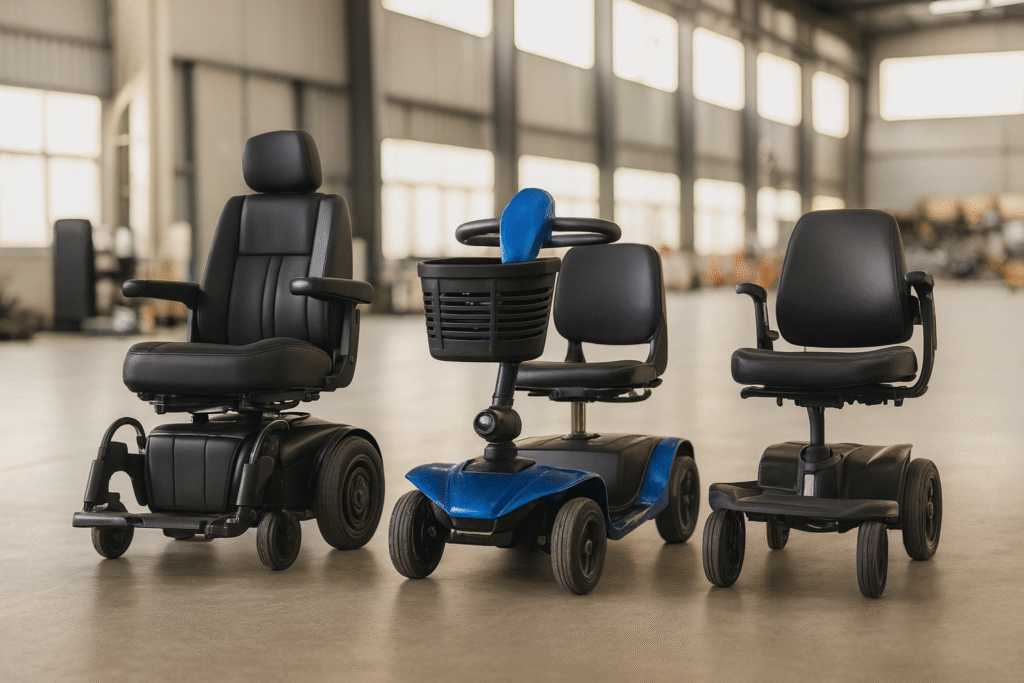
CE Certification for Wheelchairs: Complete Guide to EU Compliance Standards
Quick Answer: CE certification for wheelchairs requires compliance with EU Medical Device Regulation (MDR) 2017/745, EN 12182, EN 12183/EN 12184, and ISO 7176 series standards. Wheelchairs are classified as Class I or IIa medical devices. The process involves risk assessment, technical documentation, laboratory testing, quality system compliance, and either self-declaration or Notified Body certification.
Last updated: July 2026
CE certification is the mandatory gateway to the European wheelchair market. Without it, manufacturers cannot legally sell their products in any of the 30+ countries comprising the European Economic Area (EEA). For distributors and procurement managers, understanding the CE certification process is essential for verifying supplier compliance, avoiding counterfeit certificates, and ensuring that the products they import meet all regulatory requirements.
This guide provides a comprehensive overview of CE certification for wheelchairs — covering applicable regulations, key standards, the step-by-step certification process, documentation requirements, cost expectations, and common pitfalls to avoid.
Regulatory Framework: MDR 2017/745
The EU Medical Device Regulation (MDR) 2017/745 is the primary regulatory framework governing wheelchair certification in Europe. It replaced the previous Medical Device Directive (MDD 93/42/EEC) with significantly stricter requirements:
Key Changes Under MDR
- Enhanced clinical evaluation: Manufacturers must provide stronger evidence of clinical safety and performance
- Post-market surveillance: Mandatory ongoing monitoring and reporting of real-world product performance
- Unique Device Identification (UDI): All medical devices must carry UDI labels for traceability
- Eudamed registration: Products must be registered in the European database for medical devices
- Stricter Notified Body oversight: More rigorous auditing and certification processes
- Greater manufacturer accountability: Economic operators throughout the supply chain bear compliance responsibilities
Wheelchair Classification Under MDR
Most wheelchairs are classified as Class I medical devices, allowing manufacturers to self-declare conformity. However, certain features elevate the classification:
| Wheelchair Type | Classification | Conformity Assessment |
|---|---|---|
| Basic manual wheelchair (non-sterile, non-measuring) | Class I | Self-declaration |
| Electric wheelchair with drive control system | Class I (Im) | Self-declaration + NB for QMS |
| Wheelchair with complex posture control or ventilator interface | Class IIa | Notified Body required |
| Wheelchair designed for users over 130 kg | Class IIa (potential) | Notified Body required |
Accurate classification is the critical first step — it determines the conformity assessment path, documentation requirements, and whether a Notified Body must be involved.
Core Standards for Wheelchair CE Certification
CE certification requires compliance with a set of harmonized European standards. The following are the core standards applicable to wheelchairs:
EN 12182: General Requirements for Assistive Products
EN 12182 specifies general requirements and test methods for assistive products and technical aids for disabled persons classified as medical devices. This standard serves as the foundational framework, covering safety principles, ergonomic requirements, and information disclosure. All wheelchairs — manual and electric — must comply with EN 12182 as a baseline.
EN 12183: Manual Wheelchairs
EN 12183 specifies requirements and test methods for manual wheelchairs intended to carry one person weighing between 25 kg and 250 kg. The 2022 revision (EN 12183:2022) updated requirements to align with MDR. Key testing areas include:
- Static, impact, and fatigue strength testing
- Braking system performance
- Dimensional requirements and maneuvering space
- Material safety and flammability of upholstered parts
- Folding mechanism durability
EN 12184: Electric Wheelchairs and Mobility Scooters
EN 12184 applies to electrically powered wheelchairs and mobility scooters with a maximum speed of 15 km/h, carrying one person weighing up to 300 kg, plus their battery chargers. Key testing areas include:
- Dynamic and static stability on inclines
- Braking system performance (including power-off and freewheel modes)
- Obstacle climbing and descending ability
- Power system safety: overcharge/over-discharge protection, circuit protection
- Environmental adaptability: temperature, humidity, waterproof performance
- Parking brake effectiveness
ISO 7176 Series: International Wheelchair Testing Standards
The ISO 7176 series provides detailed testing methods that complement the EN standards. Key parts include:
| Standard | Scope |
|---|---|
| ISO 7176-8 | Requirements for static, impact, and fatigue strength |
| ISO 7176-9 | Climate testing for electric wheelchairs |
| ISO 7176-14 | Power and control systems requirements |
| ISO 7176-16 | Resistance to ignition of upholstered parts |
| ISO 7176-19 | Wheelchair-seated occupant crash testing for motor vehicle transport |
| ISO 7176-21 | Electromagnetic compatibility (EMC) requirements |
Additional Required Standards
- IEC 60601-1: Basic safety and essential performance of medical electrical equipment
- IEC 60601-1-2: Electromagnetic compatibility for medical electrical equipment
- EN ISO 14971: Application of risk management to medical devices
- EN ISO 10993: Biocompatibility testing for patient-contact materials
- EN 1021-2: Ignitability assessment for upholstered furniture
- UN38.3 / IEC 62133: Battery safety for lithium-powered models
For a complete overview of our compliance with these standards, visit our quality certifications page.
The CE Certification Process: Step by Step
Step 1: Product Classification
Determine the correct MDR classification (Class I, Im, or IIa) based on intended use, features, and user weight capacity. This determines the conformity assessment path. When in doubt, consult a Notified Body or regulatory consultant.
Step 2: Establish Quality Management System
Implement and maintain a QMS compliant with ISO 13485:2016. This covers design controls, production processes, traceability, CAPA (Corrective and Preventive Action), and internal audits. For Class IIa devices, the QMS must be certified by a Notified Body.
Step 3: Prepare Technical Documentation
Compile a comprehensive technical file including:
- Product description and intended use
- Design drawings and manufacturing specifications
- Risk analysis and management report (per EN ISO 14971)
- Essential safety and performance requirements checklist
- Test reports from accredited laboratories (EN 12183/12184, ISO 7176, IEC 60601)
- EMC test report (per IEC 60601-1-2 / ISO 7176-21)
- Battery safety report (for lithium batteries: IEC 62133 or UN38.3)
- Biocompatibility assessment (EN ISO 10993 series, if applicable)
- Clinical evaluation report
- Product labeling and user instructions (in target market language)
- Declaration of Conformity (DoC)
Step 4: Laboratory Testing
Send product samples to an accredited testing laboratory (such as TUV Rheinland, TUV SUD, BSI, or SGS) for comprehensive testing against all applicable standards. Testing typically includes mechanical durability (fatigue cycles, impact tests, static load), stability testing on inclined planes, electrical safety, EMC, and environmental testing.
Step 5: Conformity Assessment
For Class I devices: the manufacturer self-declares conformity by reviewing the technical file and signing the Declaration of Conformity.
For Class IIa devices: a Notified Body reviews the technical documentation, audits the QMS, and may conduct on-site inspections and sample testing before issuing a CE certificate.
Step 6: CE Marking and Registration
Affix the CE mark to the product, packaging, and accompanying documentation. The mark must be visible, legible, and indelible. For Class IIa devices, the CE mark must include the Notified Body’s four-digit identification number. Register the product in the Eudamed database and assign a Basic UDI-DI.
Step 7: Post-Market Surveillance
Under MDR, manufacturers must maintain an active post-market surveillance system, collecting and analyzing real-world performance data, reporting serious incidents through the vigilance system, and implementing corrective actions when needed. Technical documentation must be retained for at least 10 years after the last product placement on the market.
From the Field: We have navigated CE certification for 16 wheelchair and mobility scooter product models across our portfolio, and the EN 12182 and ISO 7176 standards are truly the core requirements that every manufacturer must master. The most underestimated part of the process is not the testing itself — it is the technical documentation. A single incomplete risk analysis or a missing biocompatibility assessment can delay certification by months. Our approach: we maintain a dedicated regulatory affairs team that tracks MDR updates and proactively updates technical files before renewals are due. We also learned that choosing the right Notified Body matters enormously — some have 12-month backlogs, while others can begin audits within 8 weeks. For distributors evaluating suppliers, always ask to see the actual CE certificate (not just a declaration), verify the Notified Body number, and confirm the certificate covers the specific model you plan to import. Our certifications page provides downloadable copies of our CE certificates for all current models.
Cost and Timeline Expectations
| Item | Class I (Self-Declaration) | Class IIa (Notified Body) |
|---|---|---|
| Testing costs | $3,000 to $8,000 | $10,000 to $25,000 |
| Technical documentation | $2,000 to $5,000 | $5,000 to $15,000 |
| Notified Body fees | — | $5,000 to $15,000 |
| QMS audit (ISO 13485) | $3,000 to $8,000 | $5,000 to $12,000 |
| Annual surveillance | $1,000 to $3,000 | $5,000 to $15,000 |
| Total initial cost | $8,000 to $21,000 | $25,000 to $67,000 |
| Timeline | 4 to 8 weeks | 3 to 6 months |
Costs vary based on product complexity, number of models, testing scope, and the chosen Notified Body. Budget for ongoing compliance costs including annual surveillance audits, certificate renewals (typically every 3 to 5 years), and technical file updates when design changes occur.
Common CE Certification Pitfalls
- Incomplete risk analysis: The most common cause of certification delays. Every foreseeable hazard must be identified, evaluated, and mitigated.
- Wrong product classification: Misclassifying a Class IIa device as Class I to avoid Notified Body involvement is a serious compliance violation.
- Expired certificates: Always check expiry dates. CE certificates are typically valid 3 to 5 years and require renewal audits.
- Certificate scope mismatch: A CE certificate for one model does not automatically cover variations. Verify the certificate lists your exact product model.
- Inadequate user instructions: Instructions must be provided in the official language of each target market and include safety warnings, maintenance guidelines, and disposal information.
- Ignoring post-market obligations: Failing to maintain vigilance reporting and post-market surveillance can result in certificate suspension.
- Counterfeit certificates: Always verify CE certificates through the Notified Body’s online database. Counterfeit documentation is a growing problem in the industry.
UKCA and Swiss Market Considerations
Post-Brexit, the UK requires UKCA marking for products placed on the Great Britain market. The UKCA process mirrors CE certification but requires a UK Approved Body. Switzerland has its own medical device requirements that align closely with EU MDR but require additional Swissmedic registration. Plan for these additional certifications if your target markets include the UK or Switzerland.
For manufacturers looking to showcase their certified products to international buyers, participating in major trade shows like REHACARE or MEDICA provides opportunities to demonstrate compliance and build buyer confidence.
FAQ
Is CE certification mandatory for selling wheelchairs in Europe?
Yes. CE certification is legally required for all wheelchairs sold within the European Economic Area (EEA). Under the EU Medical Device Regulation (MDR) 2017/745, wheelchairs are classified as Class I or IIa medical devices. Without a valid CE mark, products cannot be legally placed on the EU market, and non-compliance can result in product recalls, fines, and legal liability.
What standards must wheelchairs meet for CE certification?
The core standards are EN 12182 (general requirements for assistive products), EN 12183 (manual wheelchairs), and EN 12184 (electric wheelchairs and scooters). Electric models must also comply with ISO 7176 series standards, IEC 60601-1 for electrical safety, and IEC 60601-1-2 for electromagnetic compatibility. Risk management per EN ISO 14971 is also required.
How long does the CE certification process take for wheelchairs?
For Class I wheelchairs with complete documentation, the self-declaration process can take 4 to 8 weeks. For Class IIa models requiring Notified Body involvement, the process typically takes 3 to 6 months including testing, document review, and quality system audit. Allow additional time for sample preparation and potential re-testing.
What is the difference between MDD and MDR for wheelchair certification?
The Medical Device Directive (MDD 93/42/EEC) was the previous EU regulatory framework. The Medical Device Regulation (MDR 2017/745) replaced it with stricter requirements including enhanced clinical evaluation, post-market surveillance, unique device identification (UDI), and Eudamed database registration. All new CE certifications must comply with MDR requirements.
How much does CE certification cost for a wheelchair?
CE certification costs vary widely depending on product classification and testing scope. Class I self-declaration costs range from $3,000 to $8,000 for testing and documentation. Class IIa certification with Notified Body involvement typically costs $15,000 to $40,000 including testing, audits, and technical file review. Annual surveillance audits add $5,000 to $15,000 per year.
Conclusion
CE certification for wheelchairs is a systematic compliance process requiring deep knowledge of EU regulations, harmonized standards, and quality management systems. The EN 12182, EN 12183/12184, and ISO 7176 standards form the technical backbone, while MDR 2017/745 governs the regulatory framework. Manufacturers who invest in thorough documentation, rigorous testing, and proactive post-market surveillance will find that CE certification is not just a regulatory hurdle — it is a competitive advantage that builds trust with distributors and end users across Europe.
For more information on our certified products and compliance capabilities, explore our quality certifications, learn about our OEM/ODM services, or become a distributor to access our full range of CE-certified mobility solutions.
1000Mobility Editorial Team
Product specialists with hands-on experience in mobility equipment manufacturing and B2B export. Learn more →
Interested in Wholesale Pricing?
Get OEM/ODM details, product specifications, and wholesale pricing within 24 hours.
Or send us a message directly:
 English
  Deutsch
  Français
  Español
  Italiano
  العربية
  Русский