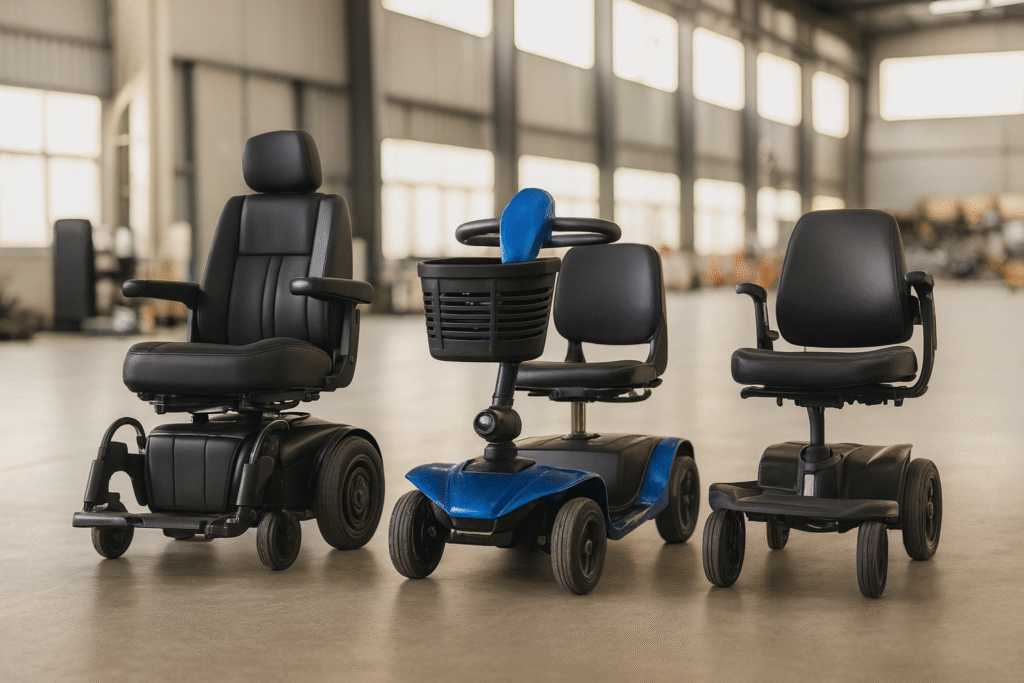
Heavy-Duty & Bariatric Electric Wheelchair Market Guide: Specs, Suppliers & B2B Opportunities
Quick Answer: The global obesity epidemic is driving surging demand for bariatric electric wheelchairs with weight capacities exceeding 200 kg. B2B distributors serving North American and Middle Eastern markets should understand the technical challenges, pricing dynamics, and certification requirements that distinguish heavy-duty power wheelchairs from standard models in this high-growth segment.
Last updated: September 2026
The rising global prevalence of obesity has created a parallel and rapidly growing demand for bariatric mobility equipment. For B2B distributors and procurement professionals, the heavy-duty and bariatric electric wheelchair segment represents a significant market opportunity—one that requires specialized technical knowledge, an understanding of regulatory requirements, and strategic supplier partnerships. This guide examines the market drivers, technical specifications, sourcing landscape, and regional opportunities in this expanding category.
Global Obesity Trends: The Demand Driver
According to the World Health Organization, in 2022, 1 in 8 people globally were living with obesity. Worldwide adult obesity has more than doubled since 1990, with 2.5 billion adults aged 18 and older classified as overweight, including 890 million living with obesity—representing 43% overweight and 16% obese among the adult population (WHO, 2025).
The World Obesity Federation projects that by 2030, nearly 3 billion adults—approximately 50% of the world’s adult population—will be living with overweight or obesity (World Obesity Atlas, 2025). This trend has direct implications for the mobility equipment industry, as higher body weights demand wheelchairs engineered for greater load capacities, wider seating, and reinforced structural components.
Regional Obesity Prevalence and Market Implications
Obesity rates vary significantly by region, directly influencing where bariatric wheelchair demand is concentrated:
| Region | Adult Obesity Rate | Market Opportunity |
|---|---|---|
| North America (US) | ~36% (adults) | Highest single-market demand; Medicare/Medicaid reimbursement drives institutional purchasing |
| Middle East (Saudi Arabia) | ~23% (adults) | Government healthcare investment expanding; growing private sector demand |
| Europe (England) | ~30% (adults) | NHS procurement; aging population compounds bariatric needs |
| Puerto Rico | ~36% (adults) | US territory with high obesity rates and US-aligned regulatory framework |
| Qatar | ~33% (adults) | High-income market with government-funded healthcare procurement |
Data source: World Obesity Federation Data Tables, 2025
Technical Challenges in Bariatric Wheelchair Design
Manufacturing electric wheelchairs for users weighing 200 kg or more presents distinct engineering challenges across every major component system.
Frame and Structural Integrity
The frame must support dynamic loads far exceeding static user weight—accounting for impact forces from curbs, thresholds, and sudden stops. Standard wheelchair frames designed for 136 kg (300 lbs) capacity cannot be simply reinforced; they require fundamentally different engineering approaches:
- Material selection: High-tensile steel (CrMo 4130) or reinforced aluminum alloy (6061-T6 with thicker wall profiles) replaces standard tubing
- Welding specifications: TIG welding with full penetration for critical joints; mandatory X-ray inspection on load-bearing welds
- Cross-bracing: Additional frame members to distribute load across a wider footprint
- Finite Element Analysis (FEA): Computer-aided stress simulation during design phase to identify and reinforce high-stress points
Motor Systems
Bariatric wheelchairs require significantly more powerful drive systems:
- Standard wheelchair: 250W×2 motors, sufficient for 136 kg capacity
- Bariatric model (200 kg+): 400W×2 to 700W×2 motors for adequate torque and hill-climbing capability
- Gearbox reinforcement: Planetary gear systems with higher torque ratings and heat dissipation capacity
- Controller programming: Optimized acceleration/deceleration curves to prevent tipping under high-load conditions
Battery Systems
Heavier loads demand greater energy capacity without proportionally increasing weight:
- Capacity: 24V 40Ah–80Ah lithium-ion battery packs (vs. 24V 12Ah–20Ah for standard models)
- Range impact: Despite larger batteries, bariatric wheelchairs typically achieve 15–25 km range (vs. 20–40 km for standard models) due to higher power consumption
- Battery weight trade-off: Battery weight is a significant portion of total chair weight, impacting portability
- Safety considerations: Higher current draw requires UL-certified battery management systems (BMS) and reinforced wiring harnesses
Tires and Wheels
Tire selection is critical for bariatric wheelchairs, affecting stability, comfort, and maintenance:
- Pneumatic tires: Preferred for shock absorption and weight distribution; require regular inflation monitoring
- Solid polyurethane tires: Maintenance-free but harder ride; suitable for indoor and smooth-surface use
- Wheel width: Wider tires (4-inch vs. standard 2.5-inch) distribute load over a larger contact area, reducing floor damage and improving stability
- Rim specifications: Reinforced rims with higher spoke counts or mag-wheel designs for structural integrity
Weight Capacity Specifications: Market Comparison
The following table compares specifications across standard, enhanced-capacity, and full bariatric electric wheelchairs:
| Specification | Standard Model | Enhanced Capacity | Bariatric (Heavy-Duty) |
|---|---|---|---|
| Weight Capacity | 136 kg (300 lbs) | 180 kg (400 lbs) | 200–250 kg (440–550 lbs) |
| Seat Width | 40–46 cm (16–18 in) | 48–51 cm (19–20 in) | 56–71 cm (22–28 in) |
| Motor Power | 250W×2 | 350W×2 | 400W×2–700W×2 |
| Battery | 24V 12–20Ah Li-ion | 24V 20–40Ah Li-ion | 24V 40–80Ah Li-ion |
| Frame Material | Aluminum alloy | Reinforced aluminum | Steel or heavy-gauge alloy |
| Overall Width | 60–66 cm | 66–72 cm | 72–90+ cm |
| Top Speed | 6 km/h | 6 km/h | 6–8 km/h |
| Range | 20–40 km | 15–30 km | 15–25 km |
| Typical Weight (chair) | 25–35 kg | 35–55 kg | 55–90+ kg |
Pricing Dynamics: Bariatric vs. Standard Models
Bariatric electric wheelchairs command significant price premiums over standard models, reflecting the more robust components, specialized manufacturing processes, and lower production volumes:
| Product Tier | Wholesale Price (FOB China) | Retail Price Range | Premium vs. Standard |
|---|---|---|---|
| Standard Electric Wheelchair (136 kg) | USD 300–600 | USD 1,200–2,500 | Baseline |
| Enhanced Capacity (180 kg) | USD 500–900 | USD 2,000–4,000 | +40–60% |
| Bariatric Electric (200 kg+) | USD 800–1,825 | USD 3,500–8,000+ | +80–150% |
| Premium Bariatric with full positioning | USD 1,500–3,500+ | USD 8,000–15,000+ | +150–300% |
Wholesale pricing data sourced from current manufacturer listings on Made-in-China and Alibaba platforms (Made-in-China, 2026; Alibaba, 2026).
For B2B distributors, this pricing structure means that each bariatric wheelchair sale generates substantially higher absolute profit per unit, even though gross margin percentages may be similar. A distributor selling 50 standard wheelchairs at USD 300 margin each earns USD 15,000; the same volume in bariatric models at USD 600 margin each would generate USD 30,000.
Regional Market Analysis
North America: The Largest Market
North America dominates the global electric wheelchair market with a 50.22% share in 2025, generating USD 1.37 billion in revenue (Fortune Business Insights, 2026). The United States has the highest obesity rate among developed nations, with approximately 36% of adults classified as obese. This combination of high obesity prevalence, established Medicare/Medicaid reimbursement pathways, and strong institutional purchasing (VA hospitals, rehabilitation centers) makes North America the primary target market for bariatric wheelchair distribution.
Key procurement channels include VA hospitals, Group Purchasing Organizations (GPOs), and state Medicaid programs. The CRT (Complex Rehab Technology) segment, which includes bariatric positioning wheelchairs, is projected to account for 50.64% of the electric wheelchair market in 2026.
Middle East: Emerging High-Value Market
The Middle East represents a rapidly growing market for bariatric mobility equipment. Saudi Arabia reports adult obesity rates of approximately 23%, with combined overweight and obesity prevalence exceeding 68% among adults (World Obesity Federation, 2024). Qatar shows even higher rates at 33.4% adult obesity.
Government-funded healthcare systems in Gulf Cooperation Council (GCC) countries are investing heavily in rehabilitation and long-term care infrastructure, creating institutional procurement opportunities. The region’s preference for premium products and willingness to pay for quality positions it as an attractive market for higher-margin bariatric wheelchairs.
Sourcing Considerations for B2B Buyers
When sourcing bariatric electric wheelchairs, B2B buyers should prioritize:
- Weight capacity certification: Request independent load testing certificates verifying the stated weight capacity, including dynamic load testing (not just static)
- Frame warranty: Minimum 2-year frame warranty; 3–5 years preferred for institutional buyers
- Component traceability: Ability to trace frame materials, motor specifications, and battery certifications through serial number tracking
- Spare parts availability: Commitment from manufacturer for minimum 5-year parts availability post-purchase
- After-sales support: Technical documentation, repair manuals, and remote diagnostic capability for warranty service
For buyers evaluating Chinese manufacturers, our electric wheelchair manufacturing capabilities include bariatric models with capacities up to 250 kg. We maintain rigorous quality certifications including CE, FDA 510(k), and ISO 13485, ensuring compliance with international medical device standards for bariatric wheelchair distribution.
FAQ
What weight capacity qualifies a wheelchair as bariatric?
Electric wheelchairs with weight capacities of 200 kg (440 lbs) or more are generally classified as bariatric. Standard electric wheelchairs typically support up to 136 kg (300 lbs), while enhanced-capacity models handle up to 180 kg (400 lbs). Full bariatric models support 200–250 kg or more.
How much more do bariatric electric wheelchairs cost compared to standard models?
Bariatric electric wheelchairs typically cost 80–150% more than standard models at both wholesale and retail levels. Wholesale prices from Chinese manufacturers range from USD 800–1,825 for bariatric models, compared to USD 300–600 for standard electric wheelchairs.
Which regions have the highest demand for bariatric wheelchairs?
North America has the highest demand, driven by obesity rates of approximately 36% among adults and established insurance reimbursement systems. The Middle East (particularly Saudi Arabia and Qatar) is an emerging high-value market with obesity rates of 23–33% and growing government healthcare investment.
What are the main technical challenges in manufacturing bariatric wheelchairs?
The primary challenges include frame structural integrity under high dynamic loads, motor power sufficient for heavier loads without excessive battery drain, wider seating configurations, reinforced tire and wheel systems, and overall weight management of the wheelchair itself (which can exceed 90 kg).
What certifications are required for bariatric electric wheelchairs?
Bariatric electric wheelchairs require the same certifications as standard medical-grade electric wheelchairs: CE marking with MDR compliance (EU), FDA 510(k) clearance (US, Class II medical device), ISO 13485:2016 quality management, and RoHS compliance. Additional load-testing certifications may be required by specific institutional buyers.
Conclusion
The bariatric electric wheelchair market is poised for sustained growth, driven by the global obesity epidemic and the expanding healthcare infrastructure needed to address it. With nearly 3 billion adults projected to be overweight or obese by 2030, demand for heavy-duty mobility equipment will only intensify—particularly in North America and the Middle East where obesity rates and healthcare spending are highest.
For B2B distributors, the bariatric segment offers higher per-unit margins, growing institutional demand, and a less crowded competitive landscape than standard wheelchair categories. Success requires partnering with manufacturers who understand the engineering challenges of high-capacity mobility devices and maintain rigorous quality and certification standards. 1000Mobility provides bariatric electric wheelchairs with capacities up to 250 kg, backed by comprehensive certification support and OEM/ODM customization services. Contact our distribution team to explore bariatric wheelchair sourcing opportunities for your market.
By 1000Mobility Editorial Team
Interested in Wholesale Pricing?
Get OEM/ODM details, product specifications, and wholesale pricing within 24 hours.
Or send us a message directly:
 English
  Deutsch
  Français
  Español
  Italiano
  العربية
  Русский