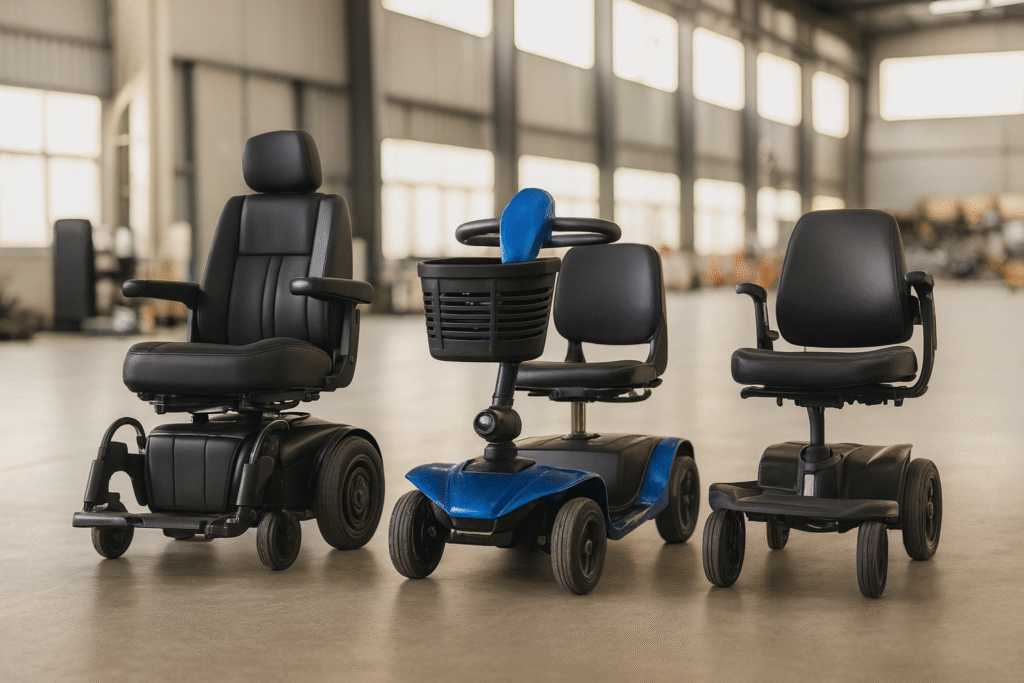
Southeast Asia Mobility Aid Market 2026: Import Guide for ASEAN Wheelchair & Scooter Distributors
Quick Answer: The ASEAN mobility aid market exceeds $1 billion across six key countries, growing at 6–8% CAGR through 2030. RCEP tariff reductions of 5–15% on Chinese wheelchair imports, combined with the ASEAN Medical Device Directive (AMDD) harmonization, create a window for distributors to source cost-effectively. Thailand, Vietnam, and Indonesia represent the largest opportunities by market size.
Last updated: September 2026
ASEAN Mobility Aid Market Overview: Six-Country Analysis
Southeast Asia represents one of the world’s most dynamic growth markets for mobility aids. According to Ken Research, the combined mobility aid market across six key ASEAN nations exceeds $1 billion in 2025, with population aging, rising healthcare expenditure, and expanding insurance coverage driving sustained demand. For wheelchair distributors in Southeast Asia, understanding the distinct regulatory, tariff, and logistics landscape of each country is essential for profitable market entry.
| Country | Market Size (2024) | CAGR (2025–2030) | Pop. 60+ (Mn) | Health Coverage |
|---|---|---|---|---|
| Indonesia | USD 308 Mn | 8.1% | 32.3 | 95.0% |
| Thailand | USD 244 Mn | 6.8% | 14.9 | 99.0% |
| Vietnam | USD 198 Mn | 7.5% | 14.2 | 94.2% |
| Philippines | USD 153 Mn | 7.1% | 10.8 | 89.0% |
| Malaysia | USD 92 Mn | 6.2% | 3.8 | 98.0% |
| Singapore | USD ~65 Mn | 5.5% | 1.5 | 100% |
Source: Ken Research ASEAN Mobility Aid Market Comparison; IntelMarketResearch Asia-Pacific Advanced Power Wheelchair Market Report 2026
Thailand: The Gateway Market
Thailand offers the most mature regulatory framework for medical device imports in mainland ASEAN. Under the Medical Device Act B.E. 2551 and its 2019 amendment, all medical device registrations must go through the SKYNET e-submission portal managed by the Thai FDA. Wheelchairs are classified as Class 1 (Low Risk) devices, requiring a Listing pathway — the simplest registration route. According to Emerhub’s Thailand Medical Device Registration Guide, Class 1 listing typically completes within 30 working days, making Thailand one of the fastest ASEAN markets for wheelchair import approval.
Thailand’s 99% health insurance coverage rate and its position as a regional medical tourism hub create dual demand channels: institutional procurement through hospital networks and private-pay purchases by an aging middle class. Bangkok and Chiang Mai concentrate the deepest distribution networks.
Vietnam: Fastest-Growing Opportunity
Vietnam’s mobility aid market, valued at $198 million in 2024, is projected to reach $306 million by 2030 at a 7.5% CAGR — the strongest sustained growth rate among the six target countries. Vietnam counted 14.2 million people aged 60+ in 2024, with 6.2 million registered persons with disabilities. According to Ken Research, Ho Chi Minh City functions as the primary commercial hub with 162 hospitals and 443 commune health stations (as of July 2025), creating a broad institutional procurement base.
Manual wheelchairs dominate current volume demand, but powered mobility and orthotic solutions represent the fastest-growing profit pools. Vietnamese distributors who combine clinical fitting capability with multi-channel fulfillment are positioned to capture disproportionate growth as the market upgrades from basic to more complex products.
Indonesia: Scale Meets Complexity
Indonesia is the largest ASEAN mobility aid market by revenue ($308 million) and population (32.3 million aged 60+). However, regulatory complexity is 2.5 times higher than the ASEAN average, according to the World Bank’s 2026 Ease of Doing Business report cited by InCorp Indonesia. All medical devices must be registered with the Ministry of Health (Kemenkes) through the Regalkes online system, with foreign manufacturers requiring a local Authorized Representative (LAR) or a PT PMA entity to hold the Distribution Permit (NIE).
Wheelchairs are classified as Class A (Low Risk), which means no clinical testing requirements and the most straightforward registration pathway. However, Halal compliance deadlines (October 17, 2026 for Class A devices) add a regulatory layer that distributors must prepare for.
Philippines, Malaysia, and Singapore: Smaller but Strategic
The Philippines ($153 million market, 7.1% CAGR) offers growing demand driven by 10.8 million people aged 60+ and improving public health coverage at 89%. Malaysia ($92 million, 6.2% CAGR) benefits from near-universal health coverage (98%) and its September 2025 accession to MDSAP, which streamlines regulatory submissions for MDSAP-certified manufacturers. Singapore, though the smallest market by size (~$65 million), serves as the strategic entry point for ASEAN regulatory reliance pathways — HSA approval can facilitate faster registration in Thailand and Malaysia.
RCEP Tariff Benefits and Certificate of Origin
The Regional Comprehensive Economic Partnership (RCEP), the world’s largest free trade agreement covering China and all ten ASEAN members plus Japan, South Korea, Australia, and New Zealand, provides direct tariff advantages for wheelchair distributors sourcing from China. According to TOUSDA Medical’s analysis of RCEP’s impact on wheelchair exports, preferential certificates of origin under RCEP can reduce duties by 5–15% on many wheelchair categories, depending on the destination country.
Key RCEP Benefits for Mobility Aid Importers
- Tariff reductions: Progressive cuts make Chinese-made products more competitive against alternative suppliers, with preferential rates applied when a valid RCEP Certificate of Origin (COO) accompanies the shipment
- Rules of Origin flexibility: Easier qualification through regional value content (RVC) or change in tariff classification (CTC) methods, allowing components from multiple RCEP member countries to qualify cumulatively
- Customs facilitation: Simplified clearance procedures for certified shipments reduce port dwell times
- ASEAN-China FTA (ACFTA 3.0): The upgraded framework further supports supply chain integration and encourages accumulation of origin across member countries
Practical Case: ASEAN Distributor Success
A Southeast Asian distributor partnered with a Chinese manufacturer in late 2025 to source manual and portable folding mobility scooters. By leveraging RCEP certificates of origin, they reduced effective duties by over 10%. Shipments increased 40% year-over-year in Q1 2026, with the partner reporting faster customs clearance and improved margins that allowed competitive pricing in local tenders.
Obtaining an RCEP Certificate of Origin
Chinese manufacturers should provide the RCEP COO through their local Customs or CCPIT office. The COO must include:
- Manufacturer name and address (matching the commercial invoice)
- HS code for the wheelchair/scooter (typically 8713.10 or 8713.90)
- Origin criterion (usually “WO” for wholly obtained or “PE” for produced exclusively from originating materials)
- Authorized signature and official seal of the issuing authority
Medical Device Registration Requirements: Country-by-Country Comparison
The ASEAN Medical Device Directive (AMDD) provides a harmonized framework, but each country implements it differently. According to the ASEAN AMDD and CSDT Guide (2026), manufacturers must prepare a Common Submission Dossier Template (CSDT) that can be adapted for each target market with country-specific addenda.
Registration Pathways for Wheelchairs (Class A/1)
| Country | Classification | Pathway | Timeline | Govt. Fee | Validity |
|---|---|---|---|---|---|
| Singapore | Class A | Listing (Abridged) | 60 working days | SGD 100+ | 5 years |
| Malaysia | Class A | Establishment Registration | 60 working days | RM 500+ | 5 years |
| Thailand | Class 1 | Listing | 30 working days | THB 1,000+ | Indefinite |
| Indonesia | Class A | Registration via Regalkes | 30–90 working days | IDR 500K+ | 5 years |
| Philippines | Class A | Notification | 60 working days | PHP 5K+ | 5 years |
| Vietnam | Class A | Listing (fast-track) | 7 working days | VND 1M+ | 5 years |
Source: ASEAN AMDD and CSDT Guide 2026; Emerhub Thailand Guide; InCorp Indonesia Guide
Required Documents (Universal)
- ISO 13485 certificate (quality management system)
- Certificate of Free Sale (CFS) from country of manufacture
- Technical documentation per CSDT format
- Product labeling in local language (Thai, Vietnamese, Bahasa Indonesia, etc.)
- Authorized representative appointment letter
- Declaration of Conformity
Strategic Multi-Country Entry Approach
For distributors targeting multiple ASEAN markets simultaneously, the recommended approach is:
- Start with Singapore or Malaysia — These have the most mature regulatory systems, and approval in one can facilitate registration in the other through reliance pathways
- Prepare a master CSDT — Invest in a high-quality base dossier that can be adapted for each target market with minimal country-specific addenda
- Engage local authorized representatives early — Each country requires a local representative whose licenses must be verified before application
- File parallel submissions — Once the master CSDT is ready, file simultaneously in multiple markets
- Leverage existing approvals — FDA clearance, CE marking, or TGA approval can be referenced as supporting documentation
Expected timeline for parallel multi-market entry: 8–12 months (versus 12–18 months for sequential filing).
China–ASEAN Logistics: Sea Freight vs. Land Transport
Logistics optimization can reduce landed cost by 10–20% depending on destination. Distributors should evaluate both sea freight and land transport options based on order volume, urgency, and destination country.
Sea Freight (Primary Channel)
| Route | Transit Time | Cost (40ft HQ, est.) | Primary Port |
|---|---|---|---|
| Shenzhen/Guangzhou → Ho Chi Minh City | 5–7 days | $800–$1,200 | Cat Lai Port |
| Shenzhen/Guangzhou → Laem Chabang (Thailand) | 7–10 days | $1,000–$1,500 | Laem Chabang |
| Shanghai/Ningbo → Jakarta | 12–15 days | $1,500–$2,200 | Tanjung Priok |
| Shanghai/Ningbo → Manila | 10–14 days | $1,300–$1,800 | Port of Manila |
| Shenzhen → Port Klang (Malaysia) | 7–9 days | $900–$1,400 | Port Klang |
Estimates based on 2026 shipping rates; actual costs vary by season and carrier
Land Transport (China–Vietnam–Thailand)
The China–Indochina Peninsula land corridor offers a cost-effective alternative for distributors in Vietnam, Thailand, and Malaysia. The Nanning–Hanoi expressway and the Kunming–Bangkok highway enable direct truck transport from Guangdong/Yunnan manufacturing hubs to Vietnamese and Thai distribution centers.
- Guangzhou → Hanoi: 2–3 days by truck, approximately 20% cheaper than sea freight for orders under 50 units
- Kunming → Bangkok: 4–5 days via the R3E highway through Laos, ideal for urgent restocking
- Container density advantage: Manual wheelchairs packed flat can achieve 10–15% higher container density than assembled models, reducing per-unit freight cost
Recommended Logistics Strategy
For initial market entry, sea freight from Shenzhen or Guangzhou offers the best cost-per-unit for orders of 100+ units. For ongoing restocking of fast-moving models, land transport to Vietnam and Thailand provides faster turnaround (3–5 days versus 7–15 days) for urgent inventory needs. Distributors in Indonesia and the Philippines should plan for longer lead times and consider maintaining 2–3 months of buffer stock.
Price-Sensitive Market Strategies for ASEAN Distributors
Southeast Asian markets are among the most price-sensitive globally for mobility aids. The average realized revenue per unit in Vietnam was just $140 in 2024, compared to $800+ in Western markets. To compete effectively, distributors must adopt specific pricing and product strategies:
Product Tier Strategy
| Tier | Price Range (FOB China) | Target Customer | Suggested Products |
|---|---|---|---|
| Entry | $120–$250 | Government tenders, basic institutional | Standard manual wheelchairs, basic transport chairs |
| Mid-Range | $250–$600 | Private-pay consumers, clinics | Folding electric wheelchairs, lightweight manual chairs |
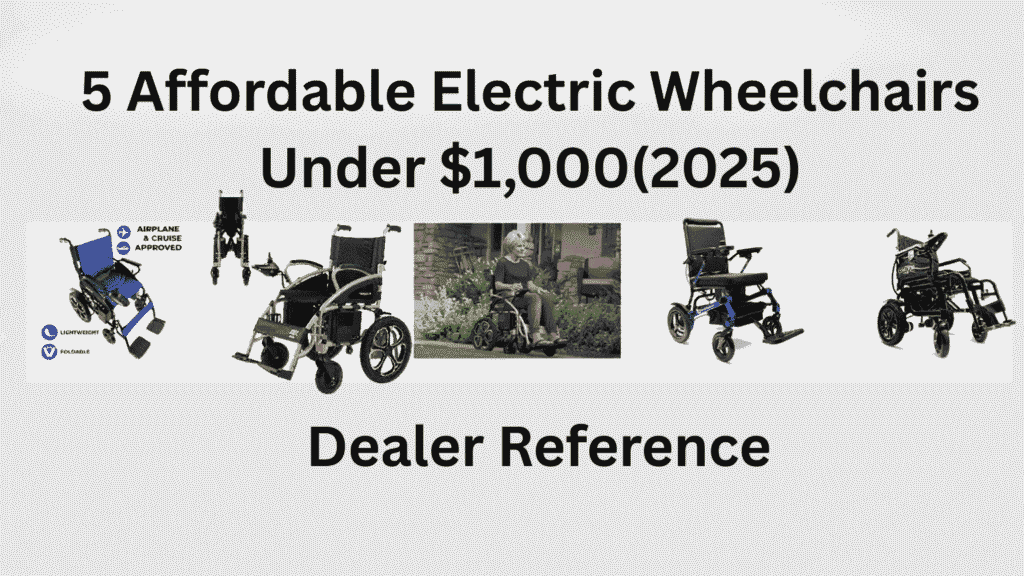
| Premium | $600–$1,500 | Hospital networks, rehabilitation centers | Power wheelchairs with brushless motors, carbon fiber models |
Tender Pricing Strategy
Government and hospital tenders dominate institutional procurement in Thailand, Vietnam, and Indonesia. Winning tender strategies include:
- Volume-based discounting: Offer 15–20% price reductions for orders exceeding 200 units
- Bundled service packages: Include free maintenance contracts (1–2 years) to differentiate on value rather than price alone
- Local assembly option: For Indonesia’s local content requirements (TKDN), consider CKD (Completely Knocked Down) assembly partnerships
- Multi-year framework agreements: Lock in pricing for 2–3 year supply contracts with annual volume commitments
Competitive Positioning Against Regional Manufacturers
Local manufacturers in Thailand and Vietnam focus on cost-effective, durable designs suitable for tropical climates. Chinese manufacturers compete on technology advantage (brushless motors, carbon fiber frames, smart features) and manufacturing scale. Distributors should emphasize certification compliance (ISO 13485, CE, FDA) and after-sales support capability to justify premium pricing over uncertified local alternatives.
Becoming a 1000Mobility Distributor in Southeast Asia
1000Mobility offers comprehensive distributor support for ASEAN market entry, including:
- Full certification documentation (ISO 13485, CE, FDA) ready for AMDD submission
- RCEP Certificate of Origin preparation for tariff optimization
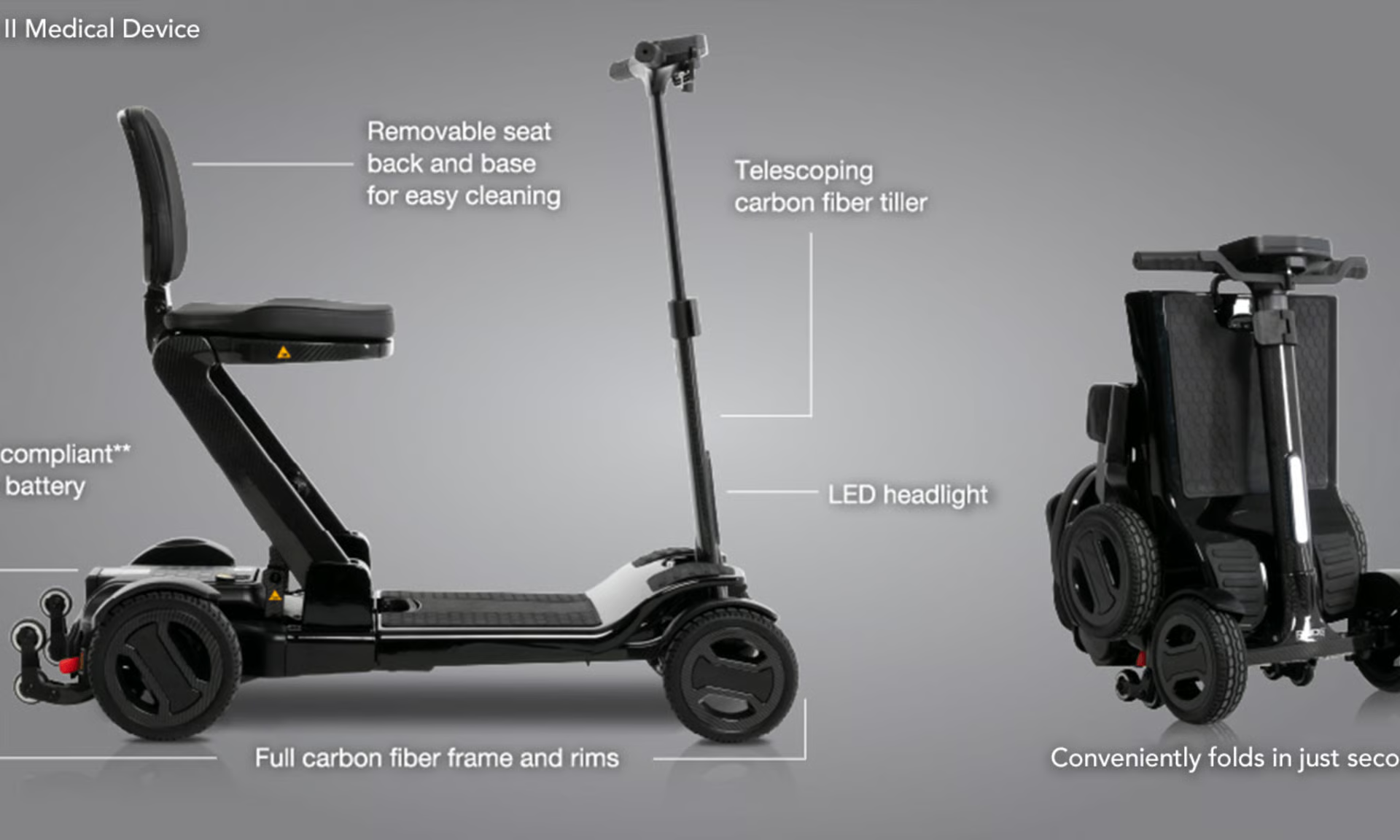
- Multi-tier product portfolio from entry-level to premium carbon fiber models
- Marketing support including localized product literature and digital assets
- Spare parts supply chain with 2–4 week delivery to most ASEAN destinations
Apply to become an authorized 1000Mobility distributor and gain access to our Southeast Asia market entry toolkit, including CSDT templates, regulatory pathway guidance, and competitive pricing structures.
FAQ
What is the RCEP tariff reduction for wheelchair imports in ASEAN countries?
RCEP preferential certificates of origin can reduce import duties by 5–15% on wheelchair categories, depending on the destination country and HS code. The reduction applies when the manufacturer provides a valid RCEP COO and the product meets rules of origin requirements (typically regional value content of 40% or more).
How long does medical device registration take for wheelchairs in ASEAN countries?
For Class A/1 wheelchairs (the standard classification), registration timelines range from 7 working days (Vietnam fast-track) to 90 working days (Indonesia full review). Singapore and Thailand typically process within 30–60 working days. Parallel filing across multiple ASEAN markets can complete within 8–12 months total.
Do I need a local authorized representative in each ASEAN country?
Yes, every ASEAN country requires a locally registered entity to hold the medical device registration. Foreign manufacturers cannot register directly. You can either appoint a local distributor as your Authorized Representative (faster but shared control) or establish your own local entity (slower but full control over the registration).
What documents do I need to import wheelchairs into Southeast Asia?
Standard documentation includes: ISO 13485 certificate, Certificate of Free Sale, CE or FDA approval documents, RCEP Certificate of Origin, commercial invoice, packing list, bill of lading, and product labeling in the local language. Indonesia additionally requires a NIE (Distribution Permit) and Halal compliance for Class A devices by October 2026.
Which ASEAN country offers the fastest wheelchair market entry?
Vietnam offers the fastest Class A listing (7 working days) and strong demand growth (7.5% CAGR). Thailand is recommended as a gateway market due to its mature regulatory framework, 99% health coverage, and Class 1 listing completing within 30 working days. Singapore, while smaller in market size, provides regulatory reliance pathways that can accelerate subsequent registrations in other ASEAN countries.
Conclusion
The Southeast Asia mobility aid market offers compelling growth opportunities for distributors who navigate the regulatory, tariff, and logistics landscape strategically. With combined market size exceeding $1 billion, RCEP tariff reductions of 5–15%, and AMDD harmonization simplifying multi-country registration, the window for profitable market entry has never been wider. Success requires choosing the right entry country, preparing a master CSDT dossier, and partnering with a manufacturer who provides full certification documentation and RCEP compliance support.
1000Mobility’s comprehensive product portfolio, certification stack, and ASEAN market experience position us as an ideal manufacturing partner for distributors entering or expanding in Southeast Asia. Contact our distribution team to discuss your specific market entry requirements and receive our ASEAN distributor information package.
By 1000Mobility Editorial Team
Interested in Wholesale Pricing?
Get OEM/ODM details, product specifications, and wholesale pricing within 24 hours.
Or send us a message directly:
 English
  Deutsch
  Français
  Español
  Italiano
  العربية
  Русский