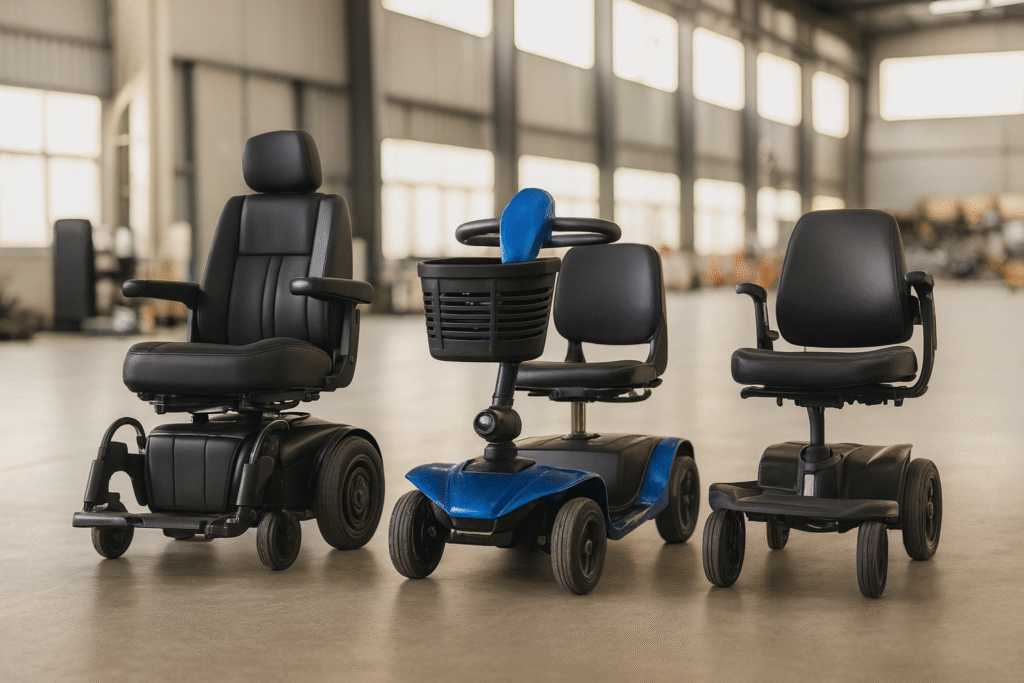
Telemedicina y monitorización a distancia: integración de funciones inteligentes en los scooters de movilidad para los cuidados a largo plazo
Last updated: July 2026

Mobility scooters are undergoing a fundamental transformation. No longer simply transportation devices for individuals with walking difficulties, they are evolving into connected health platforms that integrate with telemedicine ecosystems, remote monitoring systems, and long-term care infrastructure. This shift represents one of the most significant commercial opportunities for B2B suppliers in the mobility equipment sector — but only for those who understand the technology, the regulatory landscape, and the procurement dynamics of healthcare buyers.
According to the WHO’s Global Report on Assistive Technology, over 2.5 billion people worldwide need assistive products, with mobility devices being the most requested category (Polaris Mobility, 2026). As populations age and chronic conditions become more prevalent, long-term care systems are seeking smarter, more efficient ways to support patients — and connected mobility scooters are emerging as a key component of this strategy.
The Rise of Connected Mobility Scooters
The integration of IoT (Internet of Things) technology into mobility scooters represents the convergence of assistive technology and digital health innovation. Modern smart scooters incorporate several key technological components that work together seamlessly:
- Central Processing Unit (CPU): Acts as the brain of the scooter, managing all connected features and processing data from various sensors.
- Wireless Communication Modules: Enable Bluetooth, Wi-Fi, and cellular connectivity for real-time data transmission to cloud platforms and mobile apps.
- Sensor Arrays: Monitor environmental conditions, user vitals, and scooter performance metrics including battery health, motor temperature, and usage patterns.
- Battery Management Systems: Optimize power distribution between mobility functions and smart features, extending range while supporting connectivity.
- User Interface Displays: Provide intuitive control panels for accessing smart features, often integrated with smartphone apps.
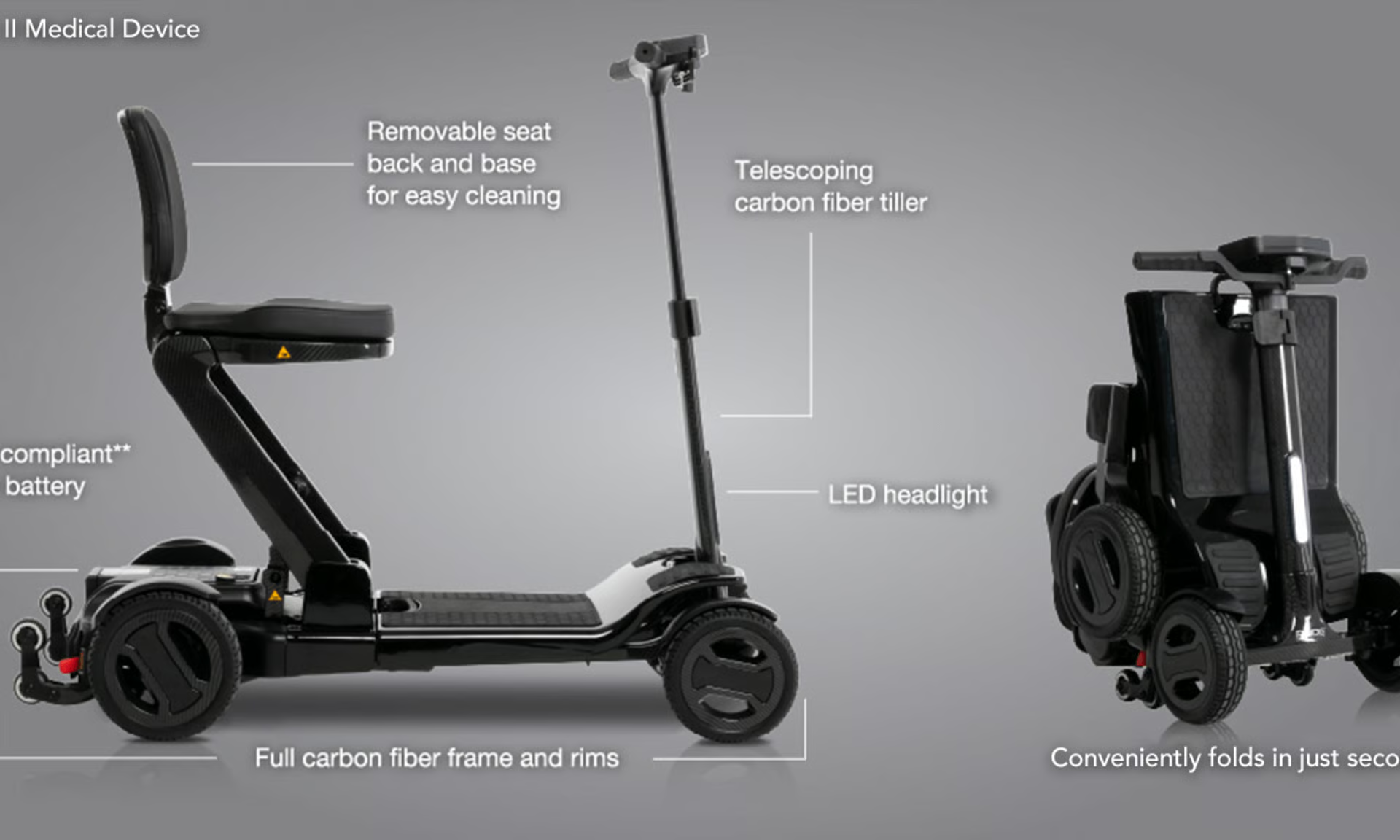
Companies like Invacare have already launched connected mobility scooters with their Zeta technology platform, paired with the InvaHome mobile app. These scooters enable users to remotely check battery life, track journey details, share location with emergency contacts, and receive timely maintenance support through a retailer dashboard that monitors battery health and scooter performance in real time (Invacare Connected Scooters).
Key Smart Features for Long-Term Care Applications
1. Health Monitoring and Biometric Tracking
Smart mobility scooters can integrate sophisticated health monitoring capabilities that track vital signs and physical activity throughout the day. These systems work in conjunction with wearable devices and smartphone health applications to provide comprehensive wellness tracking:
| Health Metric | Monitoring Method | Update Frequency | Emergency Threshold |
|---|---|---|---|
| Heart Rate | Handlebar grip sensors | Real-time | <40 or >150 BPM |
| Blood Pressure | Pulse wave analysis | Every 15 minutes | <90/60 or >180/120 |
| Activity Level | Motion sensors | Continuous | No movement >30 minutes |
| Stress Indicators | Heart rate variability analysis | Every 5 minutes | Prolonged high stress |
| Blood Oxygen (SpO₂) | Pulse oximetry sensors | Real-time | <92% |
Source: Polaris Mobility Smart Technology Integration Guide, 2026
Research from the National Institutes of Health shows that continuous health monitoring can help predict health episodes and improve recovery outcomes, making these integrated systems particularly valuable for users with chronic conditions such as cardiovascular disease, COPD, and diabetes (Polaris Mobility, 2026).
2. GPS Location Tracking and Emergency Response
For long-term care providers, knowing where vulnerable patients are at all times is a critical safety requirement. Smart scooters with GPS integration enable:
- Seguimiento de la ubicación en tiempo real accessible to caregivers and family members through mobile apps.
- Geofencing alerts that notify caregivers when a user leaves a designated safe zone or enters a restricted area.
- Fall detection and immobility alerts that automatically trigger emergency response when concerning patterns are detected — such as a sudden impact followed by no movement for more than 30 minutes.
- Emergency SOS buttons that transmit GPS coordinates, medical history, and medication information to emergency services and designated contacts simultaneously.
- Automatic emergency contact notification when vital signs indicate distress, with GPS location sharing for rapid response.
3. Remote Diagnostics and Predictive Maintenance
For B2B distributors and fleet managers, remote diagnostics is perhaps the most commercially valuable smart feature. Connected scooters transmit operational data to cloud platforms where AI algorithms can:
- Predict battery failure before it occurs by analyzing charging patterns, voltage curves, and temperature data — reducing downtime and emergency service calls.
- Identify motor and controller issues through error code transmission and performance trend analysis.
- Optimize maintenance scheduling based on actual usage data rather than arbitrary time intervals, reducing unnecessary service visits while preventing breakdowns.
- Enable retailers to view fault codes remotely and prepare replacement parts before the service visit, reducing repair turnaround time by 40–60% (Invacare).
This retailer dashboard approach, pioneered by Invacare’s Zeta platform, allows distributors to monitor battery health and scooter performance across their entire fleet in real time, enabling proactive customer support and data-driven inventory management.
4. Telemedicine Integration
The integration of telemedicine capabilities directly into mobility scooters creates a unique value proposition for long-term care providers:
- Video consultation screens mounted on the scooter enable users to participate in telehealth appointments without transferring to another location — particularly valuable for users with limited mobility.
- Secure data transmission of health metrics to electronic health records (EHR) systems, giving physicians real-time visibility into patient activity levels, vital signs, and mobility patterns.
- Medication reminders integrated with the scooter’s display, reducing medication non-adherence — a problem that costs the US healthcare system an estimated $300 billion annually.
- Rehabilitation tracking that monitors gait patterns, distance traveled, and activity duration, enabling physical therapists to adjust treatment plans remotely.
5. AI-Enhanced Safety Features
AI-integrated smart mobility scooters are incorporating advanced safety technologies that reduce accident risks by up to 40% in urban settings (SanLi Care, 2025):
- Obstacle detection sensors using ultrasonic or LiDAR technology that alert users to hazards and can automatically reduce speed.
- Adaptive speed control that adjusts scooter speed based on terrain, incline, and proximity to obstacles.
- Automatic slope detection that prevents downhill runaway by modulating braking force on inclines.
- Voice-activated controls for users with limited hand dexterity, enabling hands-free operation of lights, horn, and speed settings.
The Long-Term Care Market Opportunity
The integration of smart features into mobility scooters opens access to healthcare procurement budgets that dwarf traditional DME (durable medical equipment) channels. Several converging trends make this an opportune moment for B2B suppliers:
Policy and Reimbursement Drivers
- Aging-in-place initiatives: Governments in Germany, Japan, the UK, and Canada are actively promoting aging-in-place strategies that prioritize home-based care over institutionalization. Smart mobility devices are a key enabler, reducing hospital readmissions and enabling remote monitoring of elderly patients.
- Insurance reimbursement expansion: Reimbursement schemes in countries like Germany and Japan are making electric scooters more accessible, with growing recognition of health monitoring features as medically necessary (Verified Market Reports, 2026).
- Cost savings recognition: Healthcare systems are recognizing that smart mobility devices reduce hospital readmissions, emergency room visits, and caregiver costs — creating a compelling ROI case for institutional procurement.
Target Institutional Buyers
| Buyer Type | Procurement Budget | Key Decision Criteria |
|---|---|---|
| Hospital Systems | $50K–$500K annually | EHR integration, data security, FDA compliance, clinical validation |
| Nursing Home Chains | $20K–$200K annually | Durability, ease of use, fall detection, staff alerting systems |
| Home Health Agencies | $10K–$100K annually | Remote monitoring, GPS tracking, patient engagement features |
| Government Health Programs | $100K–$10M+ per tender | Cost-effectiveness data, local certification, scalability, data sovereignty |
| Insurance Providers | Variable | Outcomes data, readmission reduction evidence, cost-per-patient metrics |
Market Growth Projections
The elderly electric mobility scooter market is experiencing significant growth driven by IoT integration and healthcare convergence. Key projections include:
- By 2030, AI-integrated mobility aids could dominate 60% of the market, emphasizing the need for wholesalers to partner with tech-forward manufacturers (SanLi Care, 2025).
- The integration of health monitoring sensors within scooters is opening new avenues for remote patient management, aligning market development with healthcare expenditure priorities (Verified Market Reports, 2026).
- Smart rollator technology incorporating fall detection sensors, GPS tracking, and activity monitoring currently represents below 5% of market volume but is the fastest-growing segment (Dataintelo, 2026).
Regulatory and Compliance Considerations
Integrating telemedicine and health monitoring features into mobility scooters introduces additional regulatory complexity that B2B suppliers must navigate:
FDA and Medical Device Classification
In the United States, mobility scooters with health monitoring features may be classified as medical devices requiring FDA registration and 510(k) clearance, depending on the specific features and intended use claims. AI features must meet FDA safety standards, and any health data collection triggers HIPAA compliance requirements.
EU MDR (Medical Device Regulation)
The EU’s Medical Device Regulation mandates rigorous testing and certification processes for mobility devices with medical functionality. Smart features that collect health data may require CE marking under MDR Class IIa or higher, depending on the risk classification. Recent updates emphasize stability, speed limits, battery safety, and accessibility features (Verified Market Reports, 2026).
Data Privacy and Security
Smart scooters that collect and transmit health data must comply with:
- HIPAA (US) for protected health information
- GDPR (EU) for personal data processing
- PIPEDA (Canada) and equivalent regulations in other markets
- ISO 27001 for information security management systems
Distributors should verify that their suppliers provide data processing agreements, security certifications, and clear data ownership policies before entering healthcare procurement channels.
Implementation Strategy for B2B Distributors
Phase 1: Assess Market Readiness
Before investing in smart mobility scooter inventory, distributors should:
- Identify which institutional buyers in their target markets are actively procuring connected health devices.
- Assess local regulatory requirements for health data collection and medical device classification.
- Evaluate existing telemedicine infrastructure compatibility — smart scooters are only valuable if they can integrate with the healthcare provider’s existing systems.
Phase 2: Partner with Technology-Forward Manufacturers
Not all mobility scooter manufacturers have the capability to integrate IoT and health monitoring features. When evaluating supplier partners, look for:
- Existing IoT platform experience and API documentation.
- ISO 13485 quality management system certification for medical devices.
- Data security certifications (ISO 27001 or equivalent).
- Proven track record of regulatory compliance in target markets (FDA, CE MDR).
- Willingness to support custom feature development for institutional clients.
Phase 3: Develop Value-Added Services
The real margin in smart mobility scooters is not in the hardware — it is in the data and services layer. Distributors should consider:
- Subscription-based monitoring services: Charge monthly fees for remote monitoring, alerting, and reporting services.
- Data analytics packages: Provide institutional buyers with dashboards and reports on fleet utilization, patient outcomes, and maintenance predictions.
- Integration services: Charge for custom API development to connect smart scooters with the buyer’s EHR or care management system.
- Training and onboarding: Offer comprehensive training programs for healthcare staff on using the smart features and interpreting the data.
Phase 4: Build Clinical Evidence
Institutional buyers — especially hospitals and insurance providers — require evidence of clinical and economic benefit. Distributors who can present case studies, pilot program results, and outcomes data will win contracts that competitors without evidence cannot. Consider partnering with a local healthcare institution for a pilot program, and document metrics such as:
- Reduction in hospital readmissions
- Reduction in emergency response times
- Improvement in patient mobility and activity levels
- Cost savings compared to traditional care models
At 1000Mobility, we are actively developing connected mobility solutions that integrate GPS tracking, remote diagnostics, and basic health monitoring capabilities into our scooter product line. We work with distributor partners to customize smart feature sets for their specific institutional markets, and we provide the regulatory documentation needed for healthcare procurement compliance.
The smart mobility conversation changed dramatically for us after a distributor in Japan asked if our scooters could transmit usage data to their national long-term care insurance system. We didn’t have that capability then, but the inquiry opened our eyes to a market segment we’d been ignoring. We spent six months developing a Bluetooth module that tracks daily usage hours, distance, and battery cycles — basic data, but enough to satisfy their insurance reporting requirements. That single feature helped our distributor win a government tender for 500 units. The lesson we took away: institutional buyers don’t need cutting-edge AI or full telemedicine suites. They need reliable data transmission, regulatory compliance, and compatibility with their existing systems. Start simple, prove the concept, and expand from there. We’re now fielding similar requests from distributors in Germany and South Korea.
1000Mobility Editorial Team
Product specialists with hands-on experience in mobility equipment manufacturing and B2B export. Learn more →
Interested in Wholesale Pricing?
Get OEM/ODM details, product specifications, and wholesale pricing within 24 hours.
Or send us a message directly:
 English
  Deutsch
  Français
  Español
  Italiano
  العربية
  Русский