Introducción
The global mobility equipment industry is experiencing unprecedented growth, driven by aging populations, rising disability awareness, and technological advancements in assistive devices. For distributors and retailers, this presents a significant business opportunity—but only if you can secure reliable, high-quality supply from the right manufacturing partner.
Partnering with a mobility equipment manufacturer is more than a simple supplier-buyer transaction. It’s a strategic relationship that affects your product quality, pricing competitiveness, brand reputation, and ultimately, your bottom line. Whether you’re an established medical equipment distributor looking to diversify your product line or a new entrant exploring the mobility aid market, understanding how to evaluate, negotiate, and maintain a manufacturing partnership is critical.
This comprehensive guide walks you through everything you need to know about establishing a mobility equipment distributor partnership—from market analysis and partnership models to quality assurance, logistics, and long-term relationship building.
Global Mobility Equipment Market Overview
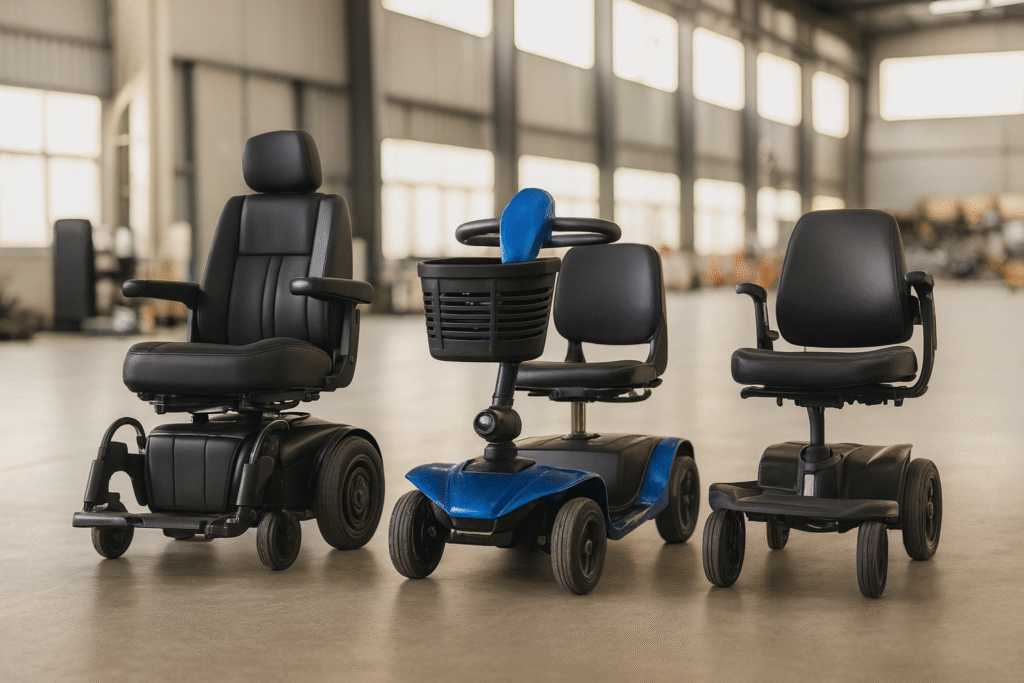
The mobility equipment market encompasses a wide range of products including wheelchairs (manual and powered), mobility scooters, walking aids, patient lifts, and other assistive devices designed to improve the quality of life for individuals with mobility challenges.
Market Size and Growth
As of 2026, the global wheelchair market alone is valued at approximately $6.1 billion, with a compound annual growth rate (CAGR) estimated between 7.5% and 10% through 2030. This growth is fueled by several converging factors:
- Aging Population: By 2030, an estimated 1.4 billion people worldwide will be aged 60 or older, significantly increasing demand for mobility assistance products.
- Rising Chronic Disease Prevalence: Conditions such as arthritis, Parkinson’s disease, and multiple sclerosis continue to drive demand for mobility aids.
- Government Initiatives: Many countries have implemented reimbursement policies and accessibility regulations that make mobility equipment more affordable and accessible.
- Technological Innovation: Advances in lightweight materials, battery technology, and smart features (GPS tracking, health monitoring) are expanding the market and creating new product categories.
Regional Market Dynamics
- North America: The largest market, driven by strong healthcare reimbursement systems and high awareness of mobility solutions.
- Europe: Stringent quality and safety standards (CE marking, MDR compliance) create both barriers and opportunities for distributors.
- Asia-Pacific: The fastest-growing region, with rising healthcare spending and improving access to mobility products.
- Middle East & Africa: Emerging markets with increasing government investment in healthcare infrastructure.
For distributors, these regional differences mean that your choice of manufacturing partner must align with your target market’s regulatory requirements, price points, and consumer preferences.
Why Partner with a Chinese Manufacturer
China has become the world’s leading manufacturer of mobility equipment, producing over 60% of the global supply. Here’s why distributors worldwide increasingly choose Chinese manufacturing partners:
Cost-Effective Production
Chinese manufacturers benefit from economies of scale, established supply chains, and lower labor costs—translating to competitive pricing that allows distributors to maintain healthy margins while offering affordable products to end users.
Manufacturing Expertise
Decades of experience in producing mobility equipment have given Chinese manufacturers deep technical expertise. Many have invested heavily in R&D, quality control systems, and international certifications (FDA, CE, ISO 13485).
Product Range and Customization
Chinese manufacturers offer an extensive product range—from basic manual wheelchairs to advanced power chairs with tilt-in-space functionality. They also provide flexible customization options, including branding, color schemes, and feature modifications.
Export Infrastructure
China’s well-developed export infrastructure, including efficient port logistics and experienced freight forwarders, ensures reliable shipping to destinations worldwide. Many manufacturers offer DDP (Delivered Duty Paid) shipping, simplifying the import process for distributors.
Scalability
Whether you need a small trial order or large-scale monthly shipments, Chinese manufacturers can scale production to meet your growing demand—something that’s often difficult with domestic manufacturers in many countries.
Partnership Models
Choosing the right partnership model is one of the most important decisions you’ll make. Each model offers different levels of commitment, customization, and investment. Here’s a detailed comparison:
| Partnership Model | MOQ (Minimum Order Quantity) | Customization Level | Timeline to First Order | Best For |
|---|---|---|---|---|
| Wholesale | Low (10–50 units) | Minimal (standard catalog products) | 2–4 weeks | New distributors testing the market |
| OEM (Original Equipment Manufacturer) | Medium (100–500 units) | High (branding, packaging, minor spec changes) | 6–10 weeks | Established distributors building their own brand |
| ODM (Original Design Manufacturer) | High (300–1,000+ units) | Very High (custom design, new product development) | 12–20 weeks | Distributors with specific market requirements |
| Strategic Partnership | Flexible | Full collaboration | Ongoing | Long-term partners with shared growth goals |
Wholesale Partnership
The simplest entry point. You purchase existing products from the manufacturer’s catalog at wholesale prices. This model requires the lowest investment and carries the least risk, making it ideal for new distributors or those testing a new product category.
Key considerations:
- Fastest time to market
- Lowest MOQ requirements
- Limited ability to differentiate your offerings
- Manufacturer retains all design and IP rights
OEM Partnership
Under the OEM model, the manufacturer produces products according to your specifications, including your branding, packaging, and sometimes minor feature modifications. You get a branded product without the investment in manufacturing infrastructure.
Key considerations:
- Build brand recognition and customer loyalty
- Moderate investment and MOQ
- Requires clear product specifications and quality agreements
- You own the brand; manufacturer owns the design
ODM Partnership
ODM goes a step further—the manufacturer designs and develops a completely new product based on your requirements. This is ideal when you’ve identified a specific market need that existing products don’t address.
Key considerations:
- Highest level of customization and differentiation
- Significant investment in development and tooling
- Longer lead times
- Potential for exclusive product rights
- Requires strong project management and communication
Strategic Partnership
A strategic partnership is a long-term, collaborative relationship where both parties invest in mutual growth. This may include joint product development, exclusive regional rights, shared marketing investments, and coordinated supply chain planning.
Key considerations:
- Deepest level of collaboration and mutual commitment
- Potential for exclusive distribution rights
- Shared risk and reward
- Requires trust, transparency, and aligned business goals
- Often includes preferential pricing and priority production
Step-by-Step Partnership Process
Step 1: Define Your Business Requirements
Before approaching any manufacturer, clearly define:
- Target market and customer segments
- Product categories and specifications
- Expected annual volume
- Budget and pricing targets
- Required certifications for your market
- Timeline for first product delivery
Step 2: Research and Shortlist Manufacturers
Identify potential manufacturing partners through:
- Industry trade shows (Canton Fair, Medica, REHACARE)
- Online B2B platforms (Alibaba, Global Sources)
- Industry associations and referrals
- Manufacturer websites and product catalogs
Evaluate each candidate based on:
- Years of experience in mobility equipment
- Relevant certifications (ISO 13485, FDA, CE, MDR)
- Production capacity and lead times
- Export experience to your target market
- Customer reviews and references
- Communication responsiveness
Step 3: Request Quotes and Samples
Contact shortlisted manufacturers to request:
- Detailed product catalogs and specifications
- Pricing tiers based on quantity
- MOQ requirements
- Available customization options
- Sample units for evaluation
Pro tip: Always test samples thoroughly—evaluate build quality, functionality, packaging, and user experience before committing to a production order.
Step 4: Negotiate Terms
Key negotiation points include:
- Pricing and volume discounts
- Payment terms (typically 30% deposit, 70% before shipment)
- MOQ flexibility for initial orders
- Lead times and production schedules
- Quality assurance protocols
- Warranty and after-sales support
- Exclusivity terms (if applicable)
- Intellectual property agreements (for OEM/ODM)
Step 5: Place Trial Order
Start with a smaller trial order to validate:
- Product quality consistency
- Packaging and labeling accuracy
- Documentation completeness
- Shipping and customs process
- Communication and support quality
Step 6: Scale and Optimize
Once the trial order meets expectations:
- Establish regular ordering schedules
- Negotiate better pricing based on volume
- Expand product range
- Streamline logistics and inventory management
- Develop deeper collaboration on product development
Quality Assurance & Compliance
Quality is non-negotiable in the mobility equipment industry. Products directly impact user safety and wellbeing, making robust quality assurance essential.
Essential Certifications
| Certificación | Region | Purpose |
|---|---|---|
| ISO 13485 | Global | Medical device quality management system |
| FDA Registration | USA | Market access for medical devices |
| CE Marking | Europe | Product safety compliance |
| MDR (Medical Device Regulation) | Europe | Enhanced medical device regulation |
| ISO 9001 | Global | Quality management system |
Quality Control Process
A reputable manufacturer should have a multi-stage QC process:
- Incoming Material Inspection: Verifying raw materials meet specifications
- In-Process Quality Control: Monitoring production at each stage
- Final Product Testing: Functional testing, load testing, and safety checks
- Pre-Shipment Inspection: Final verification before packaging
As a distributor, you should also consider:
- Hiring third-party inspection agencies (SGS, TÜV, Intertek) for pre-shipment inspections
- Requesting batch-level quality reports
- Establishing clear quality acceptance criteria in your purchase agreement
Documentation Requirements
Ensure your manufacturer provides:
- Certificate of Conformity (CoC) for each batch
- Test reports from accredited laboratories
- Material safety data sheets (where applicable)
- Product registration support documentation
- CE/FDA technical files (for registered products)
Transporte y logística
Efficient logistics management is crucial for maintaining inventory levels and controlling costs.
Shipping Methods
| Method | Transit Time | Cost | Best For |
|---|---|---|---|
| Sea Freight (FCL) | 25–40 days | Lowest | Large, regular orders |
| Sea Freight (LCL) | 30–45 days | Low–Medium | Smaller orders |
| Air Freight | 5–10 days | High | Urgent or high-value orders |
| Express Courier | 3–7 days | Highest | Samples and small parcels |
Incoterms and Delivery Options
- FOB (Free on Board): You handle shipping from the port of origin
- CIF (Cost, Insurance, Freight): Manufacturer handles shipping to your destination port
- DDP (Delivered Duty Paid): Manufacturer handles everything including customs and duties—delivered to your warehouse
DDP is increasingly popular among distributors because it eliminates customs complexity and provides landed cost certainty. Many Chinese manufacturers now offer DDP as a value-added service.
Customs and Import Considerations
- Ensure products have correct HS codes
- Verify all required certifications are in place before shipping
- Work with experienced customs brokers
- Understand import duties and taxes in your market
- Maintain accurate records for customs compliance
Building Long-Term Relationships
A successful mobility equipment distributor partnership is built on trust, communication, and mutual benefit. Here’s how to cultivate a lasting relationship:
Communication Best Practices
- Establish regular communication channels (WeChat, WhatsApp, email, video calls)
- Set clear expectations for response times
- Maintain detailed records of all agreements and specifications
- Provide constructive feedback on products and processes
- Visit the factory at least annually (if feasible)
Mutual Growth Strategies
- Share market intelligence and customer feedback to inform product development
- Commit to volume growth plans that give the manufacturer production predictability
- Collaborate on new product development for your market
- Co-invest in marketing and trade show participation
- Develop joint business plans with shared KPIs
1000Mobility’s Distributor Support
At 1000Mobility, we understand that our success depends on our distributors’ success. That’s why we provide comprehensive support to every partner:
- Regional Distribution Protection: We grant exclusive territory rights to qualified distributors, preventing channel conflict and protecting your market investment.
- Marketing Materials Support: High-quality product photos, videos, technical specifications, brochures, and digital assets in your language.
- Technical Training: Comprehensive product training sessions—both online and on-site—to ensure your team can effectively sell and service our products.
- After-Sales Parts Inventory: We maintain a dedicated spare parts inventory and can ship replacement parts quickly to minimize downtime for end users.
- DDP Logistics Options: We offer door-to-door DDP shipping to simplify your import process and provide transparent landed costs.
Common Challenges & Solutions
Challenge 1: Quality Inconsistency
Solution: Establish clear quality acceptance criteria, conduct regular pre-shipment inspections, and maintain open communication about quality issues. Request statistical process control data from the manufacturer.
Challenge 2: Long Lead Times
Solution: Plan orders well in advance, maintain buffer stock, and consider FOB terms for faster port-to-port shipping. Work with the manufacturer on production scheduling to align with your sales cycles.
Challenge 3: Communication Barriers
Solution: Use multiple communication channels, maintain written records of all decisions, and consider working with a sourcing agent if language differences are significant. Request English-language documentation for all products and processes.
Challenge 4: Customs and Regulatory Delays
Solution: Ensure all certifications are current before shipping, work with experienced customs brokers, and maintain a compliance calendar to track certification renewals.
Challenge 5: Intellectual Property Concerns
Solution: Sign comprehensive NDAs and IP protection agreements before sharing designs or specifications. Register your trademarks and patents in the manufacturer’s country. For ODM projects, clearly define IP ownership in the contract.
Frequently Asked Questions
1. How do I start a partnership with a mobility equipment manufacturer?
Start by defining your business requirements—target market, product categories, expected volumes, and budget. Research and shortlist 3–5 manufacturers, request product catalogs and samples, evaluate quality, and begin with a trial order. Most manufacturers require an initial inquiry followed by a quote request, sample evaluation, and then a formal purchase order.
2. What is the typical MOQ (Minimum Order Quantity)?
MOQs vary by partnership model and product type. For wholesale orders, MOQs typically range from 10–50 units. OEM orders usually require 100–500 units, while ODM projects may require 300–1,000+ units. Many manufacturers offer reduced MOQs for first-time trial orders to help you test the market.
3. Can I get exclusive distribution rights for my region?
Yes, most manufacturers offer exclusive distribution rights for qualified partners. Exclusivity is typically granted based on committed annual purchase volumes and demonstrated market development capability. The agreement should clearly define the territory, product scope, and performance requirements.
4. What after-sales support should I expect?
A reputable manufacturer should provide warranty support (typically 12–24 months), spare parts supply, technical troubleshooting assistance, and product training. At 1000Mobility, we maintain dedicated spare parts inventory and offer ongoing technical support to all distribution partners.
5. What certification documents do I need for my market?
Requirements vary by region. For the US market, you’ll need FDA registration and product listings. For Europe, CE marking and MDR compliance documentation are required. Most markets also require ISO 13485 certification. Your manufacturer should provide all necessary technical files, test reports, and compliance documentation.
6. What shipping methods and Incoterms are available?
Manufacturers typically offer FOB, CIF, and DDP terms. Sea freight (FCL or LCL) is the most cost-effective for regular orders, while air freight is available for urgent shipments. DDP shipping is recommended for distributors who want to avoid customs complexity—your manufacturer handles all logistics, customs clearance, and duties.
7. How long does it take from first contact to receiving my first order?
For wholesale orders, the timeline is typically 4–8 weeks (including sample evaluation, order placement, production, and shipping). OEM orders generally take 8–12 weeks, while ODM projects can take 4–6 months from design to delivery. Strategic partnerships develop over time, with the first order often following the wholesale or OEM timeline.
Conclusión
Establishing a successful mobility equipment distributor partnership requires careful research, clear communication, and a long-term perspective. The global mobility equipment market’s robust growth—driven by demographic trends and technological innovation—creates significant opportunities for distributors who choose the right manufacturing partner.
By understanding the different partnership models, implementing rigorous quality assurance processes, optimizing logistics, and investing in relationship building, you can create a sustainable and profitable distribution business in the mobility equipment sector.
At 1000Mobility, we’re committed to being more than just a supplier—we’re your strategic partner in growth. From regional distribution protection to comprehensive technical support and DDP logistics, we provide everything you need to succeed in your market.
Ready to start your mobility equipment distributor partnership? Contact our team today to discuss your requirements, request product samples, and explore how we can grow together.
By 1000Mobility Editorial Team
Interested in Wholesale Pricing?
Get OEM/ODM details, product specifications, and wholesale pricing within 24 hours.
Or send us a message directly:
 English
  Deutsch
  Français
  Español
  Italiano
  العربية
  Русский