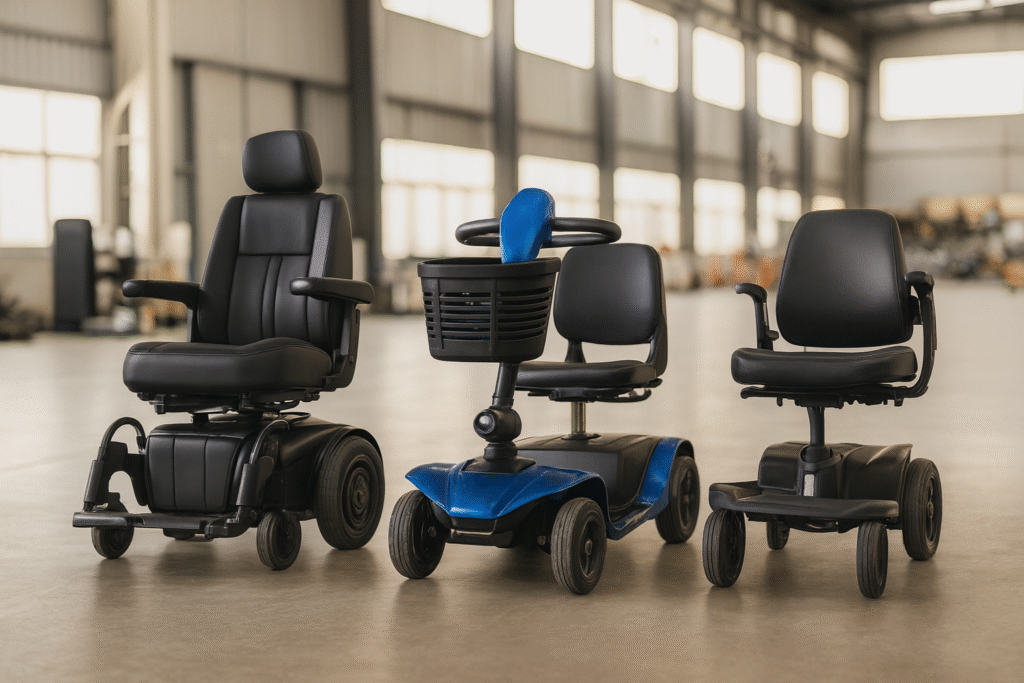
Quick Answer: Manufacturers test range under ISO 7176-4 conditions: flat surface, 165-lb test rider, 68-77F, constant speed, brand-new battery. Real-world driving involves hills, stops, extra weight, cold weather, and aging batteries \xe2\x80\x94 which is why you typically get 60-70% of the advertised range, and sometimes as little as 50% on a demanding day. This guide explains why, and how to plan around it.
\n\n
Last updated: October 2026
How Manufacturers Test Range (And Why It Doesn’t Match Your Life)
Nearly every electric wheelchair and mobility scooter sold today carries a range figure measured under ISO 7176-4:2008, the international standard for energy consumption and theoretical distance calculation. The test is run under conditions that are deliberately controlled — and deliberately unlike your daily life:
| Test Condition | ISO 7176-4 Standard | Your Real World |
|---|---|---|
| Surface | Flat, smooth, indoor | Sidewalks, grass, gravel, carpet |
| Rider weight | 165 lb (75 kg) standard test load | Your actual weight + groceries, bags, oxygen |
| Temperature | 68–77°F (20–25°C) | January morning, Florida afternoon |
| Driving pattern | Constant speed, straight line, no stops | Stop-and-go, turns, hills, idle time |
| Batería | Brand-new, fully conditioned | 2-year-old battery, 200+ charge cycles |
| Inclines | Zero | Hills, ramps, curb cuts, thresholds |
This is the same principle as EPA mileage stickers on cars — a legitimate, standardized number useful for comparing models, but almost nobody achieves it in daily driving. As WHILL explains in their range guide: their Model C2 is rated at 12.4 miles, but “many users plan around a practical range of 8 to 10 miles per day.”
The 7 Factors That Eat Your Range
1. Terrain and Inclines (Largest Impact: 30–50% Reduction)
Climbing forces the motor to work far harder than cruising on flat ground. Even a 5-degree incline noticeably increases energy draw. Frequent hill climbing alone can cut range by 30–50%. A slightly longer but flatter route often gets you further on a single charge than the shorter hilly one. Grass, gravel, sand, and cracked pavement add rolling resistance on top of any elevation changes — rough terrain can reduce range by an additional 30–40%.
2. Rider and Cargo Weight (Large Impact)
The total weight — rider plus cargo — directly determines how much current the motors draw. A 250-lb rider with a loaded basket draws significantly more power than a 165-lb test dummy with nothing on board. The closer your total load is to the wheelchair’s rated capacity, the harder the motor and battery work, and the shorter your range becomes. Everything counts: groceries, backpacks, oxygen tanks, medical equipment — the battery doesn’t distinguish between body weight and luggage.
3. Temperature and Weather (Large Impact)
Battery chemistry is temperature-sensitive. Cold temperatures slow the chemical reactions inside the battery, reducing available energy when you need it most — during acceleration and climbing:
| Tipo de batería | Range Loss at Near-Freezing (32°F / 0°C) |
|---|---|
| Sealed Lead-Acid (SLA/AGM) | 20–50% reduction |
| Lithium-Ion (LiFePO4) | 10–25% reduction |
Hot weather also affects range, though less dramatically — increased rolling resistance from softened tires and cooling fan draw on the controller. Wet conditions increase tire rolling resistance and reduce grip, forcing the motor to work harder to maintain speed.
4. Battery Age and Health (Compounding Impact Over Time)
Lithium-ion batteries lose capacity as their internal chemistry degrades. After 2–3 years of regular use, increased internal resistance limits how much energy the battery can deliver under load, even when fully charged. Frequent deep discharges (running the battery below 20%) accelerate this degradation. If your range has dropped sharply and suddenly — as opposed to gradually — it may indicate a failing cell, charger problem, or mechanical drag, not normal aging.
5. Speed and Driving Habits (Moderate Impact)
Higher speeds draw more current to overcome air and rolling resistance. Frequent hard acceleration from a stop pulls the most power of any driving condition. Smooth, steady acceleration keeps motor demand stable. In urban environments with constant stops — crowded stores, busy sidewalks, intersections — stop-and-go driving can drain your battery significantly faster than steady cruising. Turning the key off during longer stops (meals, appointments, shows) genuinely extends range.
6. Tire Pressure (Moderate: 10–20% Impact)
Underinflated pneumatic tires increase rolling resistance, forcing the motor to use more power to maintain the same speed. This is one of the most overlooked range-reducing factors — and one of the easiest to fix. Check tire pressure monthly, especially during season changes, as tire pressure drops approximately 0.1 bar per 10°C decrease in temperature.
7. Stop-and-Go vs. Steady Driving (Moderate Impact)
Constant starting and stopping — as in shopping malls, theme parks, or busy sidewalks — draws more current than steady cruising because acceleration from a stop pulls the maximum power. A full day at a major theme park can add up to 8–12+ miles of equivalent travel, which is a genuinely demanding test for any battery.
Real-World Range by Wheelchair Type
Based on field data from manufacturers, dealers, and user reports, here is what you can realistically expect:
| Wheelchair Type | Advertised Range | Realistic Planning Range | Suits |
|---|---|---|---|
| Folding travel wheelchair (Li-ion) | 12–15 miles | 7–10 miles | Daily errands, short outings |
| Mid-size power wheelchair | 15–20 miles | 10–14 miles | Daily local use, moderate terrain |
| Heavy-duty power wheelchair | 20–30+ miles | 14–20+ miles | Longer trips, outdoor use |
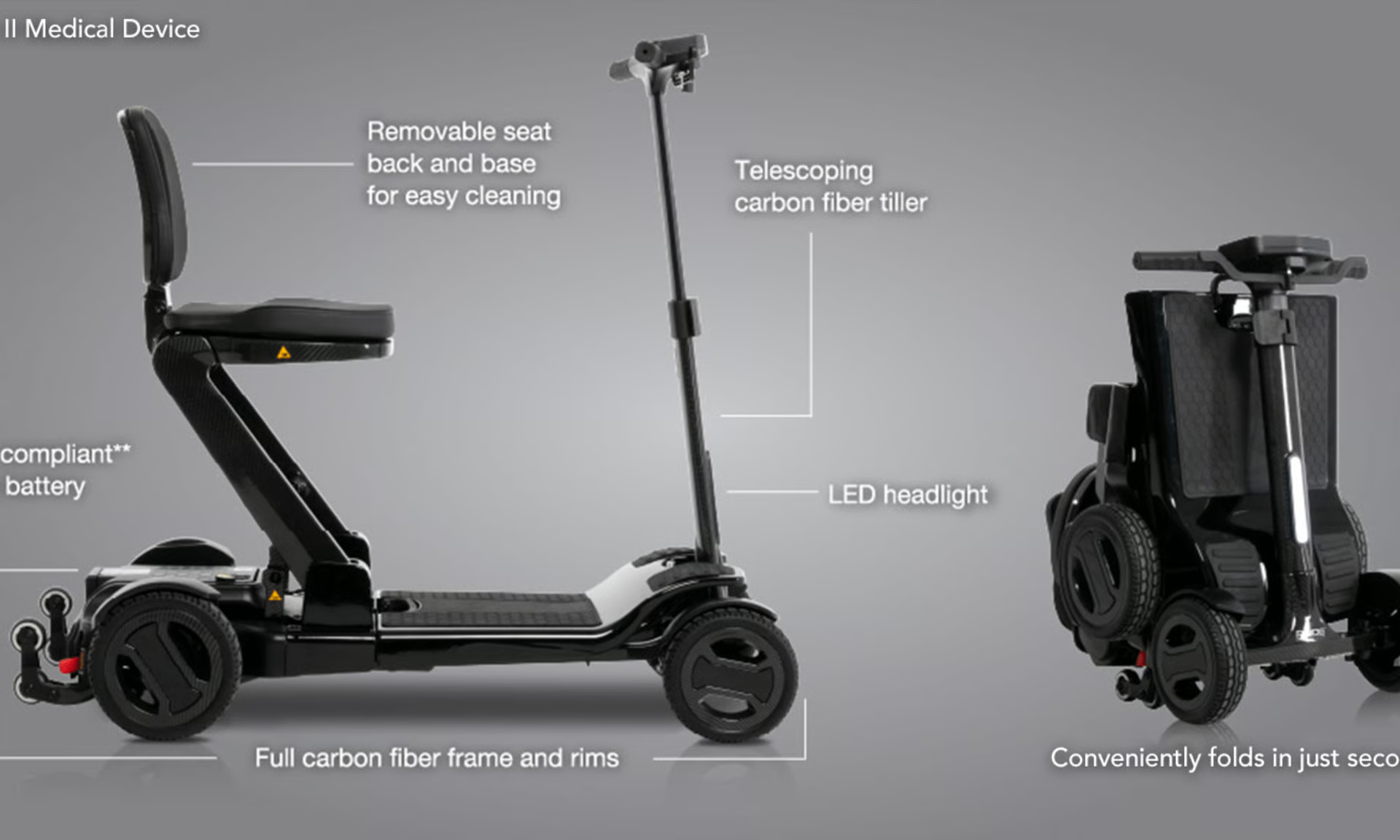
| Lightweight carbon fiber (e.g., 1000Mobility) | 12–15 miles | 8–10 miles | Travel, all-day independence |
Planning rule of thumb: Take the advertised range, keep about two-thirds of it, then halve that for a round trip. This gives you a safe planning number that accounts for real-world conditions without range anxiety.
How to Estimate Your Actual Range
Step 1: Check Your Battery Watt-Hours
Look at the battery label or spec sheet. Calculate: Volts × Amp-hours = Watt-hours. A 24V × 10Ah battery stores 240 Wh. Compare this to the manufacturer’s advertised range to see if the claim is physically plausible — typical energy consumption is 15–25 Wh per kilometer (24–40 Wh per mile).
Step 2: Apply the Real-World Multiplier
| Condition | Multiplier | Example (15 mi advertised) |
|---|---|---|
| Ideal (flat, mild, light rider, new battery) | 0.80 | 12 miles |
| Average (mixed terrain, moderate temp, some stops) | 0.65 | 10 miles |
| Demanding (hills, cold, heavy load, old battery) | 0.50 | 7.5 miles |
| Worst case (all adverse factors combined) | 0.40 | 6 miles |
Step 3: Keep a 20–30% Safety Reserve
Never plan to use 100% of your estimated range. Keep 20–30% in reserve for detours, slopes, delayed returns, and unexpected situations. A flat route may still include a steep supermarket entrance ramp — small margins matter.
How to Maximize Your Real-World Range
- Maintain proper tire pressure — Check monthly. Underinflated tires silently cost 10–20% of your range.
- Drive at moderate, steady speeds — Avoid full-throttle acceleration. Smooth inputs keep motor demand stable.
- Turn off during stops — Every minute the key is on, the system draws power, even sitting still.
- Choose flatter routes — A slightly longer flat route often uses less energy than a shorter hilly one.
- Charge before storage — Never store a battery below 50% charge. For winter storage, keep the battery indoors at 15–20°C (59–68°F).
- Never charge a frozen battery — Charging a lithium-ion battery below 0°C (32°F) causes permanent damage through lithium plating. Warm it to room temperature first.
- Replace aging batteries proactively — If your range has dropped 30%+ from when new after 2–3 years of use, it’s time for a replacement. A quality lithium-ion battery typically costs $200–400 and restores full range.
For B2B buyers managing fleets, our Electric Wheelchair Motor Technology Guide covers how motor efficiency and controller tuning affect Wh/km consumption — differences of 15–25% between similar models compound quickly across a fleet of 50+ units.
Why Advertised Range Isn’t Dishonest (But Is Misleading)
Manufacturers aren’t lying — the ISO 7176-4 test produces a legitimate, reproducible number that allows fair comparison between different models and brands. The problem is that most buyers never encounter the test conditions in daily life, and few salespeople explain the gap.
As one UK mobility retailer puts it: “Quoted ranges are the most misleading number on a mobility scooter spec sheet. Not because manufacturers are being dishonest, but because the figure describes a laboratory calculation rather than a Tuesday morning trip to the shops with a headwind and a hill.”
The solution isn’t to ignore advertised range — it’s to treat it as a comparison tool, not a promise. Use the real-world multipliers above to translate advertised range into something you can actually plan with.
Frequently Asked Questions
Why doesn’t my electric wheelchair reach its advertised range?
Advertised range is tested under ISO 7176-4 controlled conditions: flat surface, 165-lb standard rider, moderate temperature, constant speed, and a brand-new battery. Your real-world weight, terrain, temperature, stops, and battery age all reduce the distance. Expect 60–70% of the advertised figure in normal use, and as little as 50% on demanding days.
How much does cold weather reduce electric wheelchair range?
Sealed lead-acid (SLA) batteries can lose 20–50% of their range near freezing temperatures. Lithium-ion batteries perform better but still lose 10–25% of range in cold weather. Always store the battery indoors when possible and never charge a frozen lithium-ion battery — it causes permanent damage.
Does rider weight affect wheelchair battery range?
Yes, significantly. The motor draws more current to move heavier loads, especially during acceleration and on inclines. The closer your total weight (including cargo) is to the wheelchair’s rated capacity, the more noticeable the range reduction. Combined with hills, a heavier rider can see 30–50% less range than the advertised figure.
How long does an electric wheelchair battery last before needing replacement?
A quality lithium-ion battery typically lasts 2–4 years or 1,500–3,000 charge cycles before capacity drops below 80%. Sealed lead-acid batteries last 18–24 months or 300–500 cycles. Signs you need a replacement: range has dropped 30%+ from when new, the battery doesn’t hold a full charge, or charging time has changed significantly. Replacement cost is typically $200–400 for lithium-ion.
How can I make my electric wheelchair battery last longer between charges?
Maintain proper tire pressure (check monthly), drive at moderate steady speeds, turn off the power during stops, choose flatter routes, avoid carrying unnecessary cargo, and keep the battery between 20–80% charge when possible. In cold weather, store the battery indoors and allow it to warm to room temperature before charging.
What is a realistic range for a travel electric wheelchair?
Most folding travel electric wheelchairs advertise 12–15 miles of range. In real-world mixed use — some hills, some stops, moderate temperatures — expect 8–10 miles. For a round trip, plan for 4–5 miles of actual travel distance. Always keep a 20–30% safety reserve for detours and unexpected situations.
Conclusión
Understanding the gap between advertised and real-world range isn’t about finding fault — it’s about planning your day with confidence. The 60–70% rule gives you a practical framework: take the advertised number, apply the multiplier for your conditions, keep a safety reserve, and you’ll rarely be caught short.
If you are a distributor or importer, setting realistic range expectations with your customers prevents warranty disputes and builds trust. At 1000Mobility, we provide ISO 7176-4 test data for every model and help partners translate laboratory figures into honest customer-facing claims. Contact us to discuss OEM specifications, or explore our folding electric wheelchair lineup designed for practical daily range.
Interested in Wholesale Pricing?
Get OEM/ODM details, product specifications, and wholesale pricing within 24 hours.
Or send us a message directly:

 English
 Deutsch
 Français
 Español
 Italiano
 العربية
 Русский