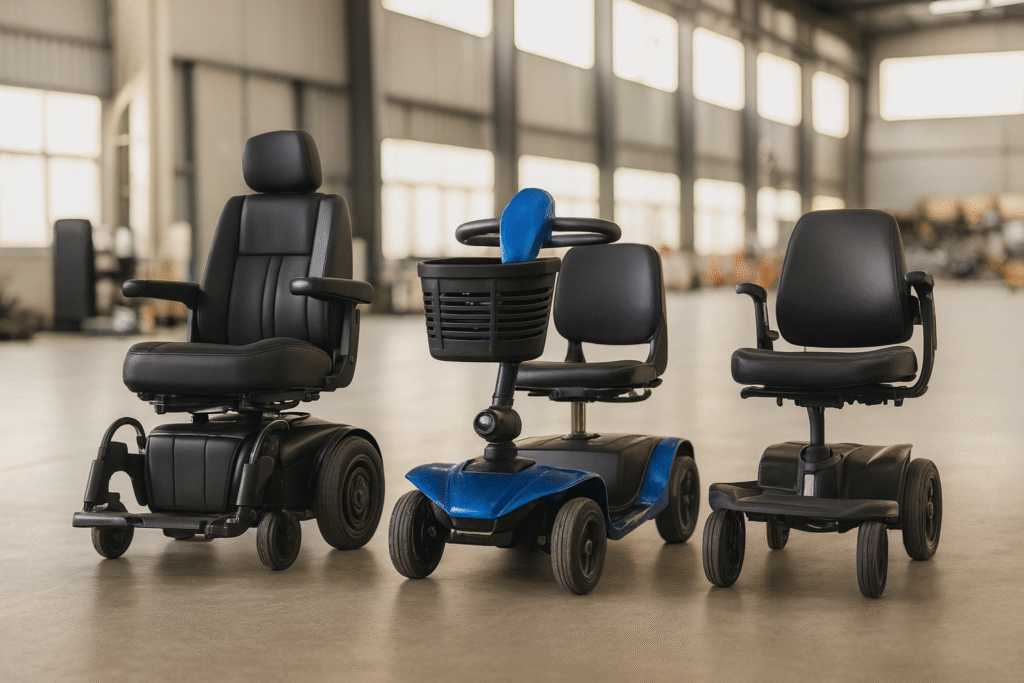
Reclining & Tilt-in-Space Electric Wheelchair Sourcing Guide: Specs, Suppliers & B2B Market
Quick Answer: Reclining and tilt-in-space electric wheelchairs are specialized clinical mobility devices designed for pressure ulcer prevention, postural management, and long-term care. B2B distributors serving rehabilitation centers, nursing homes, and home care agencies should understand the clinical specifications, regulatory requirements, and premium pricing dynamics that distinguish this segment from standard power wheelchairs.
Last updated: September 2026
The reclining and tilt-in-space electric wheelchair segment represents one of the highest-value niches in the global mobility devices market. These clinically specialized power wheelchairs address critical healthcare needs—particularly pressure ulcer prevention and postural management for users who spend extended periods seated. For B2B distributors and procurement managers, understanding the technical specifications, clinical applications, and sourcing landscape for these devices is essential for tapping into a market that commands significant premium pricing over standard electric wheelchairs.
Clinical Applications: Why Reclining and Tilt-in-Space Matter
Pressure Ulcer Prevention
Pressure ulcers (PUs) are one of the most prevalent and costly complications of impaired mobility. A survey across 25 hospitals in five European countries reported PU rates of up to 18.2%, with ischial tuberosities accounting for 10.0% of cases—the third most common location (PMC, 2021). Treating a single Stage 4 pressure ulcer can cost in excess of USD 120,000, and in the United States, PU-related healthcare expenses are estimated at up to USD 3 billion annually.
Tilt-in-space and reclining functions address this problem directly. Research demonstrates that tilting the seat backward redistributes pressure away from bony prominences such as the sacrum and ischial tuberosities. According to clinical evidence, the optimum angle for effective weight shift and pressure management is between 30° and 45° (Seating Matters, 2024). Even small adjustments—15° tilt combined with recline—significantly decrease sitting interface pressure and shear forces on the buttocks (PMC, 2022).
Postural Management and Long-Term Care
Beyond pressure relief, tilt-in-space functionality serves multiple clinical purposes:
- Postural improvement: Tilting backward counters gravity’s effect on posture, maintaining midline positioning for users with reduced head and trunk control
- Fall prevention: Changed center of gravity reduces fall risk, particularly for patients with neurological conditions such as Alzheimer’s disease
- Respiratory and digestive support: Upright positioning improves breathing, swallowing, digestion, and elimination compared to slumped postures
- Caregiver assistance: Tilt functions make repositioning easier for caregivers, enabling swift, controlled adjustments every 1–2 hours as clinically recommended
- Kyphotic posture correction: For patients with fixed spinal contractures, tilt-in-space improves visual field, social interaction, and communication
Target Clinical Settings
These specialized wheelchairs are primarily deployed in:
- Rehabilitation centers: For patients recovering from spinal cord injuries, stroke, or major surgery who require progressive mobility support
- Nursing homes and long-term care facilities: Where residents spend extended seated periods and require regular pressure relief without caregiver-intensive repositioning
- Home care settings: For individuals with progressive conditions such as ALS, multiple sclerosis, or advanced Parkinson’s disease who need clinical-grade mobility at home
- Hospice and palliative care: Where comfort positioning is paramount for quality of life
Core Technical Specifications for B2B Sourcing
When evaluating reclining and tilt-in-space electric wheelchairs for distribution, several key specifications determine clinical efficacy, regulatory compliance, and market positioning.
Recline and Tilt Angle Ranges
| Specification | Standard Electric Wheelchair | Reclining/Tilt-in-Space Model |
|---|---|---|
| Backrest Recline Range | Fixed or minimal (0–10°) | 90°–160°+ (full recline to near-supine) |
| Tilt-in-Space Range | None | 15°–45° (clinical recommendation: 30°–45°) |
| Seat Elevation | Rare | Optional (5–30 cm lift) |
| Leg Rest Adjustment | Fixed or manual flip-up | Electric, synchronized with recline |
| Headrest | Optional | Standard, multi-adjustable |
Research indicates that combining a 20° reclining angle with a 10° tilt-in-space angle optimally decreases both normal force and shear force in the gluteal region—the two primary mechanical factors in pressure ulcer development (PMC, 2022).
Motor Systems and Power
Reclining and tilt functions require dedicated actuator motors in addition to the drive motors. Key specifications include:
- Drive motors: Typically 300W×2 (dual motor) for standard models; 500W×2 for heavy-duty or outdoor-capable reclining models
- Linear actuator motors: 12V or 24V DC actuators for recline (load capacity 600–1500N) and tilt functions
- Controller compatibility: VR2, R-net, or OEM joystick controllers with programmable recline/tilt buttons
- Battery capacity: 24V 20Ah–50Ah lithium-ion for extended operation of drive plus positioning functions
Frame and Seating
The frame must accommodate the additional mechanical complexity of tilt and recline mechanisms while maintaining structural integrity:
- Frame material: High-strength aluminum alloy (most common), steel (for bariatric models), or carbon fiber (premium positioning)
- Weight capacity: 135–200 kg for standard reclining models; up to 250 kg for bariatric versions
- Seat width: 40–55 cm standard; wider configurations available for bariatric applications
- Cushion system compatibility: Must accommodate specialized pressure-relief cushions (air, gel, or hybrid)
Premium Pricing: Margin Opportunities for Distributors
Reclining and tilt-in-space electric wheelchairs command significant price premiums over standard power wheelchairs, creating attractive margin opportunities for B2B distributors:
| Product Tier | Wholesale Price (FOB China) | Typical Retail Price | Approx. Gross Margin |
|---|---|---|---|
| Standard Electric Wheelchair | USD 300–600 | USD 1,200–2,500 | 40–50% |
| Reclining Electric Wheelchair (basic) | USD 450–800 | USD 1,800–3,500 | 45–55% |
| Tilt-in-Space + Reclining (mid-range) | USD 800–1,500 | USD 3,500–8,000 | 50–60% |
| Clinical-grade CRT with full positioning | USD 1,500–3,500+ | USD 8,000–20,000+ | 55–65% |
The premium pricing reflects the additional actuator motors, reinforced frame engineering, specialized seating systems, and more complex assembly processes required. Distributors can expect wholesale prices from Chinese manufacturers ranging from USD 250 for basic reclining models to USD 2,550+ for heavy-duty outdoor reclining wheelchairs with full clinical features (Made-in-China, 2026).
Sourcing Landscape: Key Supplier Characteristics
When evaluating suppliers for reclining and tilt-in-space wheelchairs, B2B buyers should assess several critical factors:
Manufacturing Capabilities
- Production capacity: Minimum 3,000–5,000 units/month for reliable supply continuity
- R&D capability: In-house engineering for custom recline angles, actuator programming, and seating integration
- Quality management: ISO 13485 certification for medical device manufacturing
- Testing facilities: In-house fatigue testing, drop testing, and electromagnetic compatibility (EMC) testing
Certification Requirements
- CE marking with MDR (Medical Device Regulation) compliance for European market
- FDA 510(k) clearance for US market (Class II medical device)
- ISO 13485:2016 quality management system
- RoHS and REACH compliance for materials
- UKCA marking for UK market post-Brexit
OEM/ODM Customization Options
Leading Chinese manufacturers offer comprehensive OEM/ODM services for reclining wheelchairs, including custom branding, color options, proprietary controller programming, and specialized seating configurations. Production lead times typically range from 30–60 days for standard orders and 45–90 days for custom ODM projects.
1000Mobility ODM Capabilities for Reclining Wheelchairs
At 1000Mobility, our ODM capabilities extend to the full spectrum of specialized positioning wheelchairs. Our Striker GT model exemplifies our engineering approach to multifunctional electric wheelchairs, featuring an integrated seat-lifting mechanism that demonstrates the same actuator-driven positioning technology used in our reclining and tilt-in-space models.
For B2B partners, we offer:
- Custom recline angle configurations (up to 160°+)
- Integrated tilt-in-space systems (15°–45° range)
- Programmable actuator sequencing synchronized with leg rest and headrest adjustments
- Multiple frame material options including aluminum alloy and carbon fiber
- Custom seating interface compatible with major cushion systems (Roho, Jay, Vicair)
- Full certification support: CE, FDA 510(k), ISO 13485, UKCA
Explore our OEM/ODM services to discuss custom reclining wheelchair development, or visit our electric wheelchair manufacturing page for standard product catalog and wholesale pricing.
FAQ
What is the difference between reclining and tilt-in-space functions?
Reclining changes the angle between the seat and backrest (like a recliner chair), while tilt-in-space shifts the entire seat unit backward while maintaining the seat-to-backrest angle. Tilt-in-space is preferred for pressure redistribution because it maintains postural alignment, while recline is better for resting and comfort. Most clinical models combine both functions.
What is the optimal tilt angle for pressure ulcer prevention?
Clinical research recommends tilt angles of 30°–45° for effective pressure management and weight shift. Even small angles (15°) combined with recline can significantly reduce sitting interface pressure. The combination of 10° tilt-in-space with 20° reclining has been shown to optimally decrease both normal force and shear force on the gluteal region.
How much do reclining electric wheelchairs cost at wholesale?
Wholesale prices from Chinese manufacturers range from USD 250 for basic reclining models to USD 2,550+ for heavy-duty outdoor reclining wheelchairs with full clinical features. Mid-range tilt-in-space models with both recline and tilt functions typically cost USD 800–1,500 per unit at FOB pricing.
What certifications are required for selling reclining wheelchairs in the EU and US?
For the EU market, CE marking with MDR compliance is required. For the US market, FDA 510(k) clearance is needed as these are classified as Class II medical devices. ISO 13485:2016 certification is essential for quality management. Additional certifications may include UKCA for the UK and RoHS for material safety.
Can I customize reclining wheelchairs under my own brand?
Yes. Most established Chinese manufacturers offer full OEM/ODM services including custom branding, color schemes, proprietary controller programming, specialized seating configurations, and custom recline/tilt angle specifications. Lead times for ODM projects typically range from 45–90 days depending on complexity.
Conclusión
Reclining and tilt-in-space electric wheelchairs represent a high-value B2B segment driven by genuine clinical need. With pressure ulcer treatment costs exceeding USD 120,000 per Stage 4 case and global aging trends accelerating demand for long-term care solutions, distributors who understand the clinical specifications and sourcing landscape for these specialized devices are well-positioned to capture premium market share.
The key to success in this segment is partnering with a manufacturer that combines clinical-grade engineering with proven certification capabilities and flexible OEM/ODM services. 1000Mobility offers end-to-end reclining wheelchair manufacturing—from standard models to fully customized clinical-grade positioning systems. Contact our B2B team to discuss your reclining wheelchair sourcing requirements.
By 1000Mobility Editorial Team
Interested in Wholesale Pricing?
Get OEM/ODM details, product specifications, and wholesale pricing within 24 hours.
Or send us a message directly:
 English
  Deutsch
  Français
  Español
  Italiano
  العربية
  Русский