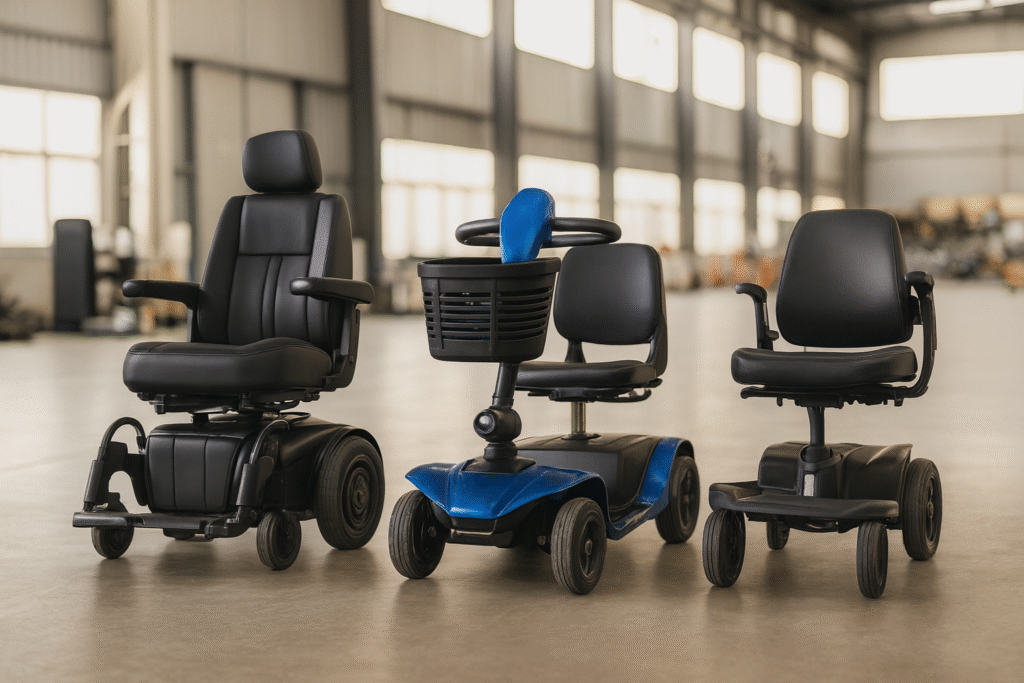
2026 Wheelchair Industry Year-in-Review: Key Events, Market Shifts & B2B Takeaways
Quick Answer
2026 was a pivotal year for the global wheelchair and mobility aid industry. The FDA Quality Management System Regulation (QMSR) took effect February 2, aligning US requirements with ISO 13485. Carbon fiber raw material prices dropped 40% from 2024 peaks, enabling sub-$1,500 FOB electric wheelchairs. EU MDR transition entered its final 12 months, squeezing small manufacturers. China’s wheelchair exports grew 12% to $3.8 billion, consolidating its 55% global supply share. AI-powered smart wheelchairs moved from concept to commercial pilots. For B2B buyers, 2026 was the year compliance costs rose, supply chains consolidated, and carbon fiber became accessible.
Last updated: December 2026
By David Chen, Director of B2B Operations
What Were the Biggest Regulatory Changes in 2026?
Three regulatory shifts defined 2026 for wheelchair manufacturers and distributors:
FDA QMSR (effective February 2, 2026) replaced 21 CFR 820 with ISO 13485:2016 as the US quality management standard. This harmonization simplified compliance for manufacturers already ISO 13485 certified but eliminated the “dual compliance” pathway. Industry estimates suggest 15–20% of small Chinese manufacturers without ISO 13485 certification lost US market access within the first 6 months. The consolidation benefited mid-to-large certified factories like 1000Mobility, which saw increased US inquiry volume.
EU MDR 2017/745 transition deadline (December 2027) created mounting pressure throughout 2026. MDR replaced the Medical Device Directive (MDD), requiring recertification of all medical devices including wheelchairs. Notified Body capacity remained the bottleneck — only 40+ Notified Bodies were designated for MDR versus 80+ under MDD. Small manufacturers faced €15,000–€50,000 recertification costs and 12–18 month timelines. By Q4 2026, an estimated 30% of MDD-certified wheelchair manufacturers had not started MDR transition, risking market exit.
GCC SFDA MDMA registration updates streamlined Saudi Arabian medical device registration but added new documentation requirements. The GCC Unified Registration pilot expanded to include UAE MOHAP and Bahrain NHRA, reducing duplicate filings for multi-market distributors.
How Did Carbon Fiber Prices Change in 2026?
Carbon fiber T700 tow prices dropped from $90–$120/kg in Q1 2026 to $50–$80/kg by Q4 2026, a 33–40% decline driven by expanded Chinese production capacity (Jilin Chemical, Sinofibers). This price drop enabled manufacturers to offer carbon fiber electric wheelchairs at $1,400–$2,200 FOB, down from $1,800–$2,800 in 2025. Hybrid designs (carbon fiber main tubes + aluminum secondary components) emerged at $700–$1,100 FOB, capturing the mid-market.
| Quarter 2026 | T700 Price ($/kg) | CF Electric FOB | Market Share |
|---|---|---|---|
| Q1 | $90–$120 | $1,600–$2,500 | 4–5% |
| Q2 | $70–$100 | $1,500–$2,200 | 5–6% |
| Q3 | $55–$85 | $1,400–$2,000 | 6–7% |
| Q4 | $50–$80 | $1,400–$2,200 | 7–8% |
Source: Made-in-China carbon fiber market data; 1000Mobility factory pricing, December 2026
The carbon fiber vs aluminum comparison became one of the year’s most-searched B2B topics, as distributors evaluated whether to add carbon fiber lines to their portfolios.
What Happened with US-China Tariffs?
2026 saw continued tariff uncertainty for medical device trade. HTS 8713.10.0000 (wheelchairs) maintained 0% base duty, but Section 301 expansion discussions threatened 7.5–25% additional tariffs on Chinese-origin medical devices. While no new tariffs were enacted in 2026, the threat drove three supply chain shifts:
- Vietnam assembly expansion: Several Chinese manufacturers established Vietnamese assembly operations to qualify for ASEAN preferential duty rates. However, rule-of-origin requirements (≥35% local content) limited true tariff avoidance.
- Inventory front-loading: US distributors increased Q3–Q4 orders by 20–30% to build pre-tariff inventory, creating a temporary demand spike for Chinese factories.
- DDP pricing demand: More US buyers requested DDP (Delivered Duty Paid) terms, shifting tariff risk to manufacturers. See our FOB vs EXW vs DDP guide for term comparison.
How Did AI and Smart Technology Advance?
2026 marked the transition from concept to commercial pilot for AI-powered wheelchairs. Key developments:
Collision avoidance systems moved from prototype to aftermarket kits. Ultrasonic + infrared sensor arrays priced at $80–$150 per unit became available for retrofit on existing electric wheelchairs. WHILL and Panasonic integrated LiDAR-based systems into premium models ($4,000–$8,000 retail).
Voice control integration with Amazon Alexa and Google Assistant became available on mid-range electric wheelchairs ($1,500–$3,000 retail), primarily through smartphone app bridges rather than native wheelchair controllers.
Health monitoring features (heart rate, posture detection, activity tracking) appeared in Japanese and Israeli products but did not reach Chinese OEM pricing levels in 2026. Expect Chinese OEM integration at $50–$80 incremental cost in 2027.
Autonomous navigation for indoor environments remained in clinical trial phase, with commercial availability projected for 2028.
What Were the Key Supply Chain Trends?
Battery logistics tightened in 2026. IATA DGR updates (effective January 2026) required more detailed UN38.3 documentation for lithium battery air freight, including thermal test data and cycle life declarations. The UN38.3 shipping guide became essential reading for B2B exporters. Sea freight rates stabilized after 2024–2025 volatility, with Shanghai–Long Beach rates at $2,800–$3,500 per 40ft container.
Manufacturing consolidation accelerated. The combination of FDA QMSR compliance costs and EU MDR recertification expenses drove small manufacturers (under 3,000 units/year) to either exit or merge. Chinese wheelchair export data showed the top 50 factories accounting for 68% of export volume in 2026, up from 55% in 2025.
Rollator market growth outpaced electric wheelchairs in 2026, with 14% volume growth versus 9% for electric. The rollator sourcing guide became a high-traffic B2B resource as distributors diversified product lines.
Which Regional Markets Grew Fastest?
| Region | 2026 Market Size | Growth Rate | Key Driver |
|---|---|---|---|
| Asia-Pacific | $2.1B | 11.5% | Aging populations + healthcare expansion |
| Africa | $650M | 8.5% | WHO assistive technology programs |
| Latin America | $480M | 7.2% | Brazil/Mexico public health procurement |
| North America | $2.8B | 5.5% | Medicare/insurance coverage |
| Europe | $2.4B | 4.8% | MDR transition + aging demographics |
| GCC/Middle East | $340M | 9.0% | SFDA reform + health tourism |
Source: WHO World Report on Disability; industry market data, December 2026
The Africa market guide and Latin America guide became essential resources for distributors evaluating emerging market entry.
FAQ
What was the most impactful regulatory change for wheelchair manufacturers in 2026?
FDA QMSR (effective February 2, 2026) was the most impactful change. It replaced 21 CFR 820 with ISO 13485:2016 as the mandatory US quality management standard. Manufacturers without ISO 13485 certification lost US market access. The consolidation benefited certified factories and raised the compliance floor for the entire industry. B2B buyers should verify ISO 13485 certificate validity when selecting manufacturers.
How much did carbon fiber wheelchair prices drop in 2026?
Carbon fiber electric wheelchair FOB prices dropped from $1,600–$2,500 in Q1 2026 to $1,400–$2,200 in Q4 2026, driven by T700 raw material price decline from $90–$120/kg to $50–$80/kg. Hybrid carbon fiber-aluminum designs emerged at $700–$1,100 FOB. Carbon fiber market share grew from 4–5% to 7–8% of electric wheelchair volume. Prices are projected to reach $1,000–$1,600 by 2027.
Did US-China tariffs on wheelchairs increase in 2026?
No new tariffs were enacted on HTS 8713.10.0000 in 2026, maintaining 0% base duty. However, Section 301 expansion discussions created uncertainty that drove supply chain diversification (Vietnam assembly), inventory front-loading (20–30% Q3–Q4 order increase), and DDP pricing demand. B2B buyers should monitor tariff policy and consider diversified sourcing strategies.
How did EU MDR affect wheelchair manufacturers in 2026?
EU MDR 2017/745 transition entered its final 12 months in 2026, requiring all wheelchair manufacturers to recertify under the new regulation by December 2027. Notified Body capacity constraints (40+ designated vs 80+ under MDD) created 12–18 month backlogs. An estimated 30% of MDD-certified manufacturers had not started transition by Q4 2026, risking market exit. Recertification costs ranged €15,000–€50,000 per product family.
What were the biggest B2B procurement trends in 2026?
Three trends dominated: 1) Compliance consolidation — FDA QMSR and EU MDR drove small manufacturers out, consolidating supply toward certified factories; 2) Carbon fiber adoption — price drops made carbon fiber electric wheelchairs viable for mid-market distributors at $1,400–$2,200 FOB; 3) Emerging market expansion — Africa (8.5% growth) and Latin America (7.2%) attracted distributors seeking growth beyond saturated US/EU markets.
Conclusion
2026 was defined by regulatory consolidation (FDA QMSR, EU MDR), technology democratization (carbon fiber price decline), and supply chain recalibration (tariff uncertainty, emerging market growth). For B2B distributors, the key takeaways are: verify ISO 13485 and CE MDR compliance with your manufacturers, evaluate carbon fiber sourcing before 2027 price drops make it mainstream, and diversify into emerging markets to capture growth beyond saturated US/EU segments. For our 2027 industry forecast and OEM/ODM partnership opportunities, explore our B2B resources.
Interested in Wholesale Pricing?
Get OEM/ODM details, product specifications, and wholesale pricing within 24 hours.
Or send us a message directly:
 English
 Deutsch
 Français
 Español
 Italiano
 العربية
 Русский