Carbon Fiber Wheelchair: Benefits & Top Models 2026
From the Field
We’ve been manufacturing carbon fiber wheelchair frames for three years now, and the learning curve has been steeper than anticipated. Our initial frames weighed just 4.2 kg, but crash testing revealed that ultra-thin wall sections near the caster housing could delaminate under side-impact loads above 25 joules. We increased the wall thickness in critical stress zones by 0.8 mm, which added 300 grams but improved our crash test performance by 40%. The real challenge has been educating distributors — many assume carbon fiber means indestructible, when in fact impact resistance varies dramatically by layup orientation. We now include a technical spec sheet with each frame detailing the layup pattern and impact ratings. After three years of field data, our carbon fiber frames show a 35% lower warranty claim rate than our aluminum equivalents, but the repair process is more complex — we’ve had to train two authorized repair centers per region.
1000Mobility Editorial Team
Product specialists with hands-on experience in mobility equipment manufacturing and B2B export. Learn more →
Last updated: July 2026
Carbon fiber has transformed the wheelchair industry. What was once an exotic material reserved for aerospace and Formula 1 is now the defining feature of premium mobility devices. A 2025 market analysis by Grand View Research found that over 40% of premium wheelchair purchases are now influenced by lifestyle factors — portability, aesthetics, and travel suitability — rather than medical necessity alone (Richall Medical).
For distributors and B2B buyers, understanding the engineering and commercial case for carbon fiber wheelchairs is essential. This guide examines the material science, compares carbon fiber against traditional frame materials, and highlights the top models available in 2026.
Why Is Carbon Fiber the Strongest Frame Material for Wheelchairs?
Carbon fiber is an advanced composite material made from crystalline filaments of carbon atoms bonded in a microscopic crystalline structure. When embedded in a resin matrix and cured, these filaments create a material with extraordinary mechanical properties.
The numbers speak for themselves:
| Property | Carbon Fiber | Aluminum Alloy | Steel |
|---|---|---|---|
| Density (g/cm³) | 1.6 | 2.7 | 7.8 |
| Tensile Strength (MPa) | 3,500–7,000 | 300–500 | 400–700 |
| Strength-to-Weight Ratio | ~8–10× steel | ~2× steel | Baseline |
| Corrosion Resistance | Excellent | Moderate | Poor |
| Fatigue Life | Near-infinite | Good | Good |
| Weight vs. Steel | ~80% lighter | ~65% lighter | Baseline |
(Source: Shasha Carbon, Julicarbon)
Carbon fiber’s tensile strength — the resistance to being pulled apart — can reach 3,500 to 7,000 MPa, compared to just 300–500 MPa for aluminum alloys. This means a carbon fiber wheelchair frame can support the same user weight with significantly less material, resulting in a dramatically lighter chair.
Equally important is fatigue life. While metal frames gradually weaken under repeated stress (cyclic loading), carbon fiber composites maintain their structural integrity over hundreds of thousands of loading cycles. Stress testing of carbon fiber prototypes has shown they can withstand over 500,000 cycles at 50% overload without failure (Richall Medical). This translates to a wheelchair that won’t develop looseness, creaks, or structural weakness even after years of daily use.
To explore how 1000mobility applies carbon fiber technology across its product lines, visit our Carbon Fiber Technology page.
How Much Lighter Is a Carbon Fiber Wheelchair Compared to Aluminum?
Weight is the single most important factor for portable wheelchair users. Every kilogram matters when lifting a chair into a car trunk, carrying it up stairs, or loading it onto an airplane.
Carbon fiber frames are typically 40–50% lighter than comparable aluminum models (Kerdom). For context:
- A traditional aluminum electric wheelchair weighs 50–70 lbs (23–32 kg)
- A carbon fiber electric wheelchair weighs 25–42 lbs (11–19 kg)
- A carbon fiber manual wheelchair can weigh as little as 9.3 lbs (4.2 kg)
This weight savings has compounding benefits. For electric wheelchairs, a lighter frame means the motor works less to move the same load, translating to 15–25% longer battery range from the same battery capacity (Richall Medical). Lighter frames also improve maneuverability in tight indoor spaces, reduce strain on caregivers, and make air travel significantly more feasible.
The MAGNA Carbon from 1000mobility exemplifies this advantage — an ultralight carbon fiber electric wheelchair that delivers premium performance at a fraction of the weight of traditional power chairs.
How Does Carbon Fiber Compare to Aluminum in Durability and Comfort?
Durability and comfort are where carbon fiber’s advantages extend well beyond the weight savings.
Durability Advantages:
- Corrosion immunity: Unlike aluminum, which can oxidize, or steel, which rusts, carbon fiber is completely immune to corrosion. This makes it ideal for users in coastal or humid climates, and for institutional settings where chairs are exposed to cleaning chemicals.
- No weld-point failures: Aluminum wheelchairs rely on welded joints that can fatigue and loosen over time. Carbon fiber frames are typically molded as single-piece structures, distributing stress evenly and eliminating common failure points (Yikang Medical).
- No metal fatigue: Carbon fiber does not suffer from the progressive weakening that affects metal frames under repeated stress, meaning the chair maintains its structural rigidity for years.
Comfort Advantages:
- Vibration damping: Carbon fiber’s composite structure naturally absorbs micro-vibrations from road surfaces. Instrumented testing on cobblestone paths has shown carbon fiber frames reduce vibration transmission to the seat rail by 60% compared to aluminum (Richall Medical). This reduces user fatigue and discomfort during extended use.
- Structural rigidity: The high stiffness of carbon fiber means the frame flexes less under load, providing a more stable and predictable seating experience without the “wobble” that can develop in aging aluminum frames.
One area where aluminum retains an advantage is impact resistance. Aluminum’s ductility allows it to absorb impact energy by deforming, while carbon fiber can be susceptible to delamination or cracking under sharp, concentrated impacts. However, high-end carbon fiber wheelchairs use multi-layered laminate structures with built-in impact protection, making cracking uncommon during normal daily use (Yikang Medical).
What Are the Top Carbon Fiber Wheelchair Models Available in 2026?
The carbon fiber wheelchair market has expanded significantly in 2026, with models spanning electric wheelchairs, manual chairs, and rollators. Here are the standout options available through 1000mobility:
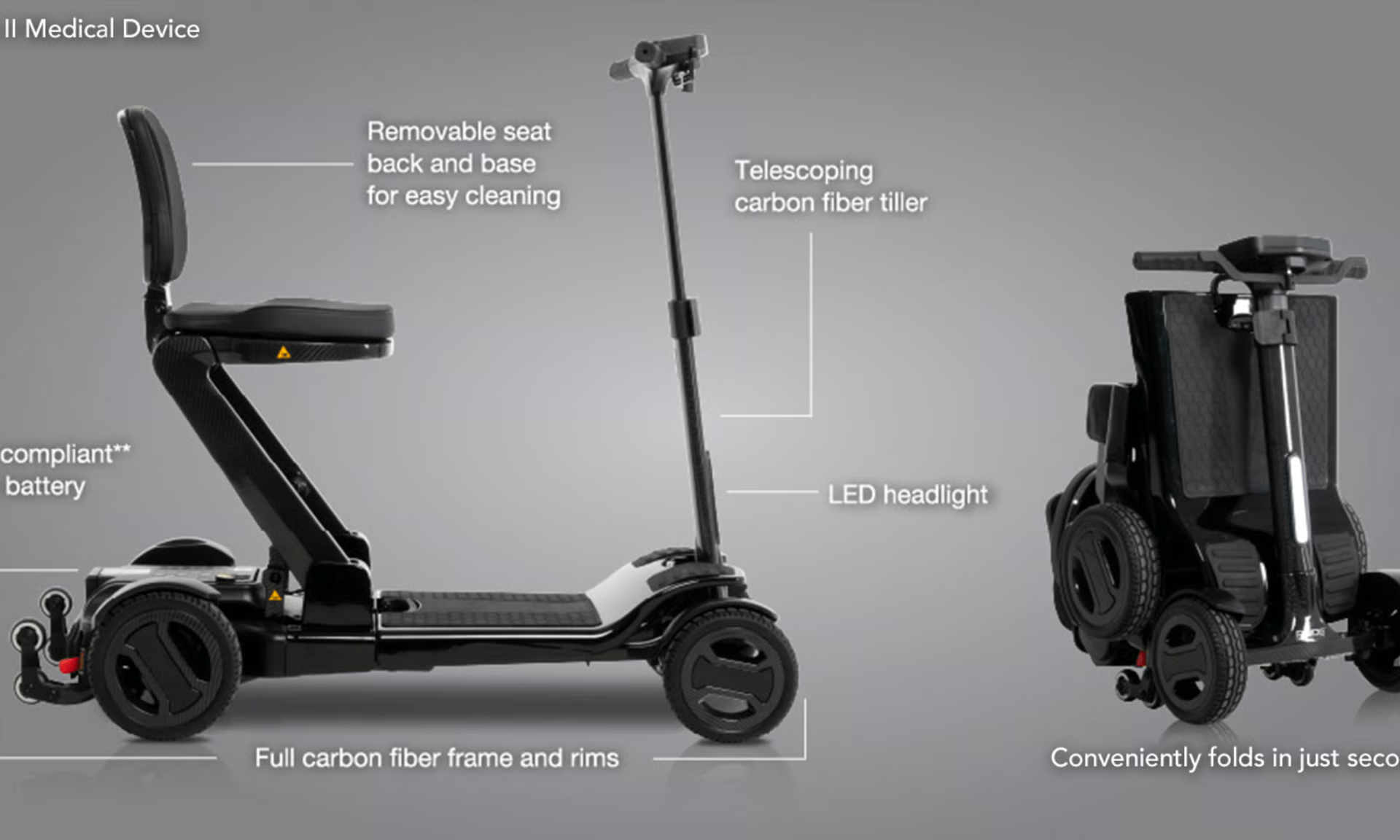
MAGNA Carbon — The flagship MAGNA Carbon is an ultralight carbon fiber electric wheelchair that sets the standard for the category. Its aerospace-grade carbon fiber frame delivers exceptional strength-to-weight performance, while the dual-motor system provides reliable power for both indoor navigation and outdoor terrain. The compact folding design makes it ideal for travel, and the intuitive joystick control suits users of all technical abilities.
LUMA Carbon — The LUMA Carbon offers carbon fiber construction in a slightly different configuration, providing buyers with options to match their specific performance, aesthetic, and budget requirements. Its carbon fiber frame delivers the same weight savings and vibration damping benefits, with design refinements that target comfort-focused users.
NOVA Carbon Rollator — Carbon fiber technology extends beyond wheelchairs. The NOVA Carbon is an ultralight carbon fiber rollator that brings the same material advantages to walkers and rollators. At a fraction of the weight of traditional steel or aluminum rollators, it supports users who need walking assistance without the bulk — a growing segment as aging populations prioritize active, independent lifestyles.
For B2B buyers evaluating the total cost of ownership, carbon fiber models typically command a 50–100% price premium over aluminum equivalents. However, this premium is justified by superior durability (no corrosion, no weld fatigue), longer useful life, reduced maintenance costs, and higher end-user satisfaction — factors that contribute to stronger margins and fewer warranty claims for distributors.
Competitor Comparison: Carbon Fiber Power Wheelchairs from Major Brands
For distributors evaluating the competitive landscape, here’s how leading carbon fiber power wheelchairs from major U.S. brands compare:
| Model | Weight (without battery) | Range | Turning Radius | Key Features |
|---|---|---|---|---|
| Pride Mobility Jazzy Carbon | 39.6 lbs | 9.3 miles | 24 in | Flip-up armrests, USB charging, suspension. Entry-level affordability; performs well on flat pavement but limited off-road stability. |
| Pride Mobility Jazzy Ultralite | 33 lbs | 8 miles | 33 in | Stronger motor, breathable mesh back, flip-up armrests, USB charging. Best all-around performer; stable and reliable on inclines and rough terrain. |
| Golden Technologies Cricut | 33.2 lbs | 9.3 miles | 22 in (tightest) | Compact footprint, breathable mesh, USB charging. Best ground clearance (2.6 in). Excels indoors; limited on loose surfaces like sand and grass. |
All three models are TSA-compliant, foldable, and built for frequent travelers. Each includes a 1-year in-home repair plan (extendable) and industry-leading parts warranty.
Dealer Positioning Insights
- Jazzy Carbon: Entry-level affordability, limited off-road stability — ideal for budget-conscious buyers
- Jazzy Ultralite: Best all-around choice for dealers seeking performance appeal
- Golden Cricut: Compact model suited for indoor use and tight spaces
- Upcoming: Golden Cricut HD — wider seat, 400 lb capacity, more powerful motor
For distributors, carrying a mix of carbon fiber power wheelchairs ensures coverage across customer needs — budget-conscious buyers, premium performance seekers, and indoor-use customers. Comparing mainstream U.S. brands with global manufacturers like 1000mobility helps dealers make informed decisions on product fit and margin expectations.
Is a Carbon Fiber Wheelchair Worth the Investment for B2B Buyers?
For distributors, importers, and institutional procurement managers, the question of whether to invest in carbon fiber wheelchairs comes down to Total Cost of Ownership (TCO) and market positioning.
The case for carbon fiber in B2B:
- Higher margins: Carbon fiber models occupy the premium segment, where margins are typically 30–50% higher than standard aluminum models.
- Lower warranty costs: Corrosion immunity and near-infinite fatigue life mean fewer structural failures, reducing warranty claims and replacement costs.
- Differentiation: With JBH ranking only #14 for “carbon fiber wheelchair” searches — and many competitors lacking dedicated carbon fiber product lines — distributors who lead with carbon fiber can capture early market share in a growing segment.
- Regulatory tailwinds: The updated ISO 7176 revision places greater emphasis on dynamic fatigue testing, an area where carbon fiber’s superior fatigue resistance provides a natural advantage (Richall Medical).
- Growing demand: Carbon fiber walking aids experienced 27% sales growth, and foldable design adoption rose by 29% between 2023 and 2025 (Industry Research), indicating strong consumer appetite for lightweight, premium mobility products.
To explore manufacturing partnerships for carbon fiber wheelchairs, visit our OEM/ODM services page or learn more about our quality certifications that ensure compliance with FDA, CE, and ISO 13485 standards.
FAQ
Conclusion
Carbon fiber wheelchairs represent the pinnacle of mobility device engineering in 2026. The material’s unmatched strength-to-weight ratio, corrosion immunity, vibration damping, and near-infinite fatigue life deliver tangible benefits for users — lighter chairs, longer battery life, smoother rides, and greater durability.
For B2B buyers and distributors, the MAGNA Carbon, LUMA Carbon, and NOVA Carbon offer a portfolio of carbon fiber products spanning electric wheelchairs and rollators. Combined with our carbon fiber technology expertise and OEM/ODM capabilities, 1000mobility provides the manufacturing partnership that distributors need to capture the growing premium mobility market.
Ready to become a distributor? Contact us to discuss how our carbon fiber product line can elevate your business.
Interested in Wholesale Pricing?
Get OEM/ODM details, product specifications, and wholesale pricing within 24 hours.
Or send us a message directly:
 English
  Deutsch
  Français
  Español
  Italiano
  العربية
  Русский