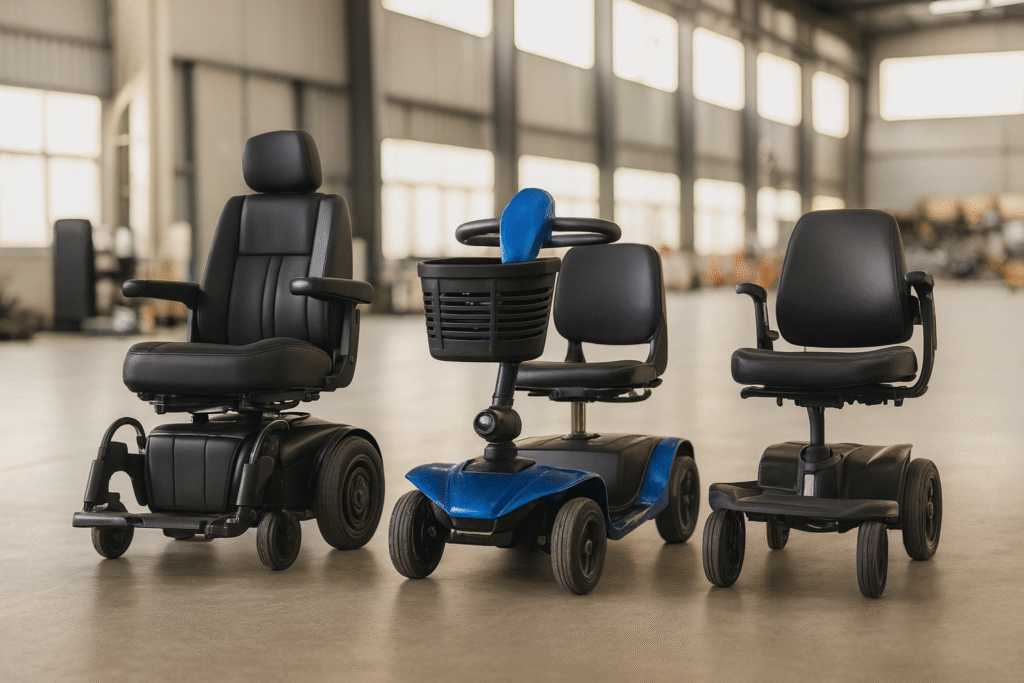
Best Wheelchairs for Elderly: 2026 Complete Guide
From the Field
Over the past two years, we’ve conducted on-site consultations with more than 15 senior care facilities across three countries, and the feedback is overwhelmingly specific: seat width matters more than any other spec. Facilities serving larger residents need 18-inch or wider seats, while standard 16-inch models get returned or left unused. Armrest design is the second most common request — removable armrests are essential for lateral transfers, but many budget models use fixed designs that caregivers find impractical. We also observed that elderly users consistently prefer desk-length armrests over full-length ones, as they allow closer positioning at tables and desks. Our product team revised three models based on this feedback, widening the seat option to 20 inches and adding flip-back armrests as standard. Facilities that adopted these modifications reported a noticeable improvement in resident independence and reduced caregiver strain during transfers.
1000Mobility Editorial Team
Product specialists with hands-on experience in mobility equipment manufacturing and B2B export. Learn more →
Last updated: July 2026
Selecting the right wheelchair for an elderly family member — or sourcing the right models for your distribution business — is a decision that directly impacts quality of life, safety, and long-term cost of care. With the global wheelchair market projected to reach USD 6.11 billion in 2026 and growing at a CAGR of roughly 10% through 2034 (Fortune Business Insights), manufacturers and distributors face both rising demand and rising expectations.
For B2B buyers and distributors, understanding what makes a wheelchair suitable for elderly users is essential to stocking the right products. This guide breaks down the key selection criteria, compares electric and manual options, and highlights top-performing models available through 1000mobility.
What Are the Core Mobility Needs of Elderly Users?
Elderly wheelchair users have distinct requirements that differ from younger or athletic users. According to the CDC, more than one in four U.S. adults (28.7%) live with some form of disability, and approximately 26% of adults aged 65 and older experience mobility limitations. Globally, individuals aged 60 and above account for over 60% of total wheelchair demand (Business Research Insights).
Four factors dominate the decision-making process:
1. Comfort — Seniors often sit for extended periods, making ergonomic seating and pressure-relief cushions critical. Inadequate cushioning can lead to pressure ulcers, which the National Institutes of Health identifies as one of the most common and costly complications of prolonged wheelchair use. Look for seats at least 18 inches wide with breathable, washable cushioning.
2. Ease of Operation — Arthritis, reduced grip strength, and cognitive changes mean that controls must be intuitive. Joystick controllers with large, responsive handles outperform small or stiff controls. Folding mechanisms should require minimal force — ideally a single-action fold.
3. Safety — Anti-tip wheels, electromagnetic braking systems (which engage automatically when the joystick is released), and seat belts are non-negotiable for elderly users. The ability to stop safely on inclines of up to 9 degrees is a benchmark used by leading manufacturers.
4. Weight — Traditional power wheelchairs can weigh 50–70 lbs, making them difficult for caregivers to lift into vehicle trunks. Lightweight models under 40 lbs dramatically improve transportability. Carbon fiber and aircraft-grade aluminum frames have made sub-30 lb power chairs a reality.
Electric vs. Manual: Which Is Better for Seniors?
The choice between electric and manual wheelchairs depends primarily on the user’s physical condition and lifestyle.
Electric wheelchairs are recommended when:
- The user has limited upper-body strength or endurance
- Daily travel distances exceed a few hundred meters
- The user lives independently or spends extended periods without caregiver assistance
- Terrain includes hills, ramps, or uneven outdoor surfaces
Electric models with joystick controls require minimal physical effort and typically offer 10–20 miles of range per charge. Modern lithium-ion batteries are FAA-compliant for air travel when under 300Wh. For a deeper comparison of electric wheelchair features, see our Electric Wheelchair Buying Guide.
Manual wheelchairs are preferable when:
- The user has adequate upper-body strength for self-propulsion
- A caregiver is available for pushing
- Budget constraints are significant
- The chair is used primarily indoors or for short outings
Manual chairs are lighter, simpler to maintain, and generally more affordable. However, long-term manual propulsion can contribute to shoulder injuries — research cited by the Paralyzed Veterans of America indicates that repetitive wheeling is a leading cause of upper-limb strain in wheelchair users.
Which Electric Wheelchairs Are Best Suited for Elderly Users?
When evaluating electric wheelchairs for seniors, distributors should prioritize models that combine low weight, reliable braking, and user-friendly controls. Here are two standout options:
ALYA Core — Designed as a versatile everyday power chair, the ALYA Core delivers a balanced combination of comfort, portability, and value. Its compact folding design makes it ideal for seniors who need a dependable chair for daily errands, medical appointments, and family outings. The intuitive joystick control and ergonomic seating address the core comfort and operability needs of elderly users.
Striker GT — For seniors who value independence and versatility, the Striker GT features a seat-lifting function that makes transfers significantly easier — a critical safety benefit for elderly users with limited mobility. Its portable, foldable design allows for easy transport in standard vehicle trunks, while the powerful motor handles inclines and outdoor terrain with confidence.
Both models reflect the broader industry trend toward lighter, smarter, and more adaptable power chairs. According to Coherent Market Insights, lightweight wheelchairs are projected to hold 59.5% of the market share in 2026 (Coherent Market Insights).
What Should Distributors Look for When Sourcing Manual Wheelchairs for Seniors?
While electric models dominate growth headlines, manual wheelchairs still account for 65–70% of global wheelchair usage due to affordability and ease of maintenance (Business Research Insights). For distributors serving cost-sensitive markets or institutional buyers, a quality manual chair remains an essential product line.
The MIRA Transit exemplifies the key qualities distributors should seek: a lightweight aluminum frame, transit-ready design with secure tie-down points, removable armrests for easy transfers, and a folding mechanism that requires minimal effort. Transit models are specifically designed for use in vehicles and are a staple in nursing homes, hospitals, and community transport services.
When evaluating manual wheelchairs for elderly users, prioritize:
- Seat width of 18–20 inches for adequate comfort
- Swing-away footrests for easier transfers
- Push-to-lock brakes that are easy for caregivers with limited hand strength
- Removable or desk-length armrests for accessibility
- Weight under 35 lbs for caregiver handling
How Important Are After-Sales Support and Certifications for B2B Buyers?
For distributors and importers, product quality and compliance are just as important as the wheelchair itself. Sourcing from a manufacturer with robust quality certifications ensures that products meet the regulatory requirements of North American and European markets.
1000mobility’s quality certifications cover FDA, CE, and ISO 13485 standards, providing the documentation that B2B buyers need for customs clearance, insurance reimbursement programs, and institutional procurement. Additionally, the OEM/ODM services available through 1000mobility allow distributors to customize specifications — seat dimensions, color schemes, branding — to meet the specific demands of their local elderly care market.
After-sales support is another critical factor. Research from the mobility aids sector shows that hospitals and rehabilitation centers account for approximately 42% of total mobility device procurement globally (Industry Research). These institutional buyers demand reliable warranty coverage, spare parts availability, and responsive technical support.
FAQ
Conclusion
Choosing the best wheelchair for elderly users requires a holistic assessment of comfort, safety, ease of use, and weight. For distributors and B2B buyers, the key is to offer a product mix that covers both electric and manual options — from feature-rich power chairs like the ALYA Core and Striker GT, to dependable manual options like the MIRA Transit. By understanding the unique needs of elderly users and sourcing from manufacturers with proven quality certifications, distributors can build product portfolios that genuinely improve lives while meeting the demands of a rapidly growing market.
For more guidance on selecting electric wheelchairs, visit our comprehensive Electric Wheelchair Buying Guide, or learn why distributors worldwide choose 1000mobility as their manufacturing partner.
Interested in Wholesale Pricing?
Get OEM/ODM details, product specifications, and wholesale pricing within 24 hours.
Or send us a message directly:
 English
  Deutsch
  Français
  Español
  Italiano
  العربية
  Русский