Lightweight Folding Wheelchairs: Complete Buyer’s Guide
From the Field
Our QC team runs every folding wheelchair model through 10,000+ open-and-close cycles before approving it for production, and this test has caught issues that field testing alone would miss. The most common failure is hinge pin wear — after about 6,000 cycles, several competitor models we benchmarked showed visible metal deformation at the pivot point, leading to lateral play that compromises stability. We responded by upgrading to hardened steel pins with self-lubricating bushings, which extended our cycle life to over 25,000 without measurable degradation. Another recurring finding: cross-brace welds on budget models crack under torsional stress. We’ve made full-penetration welding mandatory on all our folding frames. Distributors who switched to our reinforced models reported a 60% drop in warranty claims related to frame integrity within the first year.
1000Mobility Editorial Team
Product specialists with hands-on experience in mobility equipment manufacturing and B2B export. Learn more →
Last updated: July 2026
The search for a lightweight folding wheelchair often begins with a simple need: easier transport. Whether you’re a caregiver lifting a chair into a car trunk multiple times a day, a traveler navigating airports, or an active user who values independence, weight matters. A chair that’s five pounds lighter can mean the difference between effortless loading and daily strain.
The global mobility aids market was valued at approximately USD 18.5 billion in 2025 and is projected to reach USD 29.6 billion by 2034, growing at a CAGR of 6.5%—fueled in large part by demand for lighter, more portable designs (Verified Market Reports). This guide breaks down everything you need to know to make an informed purchase.
Why Choose a Lightweight Folding Wheelchair?
The benefits extend far beyond simple convenience:
Reduced Physical Strain: Caregivers who frequently lift wheelchairs are at risk of repetitive strain injuries. Every pound saved reduces the cumulative load on the back, shoulders, and wrists. For users who self-propel or partially transfer themselves, a lighter chair means less energy expended on every push.
Travel Freedom: Lightweight folding chairs are the only practical option for air travel, cruise vacations, and public transportation. They fold compactly, fit in car trunks, and can be stored in tight spaces like hotel closets or apartment entryways.
Storage Efficiency: In homes where space is limited, a folding wheelchair that collapses to 12–15 inches wide can be tucked into a corner or closet. Non-folding rigid chairs, by contrast, require dedicated storage space.
Independence: Many users can independently load a lightweight folding chair into a vehicle—a milestone that dramatically improves quality of life. Standard power wheelchairs weighing 150–250 pounds almost always require a vehicle lift or ramp, limiting spontaneity (Sinovehicles).
How Do Frame Materials Compare: Carbon Fiber vs Aluminum vs Steel?
Material choice is the single biggest factor in a wheelchair’s weight, durability, and price. Here’s a detailed comparison based on engineering data:
| Property | Carbon Fiber | Aluminum Alloy (6061-T6) | Steel |
|---|---|---|---|
| Density (g/cm³) | 1.55–1.60 | 2.70 | 7.85 |
| Tensile Strength (MPa) | 600–1,600 | 310 | 560 |
| Specific Strength | 387–1,032 | 115 | 71 |
| Fatigue Limit (% of UTS) | ~70–80% | ~40–50% | ~50–60% |
| Corrosion Resistance | Excellent | Good (anodized) | Poor (rusts) |
| Vibration Damping | Excellent | Poor | Good |
Sources: Richall Medical, Motion Composites
Carbon Fiber is the premium option. Frames are 30–40% lighter than aluminum and roughly 80% lighter than steel. Carbon fiber’s specific strength (strength-to-weight ratio) is 3–9 times higher than aluminum, meaning it can be engineered to be both lighter and stronger. It also exhibits near-infinite fatigue life—meaning it won’t weaken over repeated stress cycles the way metal frames do. The trade-off is cost: carbon fiber frames typically cost 2x or more than aluminum equivalents (Yutong Everycare).
Aluminum Alloy is the most common frame material in lightweight wheelchairs. It offers a good balance of weight, strength, and affordability. Aluminum frames typically weigh 13–18 kg (29–40 lbs) for manual chairs. They resist corrosion reasonably well when anodized and are widely available across price points. However, aluminum has relatively poor vibration damping, meaning users feel more road imperfections.
Steel is the heaviest option (20–25 kg for manual chairs) but offers excellent durability and the lowest cost. It’s primarily used in bariatric models and budget transport chairs. Steel’s susceptibility to rust makes it less suitable for humid environments or frequent outdoor use.
Typical weight ranges by material:
| Material | Manual Wheelchair Weight | Electric Wheelchair Weight |
|---|---|---|
| Carbon Fiber | 6–10 kg (13–22 lbs) | 15–25 kg (33–55 lbs) |
| Aluminum | 13–18 kg (29–40 lbs) | 25–40 kg (55–88 lbs) |
| Steel | 20–25 kg (44–55 lbs) | 35–50+ kg (77–110+ lbs) |
Source: Xunyu Medical
What Types of Folding Mechanisms Are Available?
The folding mechanism determines how quickly and compactly the wheelchair collapses. There are three primary designs:
Cross-Brace (X-Frame) Folding: The classic design, where an X-shaped brace under the seat allows the frame to collapse sideways—similar to folding an umbrella. It’s simple, affordable, and produces a compact package (typically 12–15 inches wide when folded). However, the cross-brace adds 5–10 pounds to the frame weight and can develop flex over time. Fold time: 5–10 seconds (Tousda Wheelchair).
One-Touch/Quick Fold: A more advanced mechanism using a latch or trigger that releases the frame to collapse in a single motion. Fold time: 3–5 seconds. This is ideal for users who fold and unfold the chair multiple times daily. The mechanism costs more but offers superior convenience and user-friendliness.
Electronic (Automatic) Folding: Found on premium electric models, a button on the frame or a remote control initiates an automated folding sequence. This is especially valuable for users with limited hand strength or mobility. However, the motorized mechanism adds weight, cost, and potential failure points.
Regardless of mechanism type, quality folding systems should pass at least 5,000 folding cycle tests without structural deformation, per ISO 7176 standards (Unqcare).
What Weight Range Should You Target?
Your target weight depends on who will be lifting the chair and how it will be used:
Under 20 lbs (9 kg): Ultra-lightweight manual chairs, typically carbon fiber or premium aluminum. Ideal for frequent air travel and solo users who load the chair independently.
20–35 lbs (9–16 kg): Standard lightweight manual chairs and some ultra-portable electric models. Suitable for daily car transport by a caregiver or reasonably strong user.
35–55 lbs (16–25 kg): Lightweight folding electric wheelchairs. The sweet spot for powered mobility that remains car-trunk-compatible. Most models in this range use lithium-ion batteries to keep weight down.
Over 55 lbs (25 kg): Heavier folding electric models with larger batteries or more powerful motors. May require two people to lift or a ramp for vehicle loading.
For users who prioritize the absolute lightest option, our MAGNA Carbon ultralight carbon fiber electric wheelchair represents the pinnacle of lightweight design. Its carbon fiber frame delivers exceptional strength-to-weight performance while remaining easy to fold and transport.
Which Lightweight Folding Wheelchairs Are Worth Considering?
Based on material quality, folding mechanism, and overall value, here are three standout options:
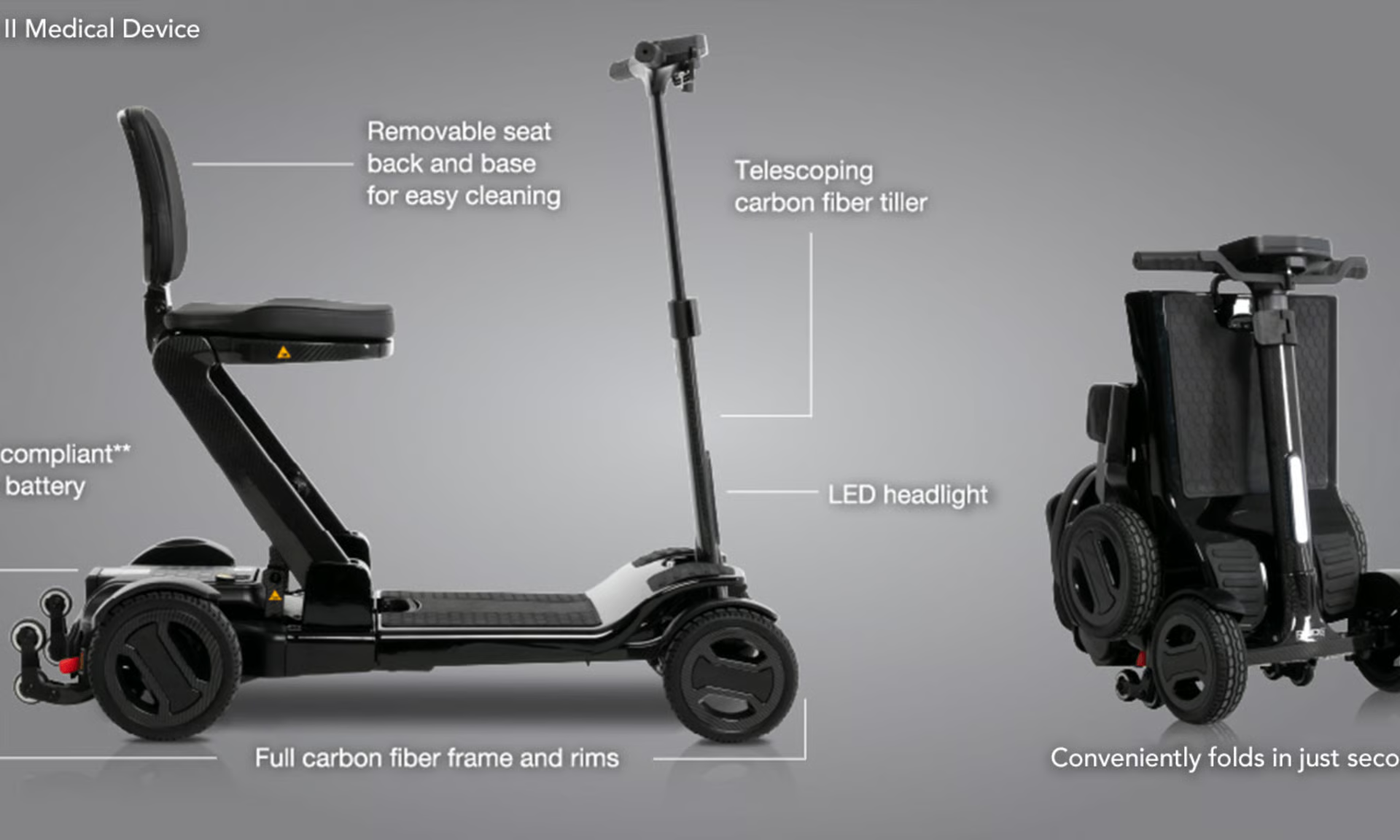
The MAGNA Carbon is our flagship carbon fiber electric wheelchair. By leveraging carbon fiber’s exceptional strength-to-weight ratio, it achieves a frame weight that’s 30–40% lighter than comparable aluminum models. The folding mechanism is designed for one-person operation, and the lithium-ion battery system is airline-compliant. It’s ideal for users who want powered mobility without the burden of a heavy frame.
The LUMA Carbon offers carbon fiber construction at a more accessible price point. It shares many of the material advantages of the MAGNA—including corrosion resistance, vibration damping, and near-infinite fatigue life—while targeting users who need a reliable everyday chair with travel capability. Learn more about the science behind carbon fiber in mobility devices on our carbon fiber technology page.
The ALYA Air is designed for users who need maximum portability in a powered chair. While it uses an aluminum frame rather than carbon fiber, its engineering focuses on minimizing every component’s weight. The result is a chair that folds compactly, fits in most car trunks, and remains light enough for most caregivers to handle comfortably.
For a broader comparison of electric wheelchair options, our electric wheelchair buying guide provides detailed specs and recommendations across categories.
How Do You Maintain a Lightweight Folding Wheelchair?
Proper maintenance extends the life of your investment:
- Inspect folding mechanisms monthly: Check for loose bolts, worn pivot points, and proper alignment. Lubricate hinges with silicone spray every three months.
- Battery care (for electric models): Charge lithium-ion batteries before they fully deplete. Store at moderate temperatures. Most batteries provide 500–800 charge cycles before noticeable capacity degradation (Wheelchairs360).
- Clean wheels regularly: Remove debris from bearings and check tire wear. Solid polyurethane tires require less maintenance than pneumatic ones.
- Check brakes before each use: Electromagnetic brakes should engage within milliseconds of joystick release. Test on slopes to ensure the chair doesn’t roll backward.
- Protect carbon fiber frames: While carbon fiber is highly durable, avoid dropping the chair on hard surfaces. Surface scratches affect only the clear coat, not structural fibers, but deep impacts should be inspected by a professional.
- Follow manufacturer weight limits: Exceeding the rated capacity stresses the folding mechanism and frame, potentially leading to premature failure.
For businesses sourcing wheelchairs, our quality commitment includes ISO 7176 compliance testing, FDA-listed manufacturing processes, and comprehensive quality control at every production stage.
Conclusion
Lightweight folding wheelchairs have transformed what’s possible for users and caregivers alike. The choice of frame material—carbon fiber, aluminum, or steel—fundamentally shapes the chair’s weight, durability, and price. Carbon fiber leads on every performance metric but comes at a premium. Aluminum offers the best value for most buyers. Steel remains relevant for bariatric and budget applications.
Whatever material you choose, prioritize a folding mechanism that matches your daily routine, a weight you can comfortably manage, and a frame that meets international safety standards. The right lightweight folding wheelchair doesn’t just transport a person—it restores freedom, independence, and the confidence to go wherever life leads.
Frequently Asked Questions
Interested in Wholesale Pricing?
Get OEM/ODM details, product specifications, and wholesale pricing within 24 hours.
Or send us a message directly:

 English
  Deutsch
  Français
  Español
  Italiano
  العربية
  Русский