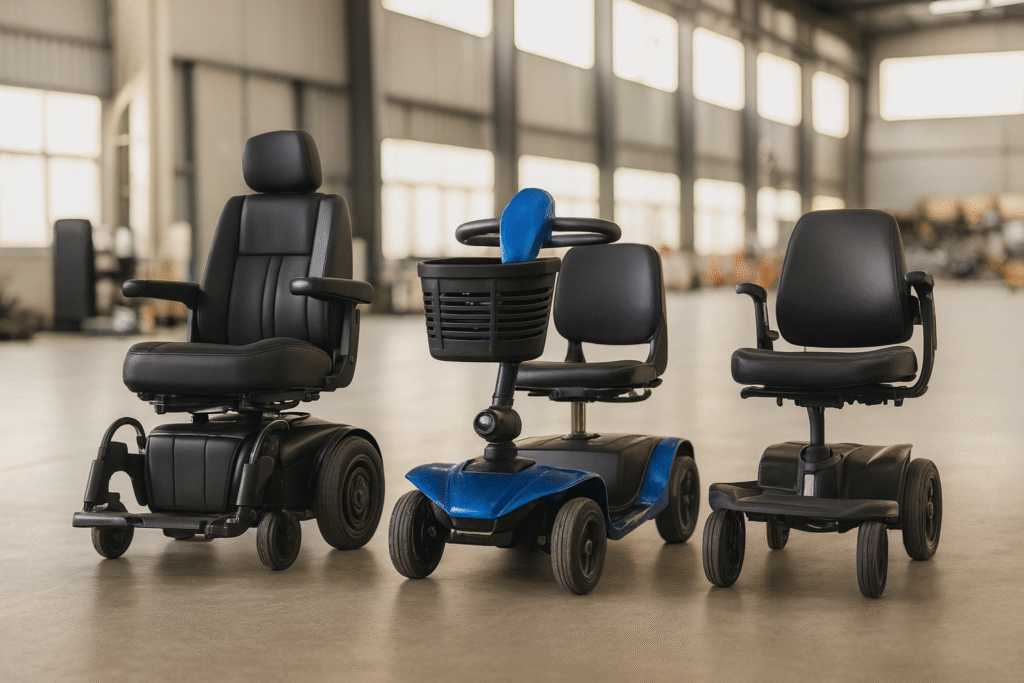
Wheelchair Types Comparison: Complete B2B Sourcing Guide 2026
Choosing the right wheelchair type for B2B procurement requires understanding weight capacity, materials, maintenance costs, and regulatory compliance across target markets. This guide compares all major wheelchair categories—from manual to bariatric to pediatric—with spec tables, cost ranges, and certification requirements to help distributors and healthcare buyers make informed sourcing decisions.
Last updated: September 2026
Quick Answer
For B2B sourcing, manual wheelchairs ($80–$300/unit) offer the lowest cost and widest market acceptance; electric wheelchairs ($600–$3,500/unit) serve users needing powered mobility; bariatric models ($400–$1,200/unit) handle 300–600 lb users; pediatric wheelchairs ($150–$800/unit) require adjustable frames for growth; reclining/tilt-in-space models ($500–$2,000/unit) serve clinical and long-term care settings. Carbon fiber frames reduce weight by 40–60% vs steel but cost 2–3x more. All types require CE marking for EU, FDA 510(k) for US, and ISO 13485 manufacturing certification.
Wheelchair Types: Side-by-Side Comparison
The table below compares the five primary wheelchair categories B2B buyers encounter:
| Feature | Manual Wheelchair | Electric Wheelchair | Bariatric Wheelchair | Pediatric Wheelchair | Reclining/Tilt-in-Space |
|---|---|---|---|---|---|
| Weight Capacity | 100–120 kg | 100–150 kg | 136–272 kg | 25–80 kg | 100–150 kg |
| Unit Weight | 8–18 kg | 25–45 kg | 20–35 kg | 5–15 kg | 18–30 kg |
| Unit Cost (FOB China) | $80–$300 | $600–$3,500 | $400–$1,200 | $150–$800 | $500–$2,000 |
| Foldable | Yes | Most models | Limited | Yes | No |
| Battery Range | N/A | 15–40 km | N/A (manual) / 15–30 km (power) | N/A | N/A (manual) / 10–25 km (power) |
| Key Certifications | CE, ISO 13485, FDA exempt | CE, FDA 510(k), ISO 13485 | CE, FDA 510(k), ISO 13485 | CE, FDA 510(k), ISO 13485 | CE, FDA 510(k), ISO 13485 |
| MOQ (OEM) | 50–100 units | 10–30 units | 20–50 units | 30–80 units | 20–50 units |
| Lead Time | 15–25 days | 25–40 days | 20–35 days | 20–30 days | 25–40 days |
| Maintenance Interval | 6 months | 3 months | 4 months | 6 months | 3 months |
| Target Buyer | Distributors, hospitals, NGOs | Rehab centers, individual users | Hospitals, bariatric care | Pediatric clinics, families | Nursing homes, ICUs |
Material Comparison: Carbon Fiber vs Aluminum vs Steel
Frame material directly affects weight, durability, and cost. The table below compares the three most common wheelchair frame materials:
| Property | Carbon Fiber | Aluminum Alloy | Steel |
|---|---|---|---|
| Frame Weight | 3–5 kg | 6–10 kg | 10–15 kg |
| Weight vs Steel | -60% to -70% | -35% to -50% | Baseline |
| Tensile Strength | 3,500–6,000 MPa | 200–500 MPa | 400–550 MPa |
| Corrosion Resistance | Excellent | Good | Poor (requires coating) |
| Fatigue Life | 10+ years | 5–8 years | 3–5 years |
| Cost Impact | +200% to +300% | Baseline | -20% to -30% |
| Manufacturing | Layup + cure, slow | Extrusion + weld, fast | Weld + paint, fastest |
| Best For | Premium, lightweight, travel | General purpose, B2B standard | Budget, high-load (bariatric) |
| HS Code | 8713.90 (same for all) | 8713.90 | 8713.90 |
B2B Insight: Carbon fiber frames command 2–3x pricing but reduce shipping costs by 40% and appeal to premium travel/travel-market segments. Aluminum remains the B2B standard—90% of distributor orders specify aluminum for its weight-cost balance.
Electric vs Manual: Power System Comparison
The decision between powered and manual wheelchairs depends on user mobility level, facility infrastructure, and budget:
| Factor | Electric (Powered) | Manual |
|---|---|---|
| Battery Type | Lithium-ion (24V 20–50Ah) | N/A |
| Motor | Brushless DC 250–500W ×2 | N/A |
| Charging Time | 6–8 hours | N/A |
| Range per Charge | 15–40 km | Unlimited (user-propelled) |
| Controller | Joystick (PG R-net, VR2) | N/A |
| Indoor Maneuverability | Excellent (mid-wheel drive) | Excellent |
| Outdoor Capability | Good (rear-wheel drive better) | Limited |
| Transport Weight | Heavy (25–45 kg, most non-foldable) | Light (8–18 kg, foldable) |
| Tire Type | Solid polyurethane or pneumatic | Solid rubber or pneumatic |
| Warranty (OEM) | 1–2 years (frame), 6–12 months (battery) | 1–2 years (frame) |
Certification Requirements by Market
B2B buyers must verify regulatory compliance for each target market before placing orders:
| Market | Required Certification | Testing Standard | Lead Time Impact |
|---|---|---|---|
| European Union | CE Marking (MDR 2017/745) | EN 12183 (manual), EN 12184 (powered) | +10–15 days |
| United States | FDA 510(k) Premarket Notification | ANSI/RESNA WC-1 | +30–60 days (first filing) |
| United Kingdom | UKCA Marking | BS EN 12183/12184 | +10–15 days |
| Australia | TGA Registration | AS/NZS 3695 | +20–30 days |
| GCC (Middle East) | SFDA Registration | ISO 13485 + local test | +30–45 days |
| Japan | PMDA (PMDA/J-MHLW) | JIS T 9225 | +60–90 days |
| Southeast Asia (ASEAN) | Varies: MOH Malaysia, BPOM Indonesia | ISO 13485 base | +15–30 days |
| All Markets (Manufacturing) | ISO 13485:2016 | Quality Management System | Ongoing |
Key: ISO 13485 is the foundation for all markets. Without it, CE/FDA certification is not possible. Verify your manufacturer’s ISO 13485 certificate scope explicitly includes “wheelchair” or “mobility aids.”
HS Code & Customs Classification
All wheelchair types share the same HS code, but duty rates vary by trade agreement:
| HS Code | Product Description | US Duty (MFN) | EU Duty (MFN) | FTA Savings |
|---|---|---|---|---|
| 8713.90.00 | Other wheelchairs (manual) | 0% | 0% | N/A (already 0%) |
| 8713.90.00 | Powered wheelchairs | 0% | 0% | N/A |
| 8713.90.00 | Bariatric/pediatric/reclining | 0% | 0% | N/A |
| 8714.99.50 | Wheelchair parts/accessories | 0–3.2% | 0–2.7% | RCEP/FORM E savings |
Wheelchairs enjoy 0% duty in most major markets under MFN rates. However, accessories (cushions, bags, replacement parts) may carry duties. Check WTO Tariff Database for specific rates.
Cost Breakdown: What Affects Unit Price?
Understanding the cost structure helps B2B buyers negotiate effectively with manufacturers:
| Cost Component | % of FOB Price | Notes |
|---|---|---|
| Raw materials (frame, components) | 35–45% | Aluminum tube, wheels, brakes, upholstery |
| Labor & assembly | 15–20% | Welding, assembly, QC |
| Battery & electronics (electric only) | 20–30% | Lithium cells, controller, motors |
| Certification & testing (amortized) | 5–8% | CE/FDA per batch, ISO annual |
| Packaging & crating | 5–7% | Carton + foam + pallet |
| Manufacturer margin | 10–15% | Standard B2B OEM margin |
| Total FOB Price | 100% | Ex-factory, before shipping |
Negotiation tip: Volume orders (500+ units) typically yield 15–25% cost reduction. Request FOB pricing breakdown by component to identify savings opportunities.
FAQ
What is the minimum order quantity (MOQ) for wheelchair manufacturing?
Most Chinese wheelchair manufacturers require 50–100 units for manual wheelchairs and 10–30 units for electric models. MOQ for OEM/ODM projects with custom branding typically starts at 200 units. Some factories accept lower MOQ (10–20 units) for sample orders at 1.5–2x standard pricing.
How long does it take to manufacture and ship wheelchairs from China?
Manufacturing lead time is 15–25 days for manual wheelchairs and 25–40 days for electric models. Sea freight from China to US West Coast adds 14–20 days; to EU ports, 28–35 days. Total door-to-door: 6–10 weeks. Air freight (3–7 days) is viable for urgent orders or high-value carbon fiber models.
Which certifications are mandatory for exporting wheelchairs?
ISO 13485 (manufacturing quality system) is the foundation. For the EU market, CE marking under MDR 2017/745 is mandatory. For the US, most powered wheelchairs require FDA 510(k) clearance; manual wheelchairs are generally FDA-exempt but must still be registered. Check our quality certifications page for details.
What is the difference between OEM and ODM wheelchair manufacturing?
OEM (Original Equipment Manufacturer) means the buyer provides complete specifications and drawings; the factory produces to spec. ODM (Original Design Manufacturer) means the factory offers existing designs that the buyer can rebrand with minor modifications. OEM offers full customization but higher MOQ (200+) and longer lead time. ODM is faster and lower MOQ (50+) but with limited customization. White label is a subset of ODM with zero design changes—just logo application.
Are carbon fiber wheelchairs worth the extra cost for B2B buyers?
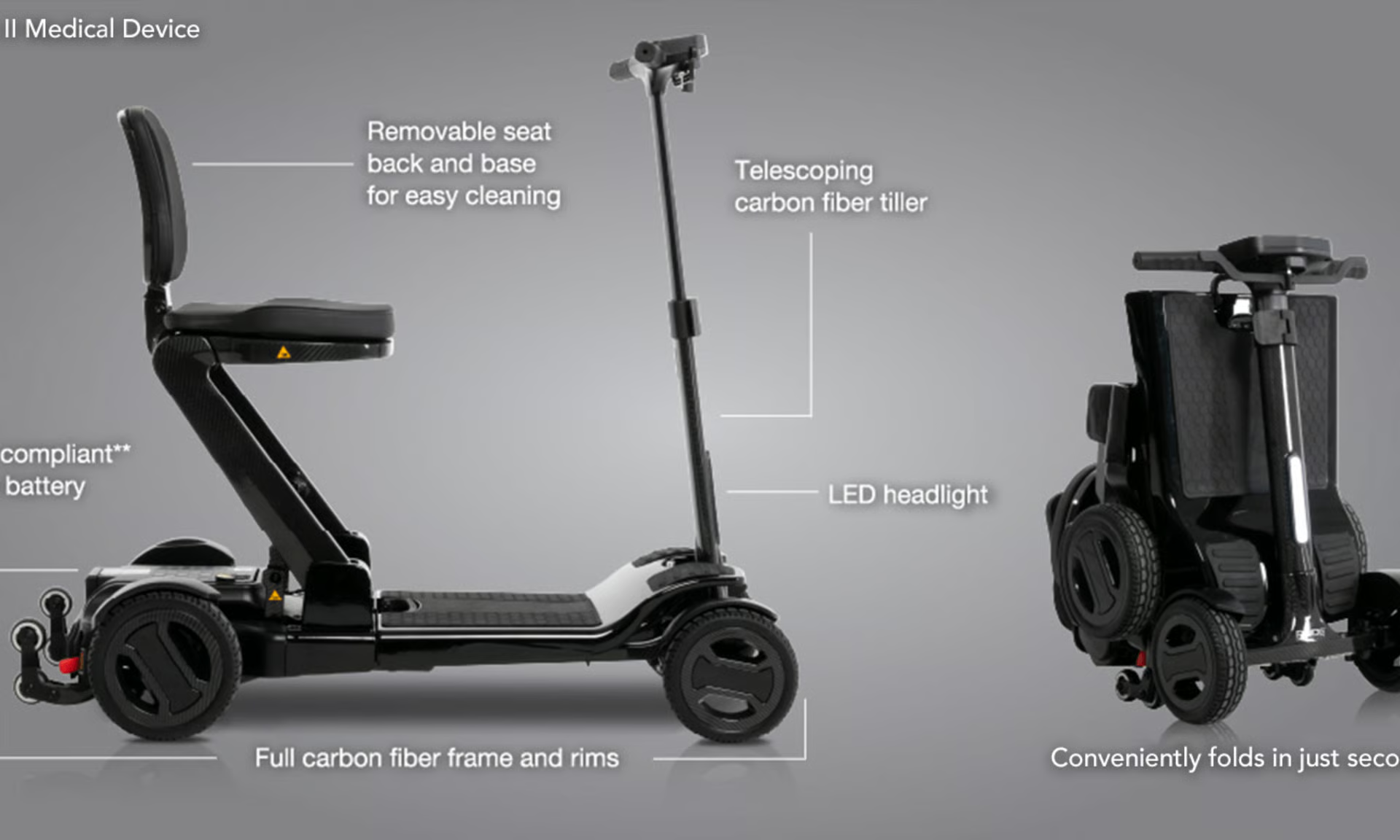
Carbon fiber wheelchairs cost 2–3x more than aluminum but offer 40–60% weight reduction, better fatigue life (10+ years vs 5–8 for aluminum), and premium market positioning. They are worth it for travel/travel-market segments, airlines (weight = fuel savings), and premium healthcare facilities. For high-volume, price-sensitive contracts, aluminum remains the standard. See our carbon fiber technology page for detailed specs.
Conclusion
For B2B wheelchair sourcing, match the wheelchair type to your target buyer’s needs: manual for broad distribution and NGOs, electric for rehabilitation and individual users, bariatric for specialized care facilities, pediatric for clinics, and reclining/tilt-in-space for clinical settings. Aluminum frames offer the best cost-to-weight ratio for volume orders, while carbon fiber serves premium segments. Always verify ISO 13485 certification and market-specific regulatory compliance before placing orders.
Need a reliable wheelchair manufacturer with ISO 13485 certification? Contact 1000Mobility for OEM/ODM quotes, or browse our product catalog for ready-to-ship models.
Interested in Wholesale Pricing?
Get OEM/ODM details, product specifications, and wholesale pricing within 24 hours.
Or send us a message directly:
 English
  Deutsch
  Français
  Español
  Italiano
  العربية
  Русский