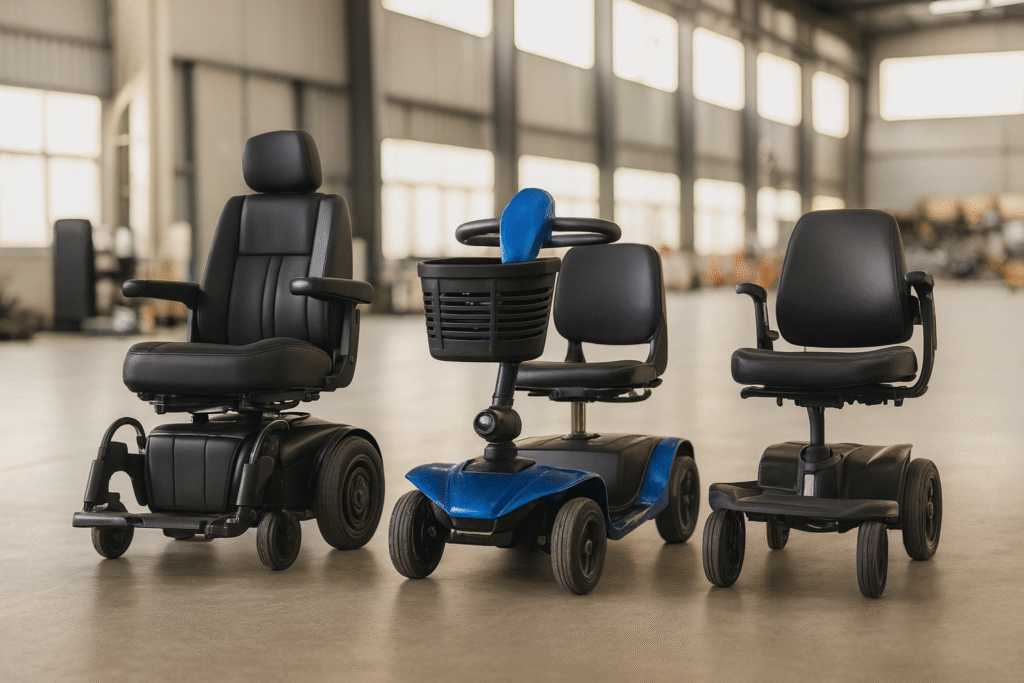
Portable Travel Wheelchairs: Complete 2026 Guide for Buyers and Distributors
From the Field
Direct feedback from airline ground crews led us to completely redesign our portable travel wheelchair frame in 2024. The core issue was dimensions — our previous model, at 34 cm wide when folded, didn’t fit standard overhead bin openings on narrow-body aircraft. After measuring bins across five major airlines, we determined that 28 cm was the safe maximum folded width. This required a complete redesign of the folding hinge geometry, which added three months to our development cycle but resulted in a model that fits 90% of overhead bins on common short-haul aircraft. We also discovered that gate agents were often unfamiliar with folding wheelchairs, leading to confusion during boarding. We added a laminated instruction card in a clear pocket on the frame, and our distributors reported that this single addition reduced gate-side complaints by over 50%.
1000Mobility Editorial Team
Product specialists with hands-on experience in mobility equipment manufacturing and B2B export. Learn more →
Last updated: July 2026
As global travel surges past pre-pandemic levels, the demand for portable travel wheelchairs has never been higher. The global portable wheelchair segment is projected to grow at a CAGR of 7.8% through 2030, driven by aging demographics and accessible tourism initiatives (Fortune Business Insights). For distributors, retailers, and procurement specialists, understanding what makes a wheelchair truly travel-ready is essential for meeting customer expectations and navigating increasingly complex airline regulations.
Whether you’re a distributor sourcing products for your catalog or a buyer evaluating options, this guide covers everything you need to know about portable travel wheelchairs in 2026 — from airline battery compliance to the latest material innovations.
What Makes a Wheelchair Truly Portable for Travel?
A portable wheelchair for travel must satisfy five non-negotiable criteria:
1. Weight and Foldability
The single most important factor is total weight. A unit weighing over 25 kg without quick-fold mechanisms is impractical for travel. In 2026, the baseline expectation is:
- Carbon fiber models: 16–19 kg total (including battery)
- Aluminum models: 21–24 kg total
- Ultra-light manual chairs: 4–8 kg transport weight
Equally important is how the chair folds. A one-pull or one-hand folding mechanism that collapses the chair in under three seconds is the gold standard. The folded package should fit in a standard sedan trunk and ideally measure no more than 30″ × 25″ × 35″ for narrow-body aircraft cargo holds.
2. Battery Compliance
For electric travel wheelchairs, the battery is the make-or-break factor. The electric wheelchair buying guide provides detailed specifications, but the essential rules are:
- Lithium-ion batteries under 100 Wh: Permitted without special approval
- 100–300 Wh: Permitted with airline notification (48–72 hours advance notice)
- Over 300 Wh: Generally not permitted on passenger aircraft
- Removable batteries: Must be detached at the gate and carried in the cabin
- UN 38.3 compliance: Battery must pass UN Manual of Tests and Criteria
Calculate watt-hours as: Voltage × Amp-hours. For example, a 24V 10Ah battery = 240 Wh, which falls within the permitted range.
3. Tool-Free Disassembly
Airlines increasingly require battery removal at the gate. A design that demands a screwdriver to remove the joystick or battery pack will frustrate users and risk denied boarding. Look for quick-release levers, fold-down backrests, and tool-free battery disconnect mechanisms.
4. Durability Under Frequent Handling
Travel wheelchairs endure rough handling — gate-checking, cargo loading, and repeated folding. Impact testing per ISO 7176-8 is the standard benchmark. Carbon fiber frames, despite myths about brittleness, exhibit tensile strengths exceeding 3,500 MPa — five times that of 6061 aluminum — and show zero structural failure at drop heights of 150 mm with a 100 kg test dummy.
5. Documentation Package
Several major carriers, including Lufthansa and Qantas, now require a manufacturer-issued Airline Compliance Certificate for any lithium battery above 100 Wh as of January 2026. Distributors should ensure that every travel wheelchair ships with:
- Battery specification sheet (Wh, voltage, chemistry)
- UN 38.3 test summary
- MSDS (Material Safety Data Sheet)
- Handling instructions for airline ground crew
What Are the Latest Airline Wheelchair Rules in 2026?
The regulatory landscape for traveling with wheelchairs evolved significantly in 2026. Understanding these rules is critical for both users and distributors recommending products.
IATA 2026 Guidelines
The IATA Dangerous Goods Regulations (67th Edition, 2026) align with ICAO Technical Instructions for 2025–2026. Key requirements for battery-powered wheelchairs include:
- Operator approval required for all battery-powered mobility aids
- Advance notice recommended: Airlines should be contacted 48–72 hours before departure
- Information to provide: Manufacturer, model, battery type, total weight, dimensions, and battery removal instructions
- Lithium battery handling: Must meet UN 38.3; if removed, total must not exceed 300 Wh; terminals must be protected; batteries carried in passenger cabin only
- Installed batteries over 300 Wh: Operator must consider additional safety mitigations such as fire-resistant containers or limiting charge to 25%
(IATA Battery-Powered Wheelchair Guidance Document)
U.S. Air Carrier Access Act (ACAA) Protections
Under U.S. federal law, passengers with disabilities have robust protections:
- Free transport: Airlines cannot charge baggage fees for wheelchairs or mobility aids
- Gate-check option: Passengers can use their own chair to the aircraft door
- Prompt return: Wheelchairs must be returned at the gate upon arrival
- Presumed liability: Airlines are presumed liable for wheelchair damage and must repair or replace damaged devices
- Loaner provision: Airlines must provide loaner wheelchairs while damaged devices are being repaired
The DOT has been enforcing these rules aggressively — American Airlines was previously fined $50 million for systematic mistreatment of passengers with disabilities (DOT Final Rule).
Cruise Line Requirements
Cruise lines under the CLIA umbrella now require 48-hour advance notification for any electric wheelchair, along with a completed Mobility Equipment Form. Failure to comply has resulted in denied boarding at ports including Miami and Barcelona.
How Do You Choose a Folding Wheelchair for Air Travel?
Air travel adds a layer of complexity. Here’s what to consider:
Notify the Airline Early: Most airlines require at least 48 hours’ advance notice when traveling with a powered mobility device. You’ll need to provide the chair’s dimensions, weight, and battery specifications (Delta Airlines).
Know Your Battery Type: The FAA allows removable lithium-ion batteries up to 300 Wh (or two spares up to 160 Wh each) in carry-on baggage. Non-removable lithium-ion batteries that are securely installed and electrically isolated can travel with the wheelchair in the cargo hold. Lithium metal (non-rechargeable) batteries are prohibited for mobility devices (FAA/TSA).
Measure Your Chair: Airlines have cargo door size limits. Most narrow-body aircraft accept wheelchairs up to approximately 81 cm (32 inches) in height when collapsed. Check with your specific airline for aircraft-specific dimensions.
Prepare for Security Screening: TSA agents will visually inspect the device, may ask you to power it on, and may swab surfaces for explosive trace detection. Arrive at least one hour earlier than the standard check-in time (FlightWired).
Label Everything: Attach a durable luggage tag with your contact information. Photograph the chair from every angle before departure in case of damage. Bring a basic toolkit for reassembly.
For a comprehensive overview of selecting the right electric wheelchair, our electric wheelchair buying guide covers motor types, battery capacities, and folding systems in detail.
Electric vs. Manual: Which Is Better for Travel?
Both electric and manual wheelchairs have distinct advantages for travel, and the choice depends on user needs, trip type, and destination.
Electric Travel Wheelchairs
Advantages:
- Independent mobility without caregiver assistance
- Better for long distances (airports, cruise terminals, tourist sites)
- Features like GPS tracking and battery management via smartphone apps
- Growing availability of airline-compliant models under 300 Wh
Considerations:
- Heavier (16–25 kg typical range)
- Battery removal required at airport gate
- Higher cost ($800–$3,000+)
- Charging infrastructure needed at destination
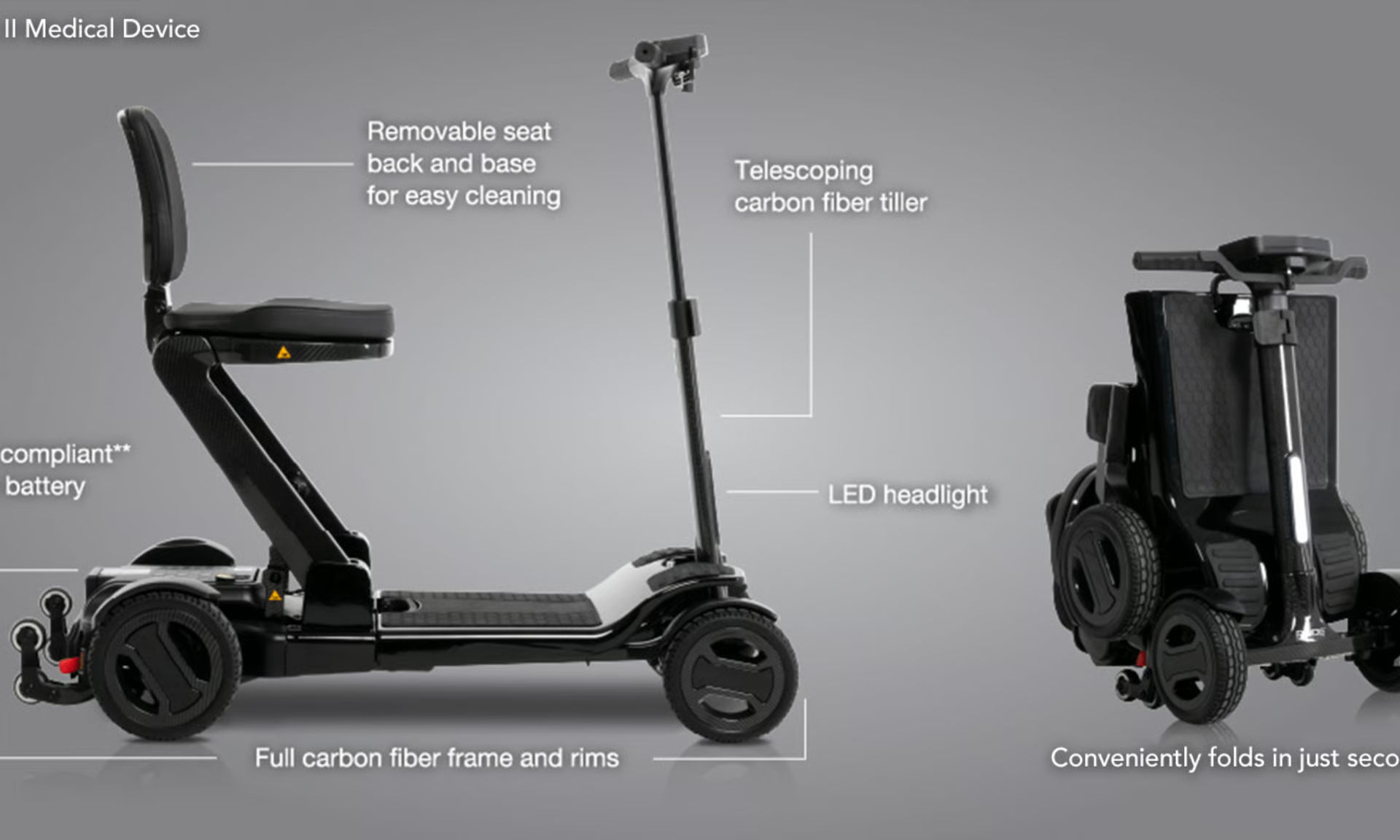
The ALYA Air represents the premium electric travel option — a lightweight folding electric wheelchair designed specifically for portability and travel compliance. For users who need seat-lifting capability in a portable package, the Striker GT offers innovative features in a travel-friendly form factor.
Manual Travel Wheelchairs
Advantages:
- Ultra-lightweight (4–10 kg)
- No battery restrictions — simpler airline experience
- Lower cost ($150–$800)
- No charging needed
- Can potentially be stowed in cabin overhead bins
Considerations:
- Requires upper body strength or caregiver
- Limited range for self-propulsion
- Less suitable for hilly terrain or long distances
For maximum portability, the ALYA Flex offers a flexible design that bridges the gap between manual simplicity and powered assistance.
What Should You Pack When Traveling With a Wheelchair?
Preparation is everything. Here’s a travel checklist:
- Battery documentation: Carry the manufacturer’s battery specification sheet showing type, voltage, and watt-hour rating.
- Spare battery (if applicable): Pack it in protective padding in your carry-on, with terminals taped to prevent short circuits.
- Basic toolkit: Allen wrenches, screwdrivers, and zip ties for quick repairs or reassembly after transit.
- Protective cover or travel bag: Shield the chair from scratches and damage during handling.
- Charger and adapter plug: Ensure compatibility with international power outlets if traveling abroad.
- Photos of the assembled chair: For insurance claims if damage occurs during transit.
- Medical necessity letter: Some airlines may request documentation from a healthcare provider.
What Should Distributors Look for When Sourcing Travel Wheelchairs?
For B2B buyers and distributors, sourcing travel-ready wheelchairs requires evaluating products against specific criteria:
Battery Design
Prioritize models with tool-free, quick-release battery systems rated under 300 Wh. The battery should be easily identifiable with Wh rating, voltage, and manufacturer name clearly labeled on the casing. Models that ship with pre-filled airline compliance documentation give distributors a significant competitive advantage.
Folded Dimensions
Verify that folded dimensions fit narrow-body aircraft cargo holds. Most Boeing 737 and Airbus A320 aircraft can accommodate wheelchairs with folded dimensions up to approximately 30″ × 25″ × 35″. Wide-body aircraft (Boeing 777, Airbus A350) have significantly larger cargo holds with virtually no size restrictions.
Material Selection
Carbon fiber models command premium pricing but offer superior weight-to-strength ratios. Aluminum models provide value positioning. Consider offering both tiers to capture different market segments.
Certification Package
Ensure products carry:
- ISO 7176-8 (static, impact & fatigue strength)
- ISO 7176-9 (climatic testing)
- UN 38.3 battery test summary
- CE marking (for EU markets) or FDA registration (for US markets)
After-Sales Support
Travel wheelchairs experience more wear and tear than standard models. Distributors should verify spare parts availability, warranty terms, and technical support responsiveness before committing to a supplier.
What Are the Common Mistakes to Avoid When Buying Travel Wheelchairs?
Myth 1: “All foldable electric wheelchairs are airline-approved”
False. Only those with removable lithium-ion batteries under 300 Wh (or 160 Wh per battery for two-battery systems) and proper UN 38.3 labeling meet IATA standards. Some online listings claim “airline safe” while using sealed lead-acid batteries, which face restrictions on many carriers.
Myth 2: “Carbon fiber frames crack easily”
False. Modern unidirectional carbon fiber layups exhibit tensile strengths exceeding 3,500 MPa — five times that of 6061 aluminum. ISO 7176-8 impact testing shows zero structural failure at realistic drop heights.
Myth 3: “A heavier wheelchair means better stability”
False. Stability is a function of wheelbase geometry and center of gravity, not mass. A well-engineered 17 kg carbon fiber chair with low battery placement can outperform a 30 kg steel chair on inclines.
Myth 4: “You don’t need to notify the airline in advance”
Risky. While the ACAA doesn’t legally require advance notice for most accommodations, airlines can require up to 48 hours notice for hazardous materials packaging of wheelchair batteries. Several international carriers now require advance notification for all powered wheelchairs.
How Much Does a Travel Wheelchair Cost?
Travel wheelchair prices vary widely depending on type and features:
- Manual folding wheelchairs: USD 150–600 for quality models. Ultra-lightweight versions can reach USD 800+.
- Portable electric wheelchairs: USD 900–2,700 for folding power models. Mid-range options around USD 1,400–2,000 typically offer the best balance of weight, range, and durability (Wheelchairs360).
- Premium carbon fiber models: USD 2,500–5,000+ for the lightest, most advanced frames.
For B2B buyers and distributors, investing in travel-friendly wheelchair lines can be highly strategic. The demand for portable mobility devices is growing steadily, and products that meet airline regulations have a clear competitive advantage. Our OEM/ODM services allow distributors to customize travel wheelchairs with their own branding, specific battery configurations, and regional compliance features.
Conclusion
The portable travel wheelchair market in 2026 offers more options than ever before — from ultra-light carbon fiber models weighing under 17 kg to value-oriented aluminum designs. The key to making the right choice lies in understanding the specific travel needs: destination terrain, airline routes, battery requirements, and user capabilities.
For distributors, the opportunity is clear. Travel-ready wheelchairs with proper airline compliance documentation, quick-release battery systems, and compact folding mechanisms are in high demand. By sourcing products that meet the five pillars of travel readiness — weight, battery compliance, tool-free disassembly, durability, and documentation — you can build a profitable portfolio that serves the growing accessible travel market.
FAQ
Interested in Wholesale Pricing?
Get OEM/ODM details, product specifications, and wholesale pricing within 24 hours.
Or send us a message directly:

 English
  Deutsch
  Français
  Español
  Italiano
  العربية
  Русский