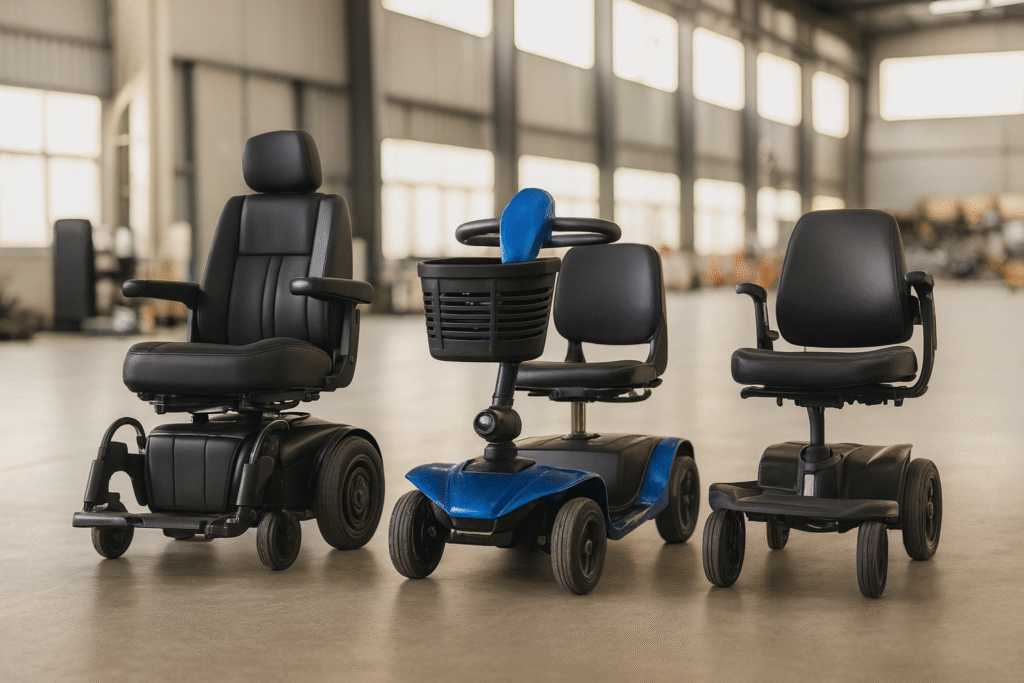
Wheelchair Technology Trends 2026: Innovation & Smart Mobility
From the Field
Our team attended REHACARE 2025 in Düsseldorf, walking the floor for three days and comparing over 200 exhibits. Two themes dominated the show: smart connectivity and lithium battery safety. Nearly every major manufacturer showcased some form of Bluetooth-enabled chair, but we noticed that most prototypes still lacked reliable range — several demonstrations dropped connection beyond 10 meters. On the battery side, the conversation has shifted from capacity to safety certification. EU distributors are now actively asking for UN38.3 test reports before placing orders, a requirement that barely came up two years ago. We also saw growing interest in modular battery systems that allow hot-swapping without tools. Our R&D team returned with a priority list: improving our Bluetooth module’s signal stability, obtaining UN38.3 certification for our 24V lithium packs, and exploring a tool-free battery swap mechanism for our 2026 product line.
1000Mobility Editorial Team
Product specialists with hands-on experience in mobility equipment manufacturing and B2B export. Learn more →
Last updated: July 2026
The wheelchair industry is undergoing a technological renaissance. Driven by an aging global population — with individuals aged 65+ projected to surpass 800 million in 2026 (IndexBox) — manufacturers are racing to integrate materials science, artificial intelligence, and smart connectivity into mobility devices that were once purely mechanical.
For B2B buyers, distributors, and OEM partners, staying ahead of these technology trends is critical to offering competitive products. This article examines the seven most significant wheelchair technology trends of 2026, with data from industry reports, trade shows, and product launches.
How Is Carbon Fiber Revolutionizing Wheelchair Frames?
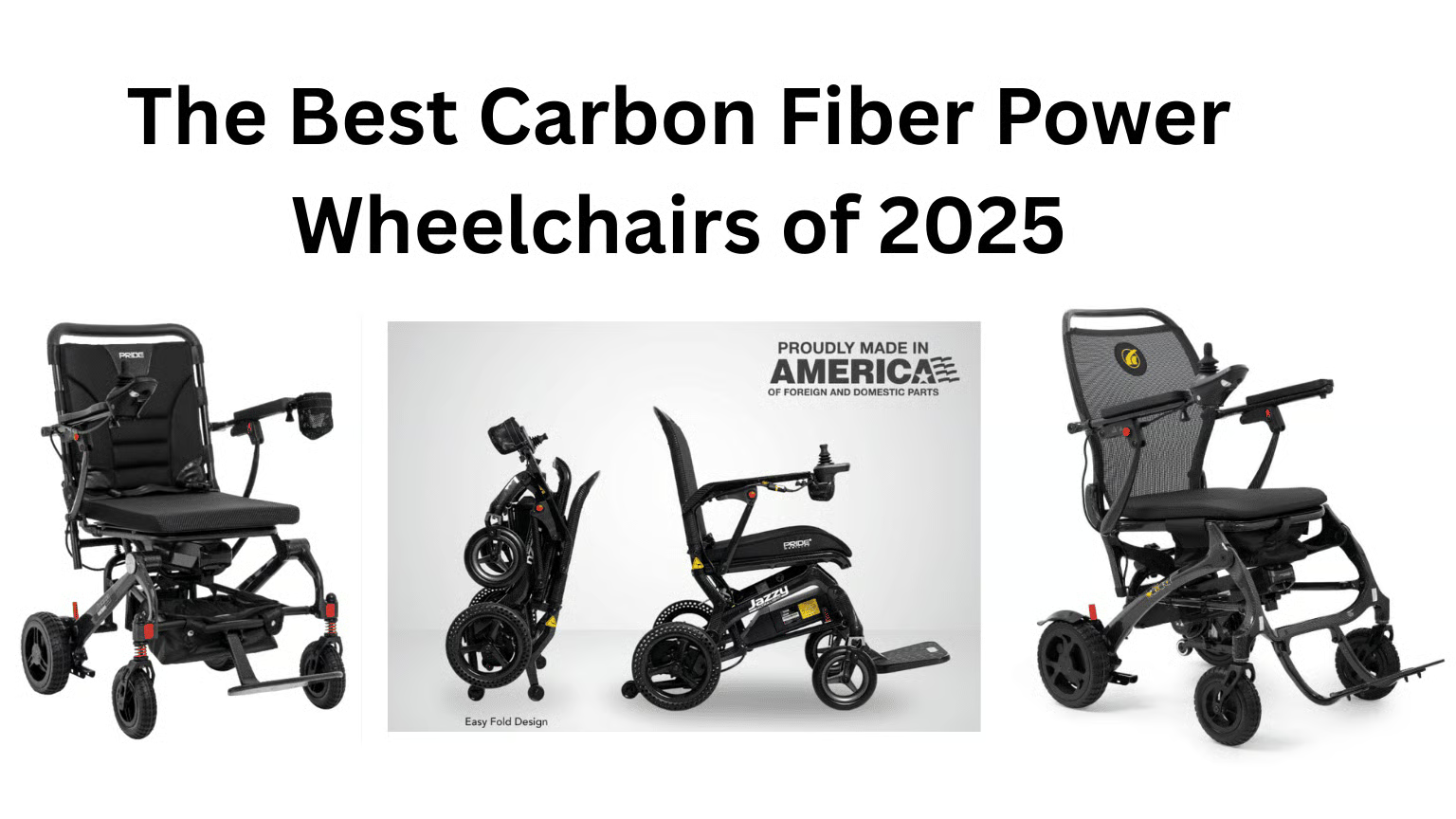
Carbon fiber has moved from aerospace exclusivity to mainstream mobility applications. In February 2026, WHILL unveiled the Model C Lite — the world’s only foldable electric wheelchair featuring a molded carbon fiber frame, weighing just 17 kg and built with 100% recycled carbon fiber resin (WHILL). In July 2026, a Chinese manufacturer won the German Red Dot Design Award for an all-carbon-fiber electric wheelchair weighing just 10.5 kg (Jiefang Daily).
The material advantages are compelling: carbon fiber is approximately 80% lighter than steel and 40% lighter than aluminum, while offering tensile strength 5–7 times greater than steel (Shasha Carbon). For wheelchair users, this translates to chairs that can be lifted with one hand, loaded into compact car trunks, and transported on airplanes.
The market is responding. According to industry research, walking aids manufactured using carbon fiber materials experienced 27% sales growth due to improved durability and reduced weight (Industry Research). To understand the full scope of carbon fiber applications in mobility devices, visit our Carbon Fiber Technology page.
Our MAGNA Carbon ultralight electric wheelchair represents this trend — combining an aerospace-grade carbon fiber frame with powerful dual motors for a chair that redefines the balance between weight and performance.
What Role Does AI Play in Modern Wheelchair Navigation?
Artificial intelligence is transforming wheelchairs from user-operated devices into semi-autonomous mobility platforms. In May 2026, Pride Mobility launched the Jazzy Assist, an AI-powered smart wheelchair featuring EZ-Pass Turning Assist for precise navigation through narrow doorways, a rear-view camera system, one-touch SOS alerts, and tilt detection that automatically notifies caregivers (THIIS).
At the research frontier, a 2026 proof-of-concept study published on arXiv demonstrated an autonomous powered wheelchair augmented with LiDAR and RGB-D sensors, capable of person-following, autonomous hailing, and shared-control navigation. The system uses Simultaneous Localization and Mapping (SLAM) within a ROS 2 (Robot Operating System 2) framework to construct real-time environmental maps.
WHILL has already deployed autonomous wheelchairs at major European airports including Munich and Copenhagen, where the devices transport passengers with reduced mobility independently across terminals using mapping, obstacle avoidance, and sensor fusion (WHILL).
These AI capabilities — obstacle avoidance, people-following, and remote summoning — represent a paradigm shift toward shared control, where the wheelchair actively assists the user’s intended movements rather than simply executing commands.
How Are Battery Technologies Evolving for Electric Wheelchairs?
Battery innovation in 2026 focuses on safety, efficiency, and daily usability rather than extreme range claims. Lithium-ion battery integration in mobility devices expanded by 32% during 2025 (Industry Research), driven by lighter cells, improved BMS (Battery Management Systems), and FAA compliance for air travel.
Key developments include:
- Graphene-enhanced batteries: While still experimental for mobility devices, early pilots in e-bikes and drones show promise for faster charging and higher energy density. WHILL notes that widespread adoption in wheelchairs is “still years away” (WHILL).
- Wireless charging: Inductive charging mats allow users to park devices for automatic charging, reducing cable management — particularly valuable for users with limited dexterity.
- Smart BMS integration: Modern battery systems now provide real-time monitoring of cell health, temperature, and charge cycles via mobile apps, enabling predictive maintenance and reducing unexpected failures.
For B2B buyers, the practical takeaway is that lighter frames (especially carbon fiber) reduce the load on motors, translating to 15–25% longer battery range from the same cell capacity. This is a key selling point for distributors.
What Smart Connectivity Features Are Users Demanding in 2026?
Smart wheelchair launches increased by 26% during 2025 (Industry Research), and the trend is accelerating. Modern users expect their wheelchairs to integrate with smartphones, smart home systems, and cloud-based health platforms.
The most in-demand connectivity features include:
Mobile App Control — Users can check battery status, track location, adjust speed settings, and even remotely fold/unfold the chair. Pride Mobility’s Jazzy Assist connects to a mobile app allowing caregivers to monitor the chair’s status and location remotely (THIIS).
Voice Control — Beyond basic commands, 2026 voice-activated systems are evolving to support natural language processing for controlling movement, adjusting speed, and selecting driving modes. This is particularly valuable for users with severe motor impairments.
SOS and Emergency Alerts — Automatic fall detection, tilt monitoring, and one-touch SOS buttons that send GPS coordinates to designated contacts are becoming standard safety features on premium models.
Remote Diagnostics — Manufacturers and service providers can remotely monitor device health, predict maintenance needs, and even push firmware updates — reducing downtime and improving the total cost of ownership for institutional buyers.
For manufacturers and OEM partners, these connectivity features represent significant value-add opportunities. Our OEM/ODM services enable distributors to customize smart features and connectivity options for their specific market requirements.
How Are Folding Mechanisms and Modular Designs Improving?
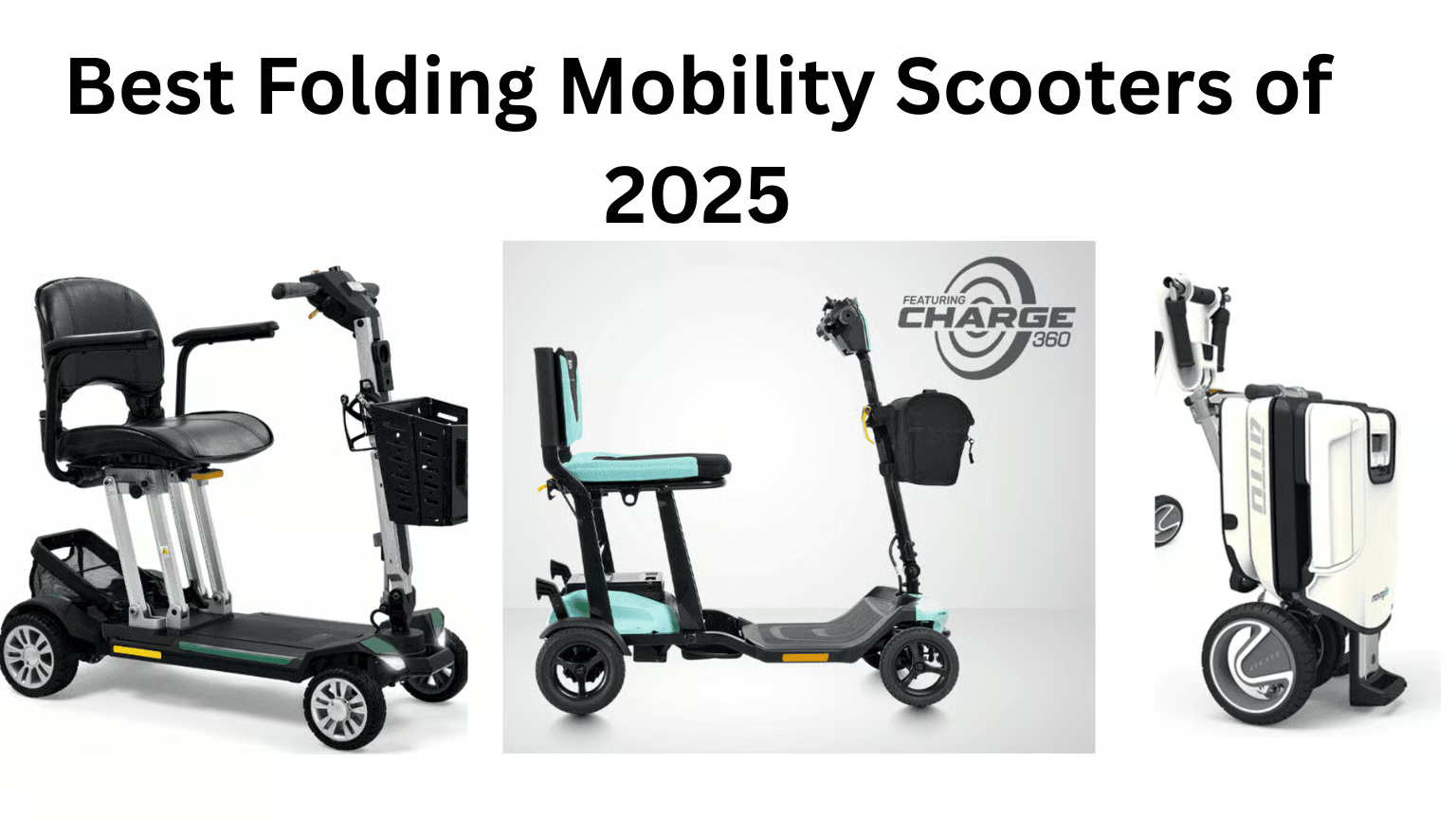
Portability remains the top user priority. In 2026, the industry has moved beyond simple folding frames to sophisticated rapid-deployment systems. At the 2026 China International Rehabilitation Expo (CR Expo) in Beijing, multiple manufacturers showcased wheelchairs and scooters that fold in under five seconds — some with one-step folding that requires no disassembly of seats or armrests (CR Expo).
Key innovations in this space include:
- One-second folding patents — Carbon fiber frames that collapse into suitcase-sized packages with a single action
- Suitcase-mode dragging — Folded chairs that can be pulled like luggage, eliminating the need to lift the full weight
- Modular component systems — Users can swap seats, controls, or batteries as needs change, extending product lifespan and simplifying repairs
- Tool-free adjustments — Standardized interfaces allow users and technicians to make adjustments without specialized tools
Modular designs also support sustainability. WHILL’s Model C Lite uses 100% recycled carbon fiber resin and is designed to be fully recyclable at end-of-life, supporting a circular resource cycle (WHILL).
What Emerging Technologies Will Shape the Next Wave of Wheelchair Innovation?
Several frontier technologies showcased at the 2026 CR Expo hint at the next generation of mobility devices:
- 3D-Printed Wheelchair Frames: The KIVRO, the world’s first 3D-printed wheelchair, won the 2026 German Red Dot Best of the Best award. It uses aviation-grade titanium alloy with a patented carbon lattice structure, and is custom-fitted to each user via 3D scanning (CR Expo).
- Stair-Climbing Systems: Multiple manufacturers demonstrated wheelchairs with tracked or wheel-leg hybrid systems capable of autonomously climbing stairs, using AI to detect step height and adjust the center of gravity.
- Wearable Exoskeletons: While not replacing wheelchairs, powered exoskeletons are advancing as complementary devices that support standing and controlled walking, with lighter frames and AI-driven gait modeling.
- Solar Power Integration: Small panel-based systems integrated into canopies or external mounts provide supplementary charging during outdoor use, extending range without adding significant weight.
These innovations signal a future where wheelchairs are not just mobility aids but integrated platforms combining materials science, AI, connectivity, and personalized manufacturing.
FAQ
Conclusion
The wheelchair technology landscape in 2026 is defined by convergence — of advanced materials like carbon fiber, AI-driven navigation, smart connectivity, and modular design thinking. For distributors and B2B buyers, the opportunity lies in sourcing products that incorporate these innovations while maintaining the reliability, safety certifications, and after-sales support that institutional and individual buyers demand.
At 1000mobility, our MAGNA Carbon electric wheelchair and our carbon fiber technology capabilities position us at the forefront of these trends. Through our OEM/ODM services, we help distributors bring customized, technology-forward mobility products to their markets. Discover why partners worldwide choose 1000mobility for their wheelchair manufacturing needs.
 English
  Deutsch
  Français
  Español
  Italiano